Best Cooling Mattress Pads for Hot Sleepers
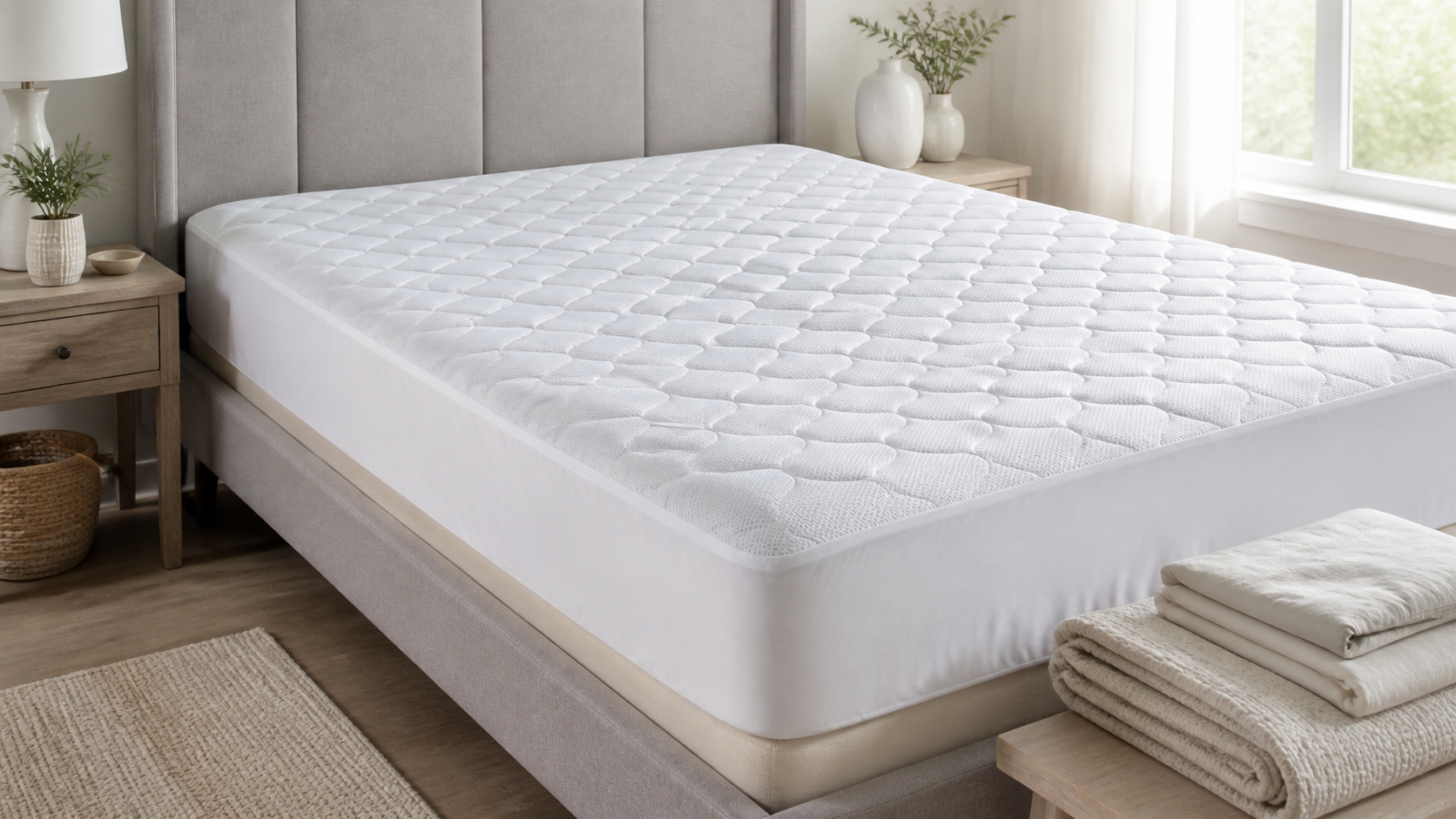
A so-called cooling mattress pad cannot guarantee a cooler body or fix a hot bedroom. What it can do is replace a heat-trapping surface with a washable layer whose fabric, fill, waterproofing, and fit are better suited to your bed. Start with material and care—not blue graphics or vague cooling language.
As an Amazon Associate, The Good Home Doc may earn from qualifying purchases.
Compare the pad construction that fits your bed and laundry routine:
- Browse category: Compare breathable cooling mattress padsStart with fitted pads that publish full materials, pocket depth, and wash instructions.
- Browse category: Compare cotton-top deep-pocket mattress padsUseful when surface feel and mattress fit matter more than a waterproof barrier.
- Browse category: Compare washable pads with a moisture barrierCheck whether added protection changes airflow, sound, feel, or dryer requirements.
These are category searches, not tested rankings. Verify current materials, dimensions, pocket depth, barrier construction, care label, dryer limits, warranty, and return terms before buying.
This is a category buying framework, not a list of named winners. Product formulas and care directions change, and terms such as “cooling,” “breathable,” and “temperature regulating” do not follow one consistent retail standard. Treat them as prompts to inspect the construction, not proof of performance.
Quick Best-Fit Guide
- Best simple starting point: a lightly quilted, breathable fitted pad with complete material and wash information.
- Best for a thick mattress: a pad whose stated pocket range comfortably covers the measured mattress, topper, and protector stack.
- Best when spills matter too: a pad with a documented moisture barrier, provided you accept possible tradeoffs in airflow, feel, and noise.
- Best for frequent laundering: a pad that fits your washer and dryer and permits a routine you can actually follow.
- Best for a genuinely hot room: skip the pad as the main fix and address shade, ventilation, airflow, bedding, or cooling equipment first.
Measure the Entire Mattress Stack
Measure mattress depth at the deepest point, then include any topper or protector that will sit beneath the new pad. Compare that total with the manufacturer's pocket-depth range. A skirt stretched to its limit is more likely to creep off a corner, pull the quilted top out of place, or tear during removal.
Also confirm the bed size rather than assuming every queen or king has identical finished dimensions. If the mattress has rounded corners, a very thick pillow top, or an adjustable base, look for fit guidance that addresses that setup. A generous skirt helps only when its elastic can hold without bunching under the mattress.
Comparison Framework
Cotton-Top and Cotton-Rich Pads
Cotton can provide a familiar, less slick sleep surface and may manage routine moisture better than a dense synthetic face fabric. But “cotton top” does not mean the fill, backing, or skirt is cotton. Read the full fiber breakdown and care label.
Choose this direction when: you want a straightforward fabric surface and are willing to compare shrinkage risk, fill material, and dryer instructions.
Synthetic Performance-Fabric Pads
Polyester and nylon constructions can be light, quick to dry, and shaped into textured knits. Some use finishes or yarn structures marketed for cooling. Without current comparable evidence, do not assume those labels make one pad universally cooler. Judge the whole build, including fill density and backing.
Choose this direction when: easy washing, lower weight, or a smoother surface matters, and the exact fabric feel works with your sheets.
Natural-Fiber and Blended Fill
Wool, lyocell-type fibers, and mixed fills may be marketed around moisture management and comfort. They can also have more specific washing, drying, or spot-cleaning requirements. A material that sounds breathable is a poor fit if your normal laundry routine will damage it.
Choose this direction when: the disclosed materials and permitted care match your priorities and budget—not simply because the product uses a natural-sounding label.
Pads with Waterproof or Water-Resistant Layers
A barrier can help protect the mattress from routine spills and perspiration, but it may add stiffness, sound, or reduced vapor movement. Read whether the protection covers only the top or includes the sides, and distinguish water resistance from broader waterproof claims.
Choose this direction when: mattress protection is a primary job and you are comfortable trading some simplicity or breathability for it.
Must-Have Buying Checks
- Complete material disclosure: Check the face, fill, backing or membrane, and fitted skirt—not just the headline fiber.
- Verified pocket depth: Match the stated range to the measured mattress stack with room to fit securely.
- Realistic wash care: Confirm permitted water temperature, washer type, cycle, detergent, drying method, and dryer heat.
- Compatible mattress use: Check instructions for adjustable beds, foam mattresses, heated bedding, and toppers when relevant.
- Sensible return terms: Fabric feel, noise, and fit are difficult to judge from a product page, so understand the hygiene and opened-bedding return rules.
- No unsupported health promise: Skip products whose main pitch relies on treating night sweats, sleep disorders, pain, or medical conditions.
Nice-to-Have Features
- Channel or box quilting: Can help keep fill distributed, though deeper quilting may change the feel of the mattress.
- A plainly labeled care tag: More useful over time than instructions that exist only on a retail page.
- Strong corner elastic: Helpful on thicker mattresses and adjustable bases when the maker permits that use.
- Low-bulk construction: Easier to fit in a home washer and less likely to noticeably soften a firm mattress.
- Trial or return period: Useful when you are uncertain about surface feel, rustling, or how the pad changes sheet fit.
Cooling Pad, Protector, or Topper?
A mattress pad adds a modest comfort and washable layer. A protector primarily shields the mattress and may be thinner. A topper is thicker and intended to change cushioning or support. Retail titles often blur these labels, so compare actual thickness, fill weight, construction, and primary purpose.
If you like the feel of your mattress and mainly want easier laundering, stay with a low-profile pad or protector. If the mattress feels unsupportive or uncomfortable, a “cooling” pad is unlikely to correct the underlying fit. Use the home product buying framework to separate must-have function from marketing extras.
Wash and Dry Before Comfort Becomes a Chore
Bulky pads can exceed the practical capacity of compact washers even when they are technically machine washable. Check whether the wet pad can move freely in the drum and whether your dryer permits the specified low-heat or no-heat cycle. High heat can damage elastic, membranes, fiber finishes, or fill distribution.
Follow the label for prewashing. After laundering, dry completely before remaking the bed, inspect for torn quilting or a peeling barrier, and rotate the pad if the instructions permit. A pad that needs special care you will not follow is not the best fit, regardless of its feature list.
Who Should Skip a Cooling Mattress Pad
- Skip it as the main solution when the room itself stays dangerously hot or the home's cooling or ventilation is not working. Address the environment and seek appropriate local help.
- Skip heavily padded options if you want to preserve the exact firmness and contour of the current mattress.
- Skip barrier-backed pads if you are highly sensitive to rustling or warmth and mattress protection is not a priority.
- Skip products that will not fit your washer, dryer, mattress depth, adjustable base, or existing bedding stack.
- Skip medical or guaranteed temperature claims. Persistent or disruptive night sweats deserve a conversation with a qualified healthcare professional rather than a bedding purchase alone.
Bottom Line
For most hot sleepers trying a passive bedding change, begin with a lightly quilted fitted pad that discloses every material, fits the measured mattress stack, and can be washed and dried in your actual machines. Add a moisture barrier only when protection matters enough to accept its possible feel and airflow tradeoffs. A good pad can make the sleep surface easier to live with, but it should not be sold as climate control or a health treatment.