Home Product Category Buying Frameworks
A home product category is only useful when it fits the actual problem, the room, the maintenance routine, and the limits of the home. This pillar helps you compare categories before you get pulled into product names, feature lists, or fake certainty.
As an Amazon Associate, The Good Home Doc may earn from qualifying purchases.
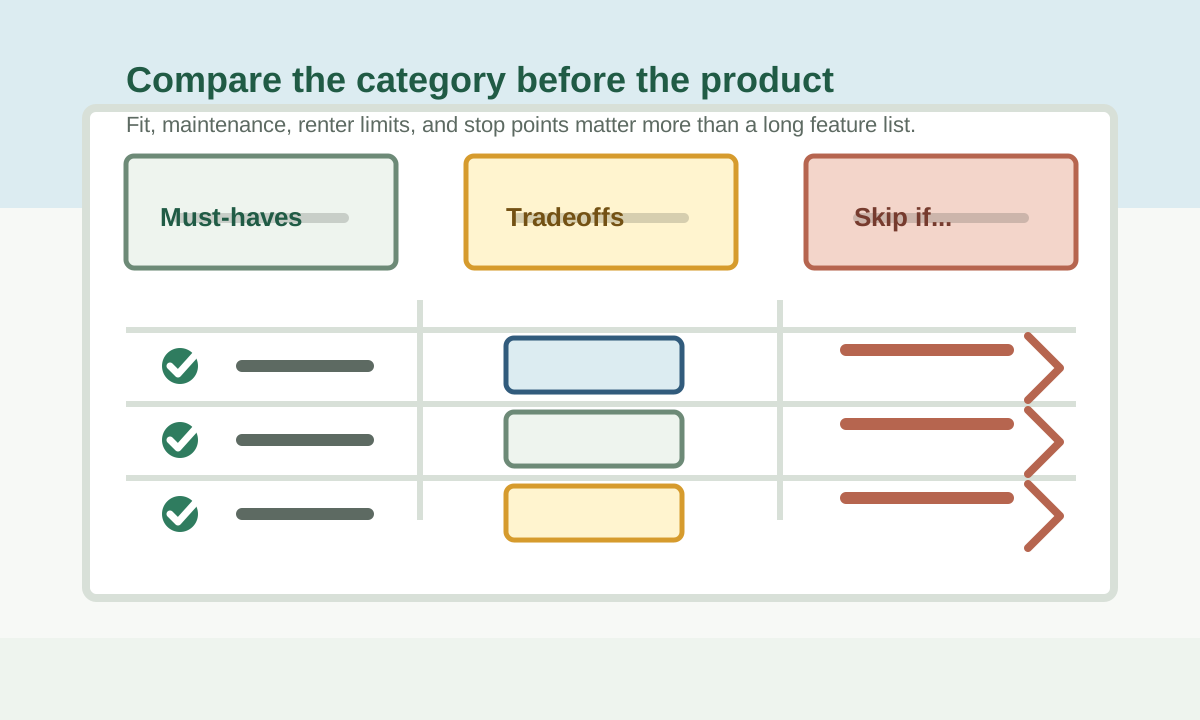
Shop the product decision first: Use these affiliate shortcuts after you check the measurements, setup limits, and skip criteria in this guide.
- Browse category: Home Organization ProductsBest first comparison set before you choose a final model.
- Browse category: Home Maintenance ToolsUseful upgrade or fit check before you choose a final model.
- Browse category: Renter Friendly Home ProductsGood supporting product to compare before you choose a final model.
These links are shopping starting points, not test rankings. Confirm dimensions, materials, installation limits, cleaning needs, return policy, and whether the product solves your actual home problem before buying.
Use this guide when you know the home problem but are not sure which kind of product belongs in the solution. For narrower examples, compare the garage and attic storage-bin material guide, humid-bathroom shelf material guide, washable kitchen rug material guide, furniture slider guide, foldable step stool guide, and under-sink drip tray versus leak alarm guide. Each solves a different environmental, access, cleanup, or prevention problem, so the useful criteria change with the job.
Start With the Job, Not the Product
Write down what needs to change in plain language: stop small spills from reaching cabinet wood, make a heavy sofa easier to shift for cleaning, keep seasonal clothes dust-free, reduce a hallway trip risk at night, or make dish cleanup less crowded. A category that solves the wrong job will still be a bad buy even if it is popular.
Then decide whether the problem is daily, weekly, seasonal, or rare. Daily-use products deserve simpler controls, easier cleaning, and better storage. Rare-use tools can be more basic, but they still need to be safe, findable, and appropriate for the surface or room where they will be used.
The Five Checks Before Comparing Features
- Problem fit: The category should address the failure you can name, not a vague promise of convenience.
- Measurement fit: Check width, depth, height, clearance, door swing, outlet access, plumbing access, floor type, and storage space.
- Setup fit: Confirm whether the product is freestanding, adhesive, over-the-door, plug-in, battery-powered, wall-mounted, or tool-required.
- Maintenance fit: Filters, batteries, liners, pads, tanks, bins, and moving parts need care. If you will avoid the upkeep, choose a simpler category.
- Home limits: Renters, shared spaces, older surfaces, pets, kids, damp rooms, and tight walkways can turn a good product category into a bad fit.
Separate Must-Haves From Nice-to-Haves
Must-have features are the ones that make the category work for your home. A leak alarm needs an alert you will notice and battery access you can maintain. A drying rack needs enough airflow and a place to stand without blocking the room. A rug pad needs floor-safe material and the right thickness for door clearance.
Nice-to-have features make a good fit easier to live with: labels, dimming, washable covers, removable liners, replacement parts, display memory, collapsible storage, or simple smart alerts. These are useful only after the category has passed the basic fit checks.
Compare Categories by Their Failure Points
Storage products fail when they hide clutter, block access, tip, trap dust, or require more sorting effort than the household will use. Start with the small-home organization systems guide when the problem is bigger than one bin. For kitchen examples, compare drawer organizer materials by cleaning and moisture, or use the bakeware organizer guide for slot width, cabinet clearance, and vertical access.
Moisture and leak helpers fail when they are treated like repairs. Alarms, trays, liners, humidity monitors, and compact dehumidifiers can help you notice or contain early issues, but they do not fix active leaks, persistent dampness, mold concerns, or building defects. For the broader path, use the home leaks and moisture prevention guide.
Renter-friendly upgrades fail when they damage surfaces, block required access, or assume the lease allows permanent changes. Favor reversible categories first, then check the renter-friendly home upgrades guide before drilling, sticking, clamping, or hanging anything heavy.
Comfort and safety-adjacent products fail when they overpromise. Lights, rug pads, air purifiers, humidifiers, curtains, and noise-softening products can improve daily comfort, but they should not be used to ignore electrical, structural, moisture, gas, fire, medical, or accessibility concerns. A cable management box, for example, can contain plug clutter but cannot correct damaged or overloaded electrical equipment. Use the home comfort and safety-adjacent upgrades guide for cautious next steps.
Cleaning and maintenance helpers fail when they are awkward to store, hard to rinse, or too specialized for the chores you repeat. If a tool adds setup friction, it may not earn its space in a busy home.
Who Should Skip a Category
Every category has a skip condition. Skip furniture sliders when the piece is unstable, overloaded, fragile, or near stairs. Skip humidifiers in rooms that already have condensation or musty surfaces. Skip adhesive organizers on weak paint, damp tile, or surfaces the landlord controls. Skip tall storage pieces when they cannot be safely anchored where anchoring is required.
Good buying advice should name the person who should not buy the product. That is not negative; it is how you avoid solving one home problem by creating another.
When to Stop Shopping and Get Help
Pause before buying a product when the issue involves active leaks, recurring dampness, suspected mold, electrical problems, gas smells, fire safety, structural movement, damaged flooring, pest activity, warranty-sensitive work, code questions, medical symptoms, or any installation that feels beyond ordinary household setup. In those cases, a qualified professional, landlord, manufacturer, or local authority is the better next step.
A Simple Category Checklist
- Name the exact home problem in one sentence.
- Measure the space and the route the product has to use.
- List must-have features before reading product pages.
- Check maintenance, replacement parts, and cleaning access.
- Confirm renter, surface, outlet, moisture, and walkway limits.
- Write down who should skip the category.
- Stop if the problem needs repair, inspection, permission, or professional judgment.
Bottom Line
The best home product category is the one that fits the job with the least drama. Start with the problem, check the room and maintenance limits, compare failure points, and only then look at individual products. A clear framework saves more money than another list of features.