Best Shelf Materials for Humid Bathrooms
Bathroom humidity does not make every shelf fail, but it exposes weak coatings, unsealed edges, trapped water, and hardware that is poorly matched to the room. The best material depends on where the shelf sits, how often it gets wet, what it carries, and how much upkeep you will actually do.
As an Amazon Associate, The Good Home Doc may earn from qualifying purchases.
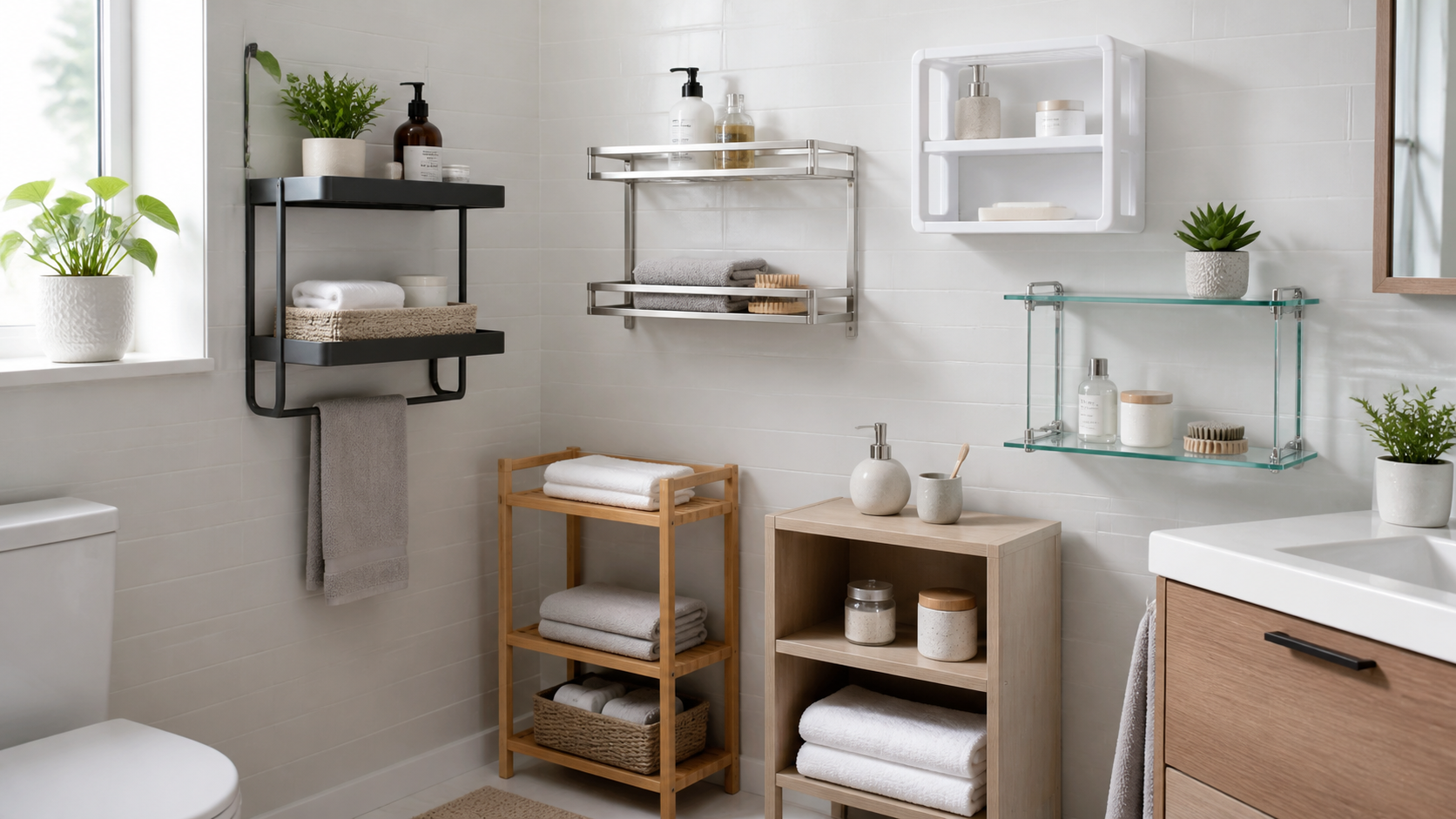
Compare by material and location:
- Browse category: Compare stainless-steel bathroom shelvesA practical starting point for damp rooms when the grade, finish, fasteners, and cleaning instructions are clearly stated.
- Browse category: Compare plastic bathroom shelvesUseful where easy wiping and low weight matter more than a furniture-like finish.
- Browse category: Compare sealed bamboo bathroom shelvesBest reserved for ventilated, splash-free zones with documented finish and care requirements.
These are category searches, not tested rankings. Confirm dimensions, finished-product material, fasteners, load guidance, mounting requirements, wet-location limits, cleaning instructions, and return terms before buying.
This is a category comparison, not a list of named winners. Material labels alone do not establish corrosion resistance, waterproofing, load capacity, or finish durability; use the finished product's instructions and warranty limits for those claims.
Quick Best-Fit Guide
- Best all-around starting point: stainless steel with compatible fasteners and useful drainage, provided the manufacturer identifies the material and bathroom use.
- Best lightweight, easy-clean option: molded plastic with reinforced shelves and open drainage.
- Best clear, wipeable surface: tempered glass on sound hardware, outside impact-prone areas.
- Best warm-looking option: sealed bamboo in a ventilated, splash-free zone where edges can be inspected and dried.
- Best skipped near direct spray: engineered wood unless the finished unit is specifically approved for that location and every edge remains sealed.
Start With the Moisture Zone
A shelf inside a shower faces direct water, soap residue, and frequent cleaning. A shelf above a toilet may see humid air and occasional condensation but little direct spray. A freestanding unit near the door may experience only routine room humidity. Do not treat these as the same environment.
Fix persistent condensation, leaks, or inadequate ventilation before expecting storage furniture to solve the problem. Keep shelves clear of plumbing shutoffs, electrical equipment, heaters, exhaust paths, and service access. If staining, soft wall material, recurring mold-like growth, or an active leak is present, address the source and seek qualified help where appropriate.
Bathroom Shelf Material Comparison
Stainless Steel
Stainless steel is the most forgiving first material for many damp bathrooms because it has no paint film that must remain intact. It can still discolor or corrode when the alloy is unspecified, harsh cleaners remain on the surface, salts or chlorides accumulate, or ordinary steel fasteners are mixed into the assembly.
Choose it when: you want a rigid, low-profile shelf and the listing identifies the finished material, fasteners, load guidance, and cleaning method.
Powder-Coated or Painted Metal
Coated steel can offer good value and more color choices. Its weak point is damage: chips at welds, screw holes, corners, or basket wires can expose steel beneath. Inspect those areas at setup and during cleaning; bubbling, spreading rust, or sharp flaking edges are replacement signs.
Choose it when: the shelf stays out of direct spray and you are willing to dry and inspect the finish.
Molded Plastic
Plastic does not rust and is easy to wipe, making it useful for light toiletries and renter-friendly carts. Thin shelves may bow, textured surfaces can hold residue, and snap joints may loosen. Look for drainage, reinforced spans, replaceable parts, and a stated load per shelf.
Choose it when: low weight, easy movement, and simple cleaning matter more than high load or a furniture finish.
Tempered Glass
Glass is nonporous and visually light, but the complete shelf is only as suitable as its brackets, edge treatment, anchors, and placement. Confirm that the listing states tempered glass; avoid placing it where doors, hard containers, or mobility aids can strike an edge.
Choose it when: you can mount it to an appropriate surface and keep impacts and overloaded corners unlikely.
Sealed Bamboo
Bamboo shelves add warmth but should not be assumed waterproof. Cut ends, joints, screw holes, and worn finish can absorb moisture. Leave airflow around the unit, wipe splashes promptly, and follow the maker's instructions rather than adding a coating that could void a warranty or trap moisture.
Choose it when: the shelf is outside the splash zone and routine drying and finish inspection fit your habits.
Engineered Wood
Engineered wood can provide cabinet-like storage at a lower price, but exposed cores and damaged edge banding are vulnerable to swelling. A vague “moisture-resistant” claim is not the same as approval for direct water. Check the base, back panel, seams, fastener holes, and sink-side edges regularly.
Choose it when: the room is well ventilated, the unit stays dry, and the finished product specifically permits bathroom use.
Must-Have Selection Criteria
- Finished-product guidance: Confirm bathroom or damp-room use instead of inferring performance from a material name.
- Compatible hardware: Brackets, screws, welds, feet, and connectors need the same moisture consideration as the shelf surface.
- Drainage and airflow: Solid trays need a drying plan; slats and perforations should not create unstable bottle feet.
- Real dimensions: Measure outside width, usable shelf depth, vertical clearance, door swing, toilet clearance, and cleaning access.
- Load guidance: Use the stated load for each shelf and installation type, not a guess based on appearance.
- Cleanable joints: Favor shapes that do not trap residue around seams, caps, rails, or unfinished edges.
Mounting and Renter Limits
A durable material does not compensate for the wrong mounting method. Wall-mounted shelves need anchors and fasteners suited to the wall assembly and load; tile drilling can damage waterproofing or hidden services. If you cannot identify the substrate or a safe fastening location, use a suitable freestanding format or hire a qualified installer.
Renters should obtain required permission before drilling or permanently adhering anything. Tension, freestanding, and over-toilet units avoid some holes but introduce fit, stability, ceiling, toilet-clearance, and tip risks. Follow anchoring guidance where supplied and do not omit restraints merely to avoid wall marks.
Cleaning and Replacement Signs
Use only cleaners permitted for the finished product. Abrasives can scratch stainless steel, damage coatings, haze plastic, or wear a wood finish; acidic or chloride-containing cleaners may attack some metals. Rinse residue when directed, dry joints, and keep wet bottles from sitting indefinitely on solid shelves.
Replace or repair according to manufacturer guidance when you see spreading corrosion, loose anchors, cracked plastic, deeply chipped coatings, sharp glass damage, swollen wood cores, separating edge banding, unstable joints, or a shelf that sags under its normal load. Do not cover structural or moisture damage with a liner.
Who Should Skip This Category
Skip a new shelf if the real problem is an active leak, chronic condensation, damaged wall material, uncertain wiring or plumbing behind the proposed mounting point, or too little clearance around a toilet, door, shower entry, or mobility route. Resolve the room problem first.
Also skip wall-mounted glass or heavy cabinet-style units if you cannot verify the substrate and installation method. A light plastic cart or an existing vanity drawer may be less elegant but more practical and easier to remove.
Bottom Line
Stainless steel is the strongest general starting point for a damp bathroom, while plastic is easier to move and maintain for light loads. Glass works when impact and mounting are controlled. Coated steel, bamboo, and engineered wood belong in progressively drier, better-ventilated zones and need closer inspection. Choose the complete shelf—material, fasteners, finish, drainage, load, and location—not a material label in isolation.