Best Foldable Step Stools for Small Homes
A folding step stool earns its storage space when it gives you enough height for routine shelves, opens into a stable platform, and folds thin enough to put away. The right type depends more on the reach you need and the room you can store it in than on having the most steps.
As an Amazon Associate, The Good Home Doc may earn from qualifying purchases.
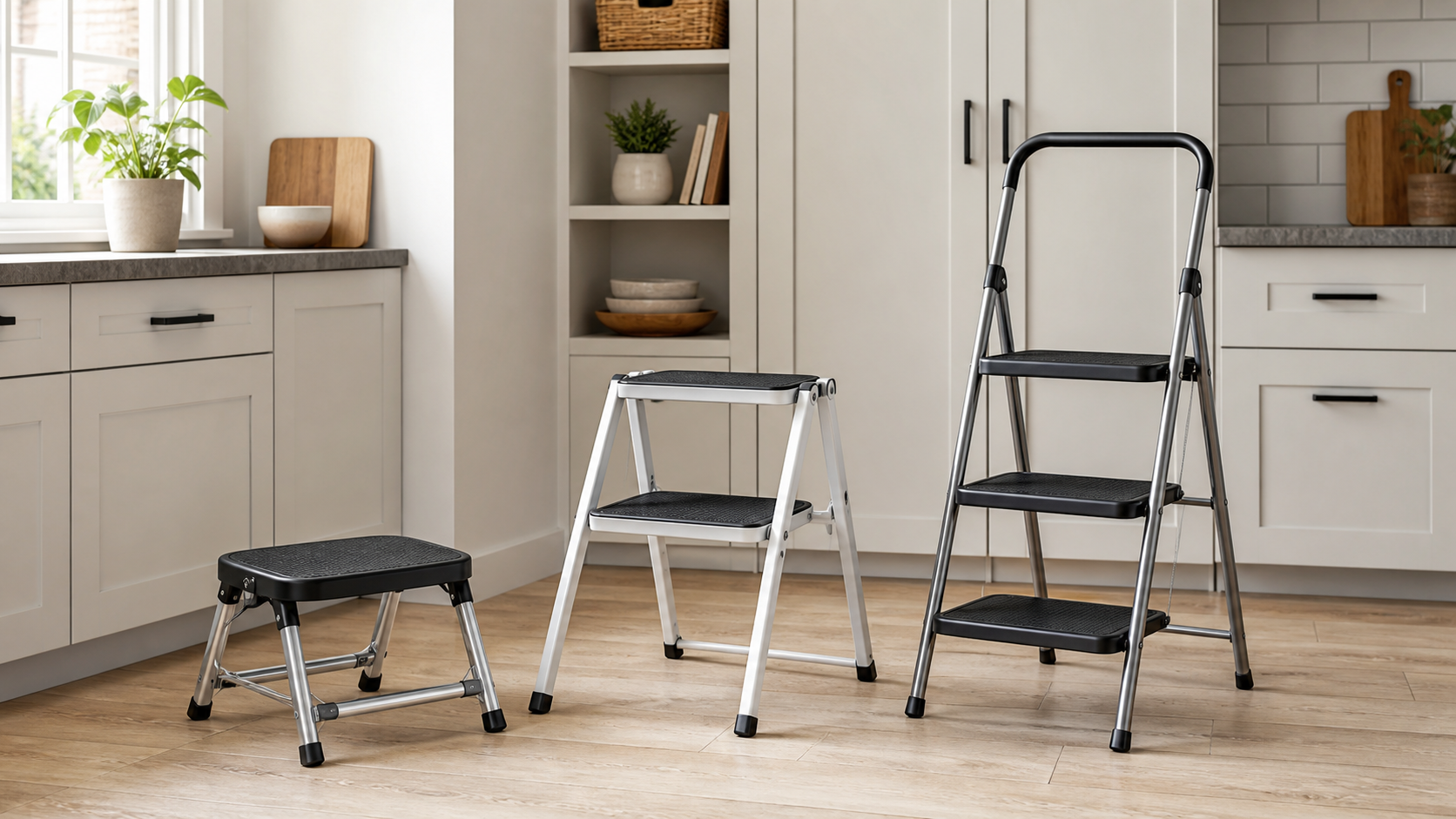
Product-category guide
Compare folding stools by reach, stability, and storage
Start with the shelf height you need to reach, then verify the maker's intended use, rated capacity, open footprint, platform size, locking setup, folded depth, and floor compatibility.
This is a best-fit comparison framework, not a ranked review or a claim that we tested individual stools. A seller's use of words such as “heavy duty” is not a substitute for current manufacturer instructions. Confirm the intended user, maximum rated load, setup directions, warnings, dimensions, and warranty before buying or using one.
Quick Picks by Home Setup
- Best for low kitchen shelves: a wide one-step folding stool with a non-slip standing surface and four floor-contact points.
- Best balance for most small homes: a two-step model with broad treads, a positive locking or opening mechanism, and a top rail designed to steady the user if the maker permits it.
- Best for occasional higher indoor reach: a three-step model with a roomy top platform and handrail, only when its open footprint fits fully on a level floor.
- Best for narrow storage: a stool whose published folded depth fits beside an appliance or inside a closet without blocking access or ventilation.
- Best to skip: any stool that is too short for the task, wobbles, has damaged locks or feet, or would be used on stairs, wet floors, uneven ground, or for repair work beyond its instructions.
Choose Reach Before Number of Steps
Measure the highest shelf you routinely need, then consider the standing height the manufacturer allows—not just the product's overall height. Your comfortable reach varies with your height and the task. You should not need to stand on tiptoe, lean sideways, or use a step the manufacturer says is not a standing surface.
A taller stool is not automatically better. More steps usually mean a larger open footprint, more weight, and a longer folded frame. For a shelf that is only slightly out of reach, a broad single step may be simpler to open and easier to store. If the job requires prolonged work, two hands, force, or reaching overhead around electrical or repair hazards, a compact household stool may be the wrong access tool.
Comparison Framework
One-Step Folding Stools
A low folding platform works for everyday cabinets, closet rods, and other modest reach gaps. Its low center of gravity and small stored size are useful in apartments.
Choose this type if: one stable step lets you face the task without stretching or leaning.
Watch out for: children's plastic folding stools sold beside adult-use products, finger-pinch points, small platforms, and models whose legs do not lock or spread positively.
Two-Step Stools with a Top Rail
Two-step models are a practical middle ground for upper kitchen cabinets and closet shelves. A top rail can provide a reference point while climbing, but it should be used only as the instructions describe; it does not make sideways reaching safe.
Choose this type if: you need more reach than a single step and have room for the complete open footprint.
Watch out for: narrow lower treads, shallow top platforms, rails too low or high for comfortable use, and frames that can partly fold if not fully opened.
Three-Step Folding Stools
A three-step stool reaches higher storage while remaining easier to store than many household ladders. It also demands more clear floor space and more care during setup.
Choose this type if: the maker approves the task and standing position, and you can climb while facing the steps with the stool fully open.
Watch out for: treating it like a repair ladder, standing above the permitted step, placing it behind a swinging door, or using it where counters force you to twist.
Compact Handle-Free Designs
Stools without a top rail can fold shorter and fit under beds or low closet shelves. Their small stored size may come at the cost of an easy handhold while stepping up or down.
Choose this type if: the reach is low, the platform is generous, and you can climb and descend comfortably according to the instructions.
Watch out for: choosing storage size over a stable stance. If balance or confident descent is a concern, use a different access solution and seek appropriate assistance.
Must-Have Features
- Clear adult-use instructions: Confirm the model is intended for the user and task; do not infer this from appearance.
- Published rated capacity: Follow the manufacturer's total-load limit, including the user and anything carried. Do not rely on marketplace copy alone.
- Positive open position: Hinges, spreaders, or locks should be fully engaged exactly as directed before the first step.
- Broad standing surface: The permitted platform or tread should fit your feet without forcing an awkward stance.
- Sound, non-slip feet: All feet should sit flat and be intact, clean, and suitable for the floor surface.
- Visible condition: Hinges, fasteners, rails, treads, and feet should be easy to inspect before each use.
Nice-to-Have Features
- Top rail: Useful for climbing orientation when it is designed and positioned for that purpose.
- Padded carry grip: Makes a heavier steel stool easier to move between rooms.
- Wall-friendly bumpers: Can reduce scuffs while stored, though they do not replace secure placement.
- One-hand fold: Convenient only if the release cannot be triggered during normal use and fingers stay clear of hinges.
- Replaceable feet: Helpful because worn or missing feet are a reason to stop using the stool until properly repaired.
Measure the Open and Folded Footprints
For use, check open width and depth at the feet, not just the tread width. Mark that footprint with painter's tape where the stool will normally stand. Open cabinet and room doors, drawers, and nearby appliances. The entire stool needs a firm, dry, level surface away from traffic; no foot should sit on a rug edge or floor transition.
For storage, compare folded height, width, and depth with the narrowest point of the intended spot. Leave appliance vents, plumbing, electrical panels, and shutoffs accessible. A freestanding stool should not be left where children can climb it; follow the maker's storage guidance and household needs.
Materials, Weight, and Maintenance
Steel frames are common and can feel substantial, but they may be heavier to carry and can develop rust if stored damp. Aluminum models can be lighter, while plastic platforms may be easy to wipe; material alone does not establish strength or stability. Compare the finished product's instructions and rated load.
Keep treads and feet clean and dry. Before use, look for loose fasteners, cracked plastic, bent frames, worn feet, corrosion, or a mechanism that no longer opens smoothly. Do not improvise repairs, add height with objects, or use a damaged stool. Contact the manufacturer about approved parts or replacement.
Who Should Skip a Foldable Step Stool
Skip this category if you cannot climb and descend while facing the steps, cannot maintain a centered stance, or need to carry a bulky item that prevents secure climbing. A reachable storage redesign, a grabber for suitable lightweight objects, or help from another person may solve the home problem without climbing.
A small folding stool is also the wrong tool for stairs, uneven outdoor ground, wet areas, electrical work, heavy repair work, or any task outside its instructions. If the job needs a ladder, specialized access equipment, or a qualified professional, do not substitute a compact stool because it is already in the closet.
Bottom Line
For many small homes, a well-made two-step stool offers the best compromise: enough reach for routine upper storage, broad treads, a useful top rail, and a folded profile that can fit in a closet. A one-step platform is better when the reach gap is small; a three-step model makes sense only when its larger footprint and permitted use fit the task.
Choose the minimum height that lets you work without stretching, then verify intended use, total rated load, open footprint, permitted standing surfaces, locks, feet, and folded dimensions. For the same practical approach to other home purchases, use the home product category buying frameworks guide.