Best Freestanding Pantry Cabinets for Small Kitchens
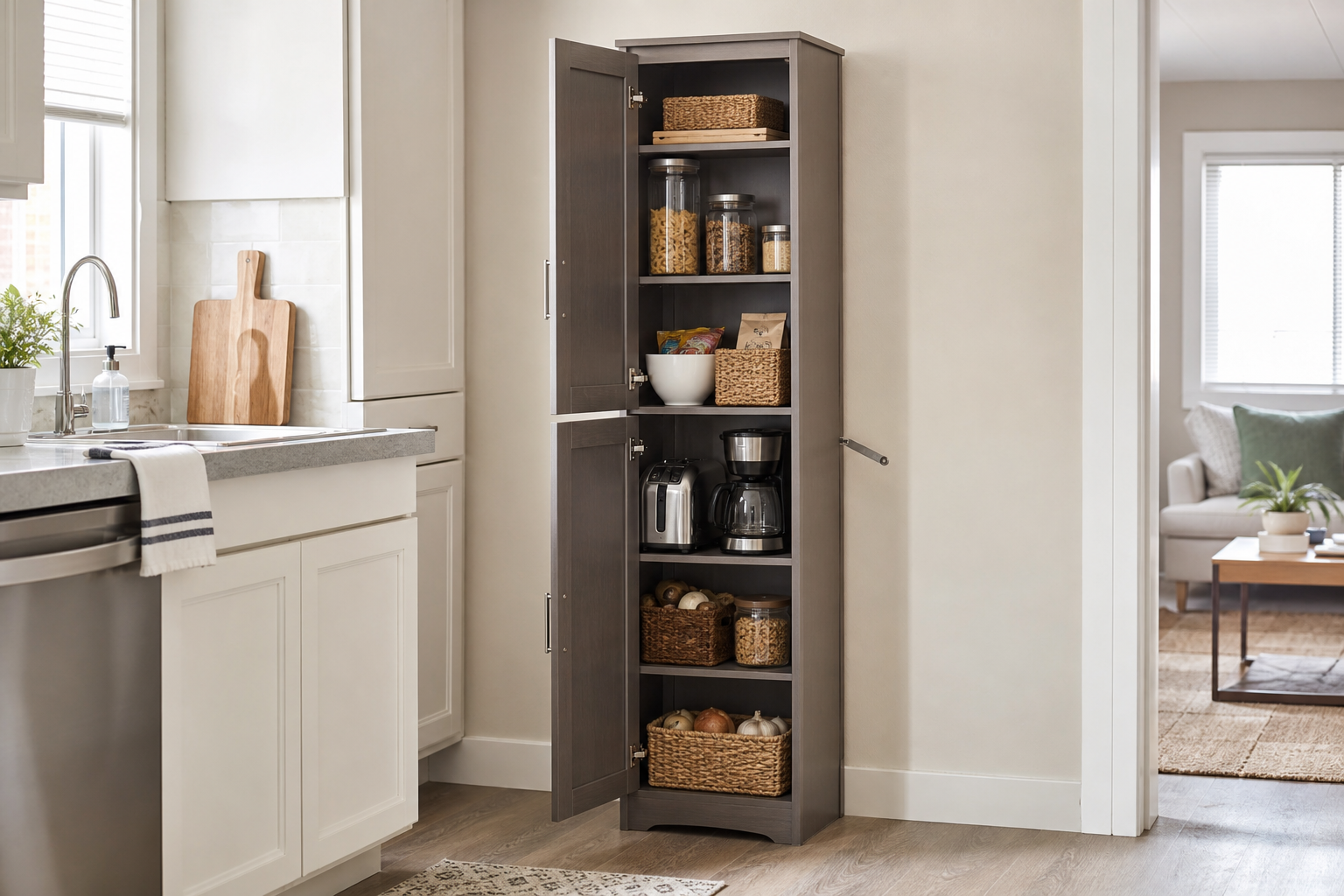
A freestanding pantry cabinet can give a pantryless kitchen a useful home for food and small appliances—but only if the cabinet fits the floor, doors can open, shelves match what you store, and the finished unit can be secured as its maker requires.
As an Amazon Associate, The Good Home Doc may earn from qualifying purchases.
Product-category guide
Compare freestanding pantry cabinets
Start with cabinets that fit your measured space, then check shelf layout, door swing, anti-tip instructions, assembly, and cleanup before choosing one.
This is a best-fit comparison framework, not a ranked review or a claim that we tested individual cabinets. It helps you choose the right cabinet format for a small kitchen and avoid buying a tall box that technically fits the wall but fails in daily use.
Quick Picks by Kitchen Problem
- Best for most pantryless kitchens: a medium-height cabinet with adjustable shelves, a wipeable interior, and doors that clear nearby handles and walkways.
- Best for a very narrow wall: a tall single-door cabinet, provided the manufacturer allows its intended placement and it can be anchored correctly.
- Best for mixed food and appliances: a wider cabinet with multiple adjustable shelves and one taller bay for a mixer, blender, or bulk containers.
- Best for renters: a lower, broader cabinet if wall anchoring is not permitted; do not ignore required anti-tip hardware.
- Best for awkward door clearance: sliding-door or open-shelf storage, though both trade away some dust protection or full access.
What to Measure Before Shopping
Measure the wall width and usable height, but also record the baseboard depth, nearby outlets, floor vents, window trim, cabinet handles, refrigerator door swing, and the walking path. Note the cabinet's assembled dimensions rather than its shipping box.
Use painter's tape to mark the closed footprint on the floor. Then mark the depth with doors and drawers fully open. A 16-inch-deep cabinet can need considerably more room during breakfast when someone is standing in front of it.
Finally, measure the tallest and widest things you actually want to store. Cereal boxes, countertop appliances, bulk paper goods, and storage bins need different shelf spacing. Advertised capacity matters less than whether the interior works with your grocery routine.
Comparison Framework
Tall Narrow Cabinets
These use vertical wall space and preserve more floor width, making them tempting for galley kitchens and open-plan apartments.
Choose this type if: the wall is narrow, your storage is mostly lightweight dry goods, and you can follow all anchoring instructions.
Watch out for: tipping risk, narrow shelves that waste space around large packages, limited access at the top, and doors that collide with counters or trim.
Medium-Height Double-Door Cabinets
A broader, shorter cabinet is often easier to load and may feel less imposing in a small kitchen. The top can also serve as a landing area, if the manufacturer permits that use and you keep it uncluttered.
Choose this type if: you have enough wall width, want a more flexible shelf arrangement, and prefer frequently used food at reachable heights.
Watch out for: wide door swing, a deeper footprint, a top that becomes a clutter pile, and center dividers that prevent wide items from fitting.
Cabinets With Drawers
Drawers can keep packets, wraps, and small tools from disappearing behind larger boxes. They also add hardware, assembly steps, and clearance requirements.
Choose this type if: small loose items are a major part of the storage problem and the drawer can open without blocking kitchen traffic.
Watch out for: shallow drawers that do not fit your items, limited load guidance, difficult-to-clean runners, and drawer fronts that compete with adjacent handles.
Open or Partly Open Pantry Cabinets
Open shelving makes inventory visible and avoids door clearance, but it puts food packaging and appliances on display and exposes everything to kitchen dust and grease.
Choose this type if: you use matching bins, rotate food often, and can wipe shelves regularly.
Watch out for: visual clutter, unstable stacking, more frequent cleaning, and open shelves that tempt you to overload the unit.
Must-Have Features
- Adjustable shelves: At least some shelves should move so the cabinet can handle changing packages and appliances.
- Clear load guidance: Follow the maker's per-shelf and total capacity limits; weight should be distributed rather than concentrated on one shelf.
- Anti-tip provision: Tall storage furniture should include clear stability instructions and compatible hardware for the intended wall and placement.
- Useful door clearance: Hinges should allow access to shelf edges without the doors blocking the kitchen path.
- Wipeable interior: Smooth sealed shelves make crumbs and small spills easier to find and clean.
- Realistic assembly instructions: Check the package weight, parts count, required tools, and whether the unit should be assembled by two adults.
Nice-to-Have Features
- Soft-close hinges: Pleasant in a small shared kitchen, though sound construction and correct door alignment matter more.
- Removable shelf liners: Helpful for crumb cleanup, as long as they do not trap moisture or interfere with shelf clips.
- Raised base: Can make floor cleaning easier, but confirm the design remains stable and does not create an unreachable dirt gap.
- Interior door racks: Useful for light packets and spices when the door and hinges are designed for the added load.
- Leveling feet: Helpful on slightly uneven floors, but they are not a substitute for required anchoring.
Stability and Renter Limits
Tall, narrow furniture can tip when doors or drawers are open, weight is placed high, or a child pulls on it. Use the anti-tip hardware and wall fasteners specified by the manufacturer, and confirm the fastener is suitable for the wall. If you are unsure about the wall construction or safe attachment, use a qualified installer.
Renters should check the lease or ask the property manager before drilling. If required anchoring is prohibited, skip that cabinet and choose a lower, wider storage format whose instructions fit the allowed setup. Do not treat heavy cans on the bottom shelf as a replacement for required hardware.
Shelf Setup and Maintenance
- Put heavier items low. Store cans, drinks, and small appliances on lower shelves within the stated load limits.
- Keep daily food reachable. Reserve eye-level shelves for items used each week and higher shelves for light backstock.
- Leave shelves visible. Shallow bins can group packets, but deep opaque tubs can hide expired food and consume usable depth.
- Protect access points. Do not cover outlets, vents, plumbing access, shutoffs, or appliance ventilation.
- Clean crumbs promptly. Empty one shelf at a time, follow the finish's care directions, and let the surface dry before restocking.
- Recheck hardware. After assembly and periodically during use, follow the maker's directions for door alignment, shelf supports, and fasteners.
Who Should Skip a Freestanding Pantry Cabinet
Skip this category if the only available location blocks an exit, narrows a busy walkway, covers a vent or outlet, crowds an appliance, or prevents a nearby door from opening fully. An over-the-door pantry organizer or a slim rolling cart may fit better when floor space is the hard limit.
Also skip tall cabinets when required anchoring is not possible, or when your main problem is dampness, pests, or a damaged kitchen surface. Storage furniture does not solve those conditions; report rental problems or consult the appropriate qualified professional first.
Bottom Line
For most small kitchens, the best freestanding pantry cabinet is a stable medium-height or tall cabinet that fits the fully open footprint, offers adjustable shelves, has a cleanable interior, and can be secured exactly as directed. Measure the room and your largest stored items, choose the door format around traffic, and skip any cabinet whose stability or installation needs do not fit your home.
For the broader plan—what belongs in a cabinet, on a cart, over a door, or elsewhere—continue with the small-home organization systems guide.