Best Slim Rolling Carts for Small Kitchens and Bathrooms
A slim rolling cart earns its space when it fits the gap with room to roll, keeps everyday items reachable, and stays steady when you pull it out. The wrong cart wastes a narrow opening, catches on trim, or becomes top-heavy after a few tall bottles are added.
As an Amazon Associate, The Good Home Doc may earn from qualifying purchases.
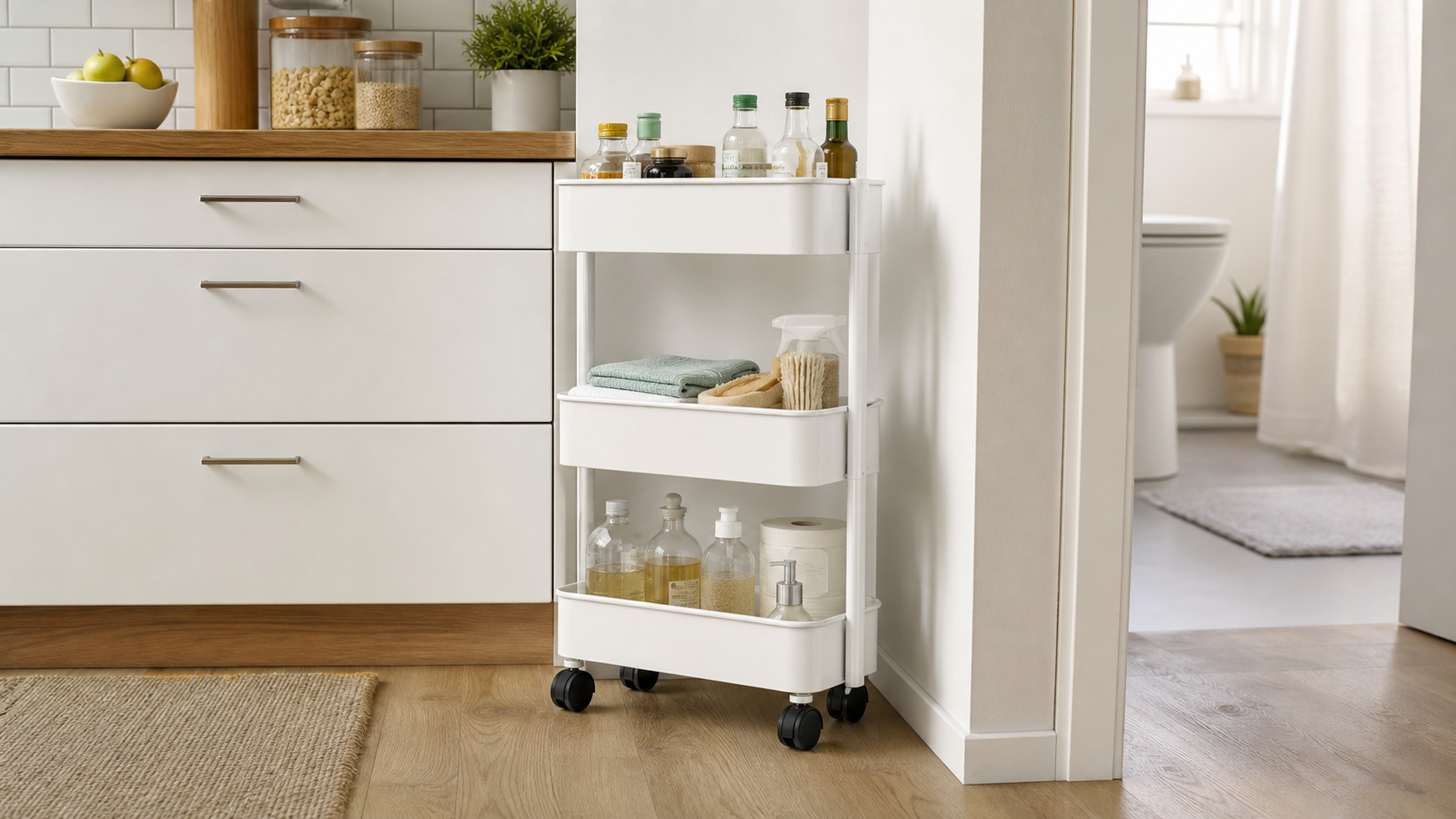
Product-category guide
Compare slim rolling carts
Measure the gap first, then compare carts by usable shelf size, wheel clearance, stability, and material care.
This is a category-based best-fit guide, not a test ranking. Product dimensions and load limits vary, so confirm the maker's current measurements and instructions before buying. A cart should support an existing routine; it should not block doors, appliance ventilation, plumbing access, or a safe walking path.
Quick Picks by Situation
- Best for a very narrow gap: a straight-sided three-tier cart with external wheels no wider than the frame and a pull handle you can reach from the front.
- Best for kitchen bottles and jars: a rigid metal or easy-clean plastic cart with raised shelf lips and enough vertical clearance for the tallest container.
- Best for a humid bathroom: a rust-resistant plastic or properly coated metal cart with open shelves that drain and wipe clean.
- Best for frequent roll-out access: a cart with four smoothly turning casters, a stable handle, and enough side clearance that it will not scrape cabinets.
- Best when stability matters most: a wider utility cart used in an open corner rather than an ultra-narrow gap cart.
Measure the Real Gap, Not Just the Cart
Measure width at the front, middle, and back of the opening. Baseboards, door trim, cabinet faces, pipes, and uneven walls can make the usable gap smaller than it looks. Use the narrowest measurement and leave working clearance on both sides; a cart that exactly matches the gap may bind as soon as it is loaded.
Measure depth from the front edge to the first obstruction, then check height under counters, towel bars, windowsills, and wall-mounted fixtures. Finally, include the casters in the total dimensions. Wheels, axle caps, and handles sometimes extend beyond the advertised shelf footprint.
Comparison Framework
Ultra-Slim Gap Carts
These narrow plastic or metal carts are designed to slide beside a cabinet, vanity, refrigerator, or laundry appliance. They use otherwise awkward space well, but the narrow frame limits capacity and stability.
Choose this type if: the opening is genuinely narrow and you are storing light, frequently used items.
Watch out for: small wheels, flexible frames, shallow shelves, and tall loads that make the cart top-heavy.
Three-Tier Utility Carts
Standard utility carts are usually wider than gap carts but roll more smoothly and carry mixed items more confidently. Raised basket-style shelves help keep bottles from sliding off.
Choose this type if: you have an open wall, corner, or wider space and need a cart that moves often.
Watch out for: handles or wheels that add width, plus baskets too deep to reach comfortably from the side.
Pull-Out Tower Carts
Tall towers maximize vertical storage and may include a front pull handle. They suit lightweight pantry goods, paper products, or small toiletries better than heavy bottles.
Choose this type if: the cart stays inside a gap and is pulled straight out for access.
Watch out for: wobble, poor weight balance, and shelves hidden by the wall when the cart cannot pull out fully.
Fixed Narrow Shelving
A narrow shelf is not mobile, but it can be the better answer when items need to stay visible and the floor is uneven, carpeted, or interrupted by trim.
Choose this type if: the storage spot is permanent and rolling access adds no real benefit.
Watch out for: wall-attachment or anti-tip requirements, especially with tall furniture. Follow the manufacturer and lease rules.
Must-Have Features
- Verified overall width: Count protruding wheels, fasteners, and handles, not only the shelf width.
- Usable shelf clearance: Measure the tallest bottle, jar, cleaning tool, or folded stack that will live on each tier.
- Raised shelf edges: A practical lip keeps items aboard when the cart crosses a floor seam or changes direction.
- Cleanable materials: Kitchen spills and bathroom residue call for smooth surfaces without deep seams or absorbent panels.
- Balanced construction: The frame should sit square, with all casters contacting the floor before it is loaded.
- A reachable pull point: You should not need to tug a shelf, bottle, or loose side rail to move the cart.
Nice-to-Have Features
- Locking casters: Helpful for an open-position cart, though locks can be hard to reach inside a tight gap.
- Adjustable shelf spacing: Useful when one tier must hold tall bottles and another holds short containers.
- Removable bins: Easier to wash after a spill than a one-piece frame.
- Ventilated shelves: Helpful for damp bathroom items, provided the openings are not large enough for small products to tip.
- Replaceable casters: Worth considering if the cart will move daily or carry more than light supplies.
Kitchen Fit and Placement
Keep carts away from hot appliance surfaces and do not use one to reduce clearance required by an appliance manufacturer. A gap beside a stove may expose stored goods and cart materials to heat or grease; a gap beside a refrigerator may be part of its ventilation plan. Check the appliance instructions instead of assuming every empty strip of floor is storage space.
For pantry use, put heavier, stable items low and lighter packages above. Do not store household cleaners beside food. If the cart will hold oils or sauces, choose shelves that can contain and clean up small spills without dripping onto the floor.
Bathroom Fit and Moisture
Bathroom carts need materials and hardware suited to routine humidity. Painted or coated metal can work, but chips and fasteners deserve periodic checks. Plastic is easy to wipe down, though a thin frame may flex under large refill bottles.
Leave room to clean the floor and baseboard, and keep the cart clear of doors, toilet access, shower entry, and plumbing shutoffs. A rolling cart can organize toiletries and spare paper goods, but it does not fix persistent dampness, leaks, musty odors, or visible surface damage. Start with the home leaks and moisture prevention guide when moisture is the actual problem.
Load and Stability Rules
Use the manufacturer's stated load limit and treat it as a total system limit unless the instructions clearly specify per-shelf capacity. Spread weight across the shelf rather than concentrating it on one edge. Put heavier items on the lowest tier, keep tall bottles upright, and avoid hanging bags or tools from the top unless the design allows it.
An ultra-narrow cart is not a step, seat, support rail, or child-accessible toy. If children or pets can pull on it, choose a more stable storage location and follow any supplied restraint instructions. Stop using a cart that leans, cracks, loses a wheel, or no longer rolls evenly.
Cleaning and Maintenance
Empty and wipe the shelves often enough that spills do not become sticky or hide under bottles. Check caster axles for hair and debris, tighten accessible hardware according to the instructions, and dry metal parts after wet cleaning. Avoid cleaners that the manufacturer says may damage the finish.
When the cart lives inside a gap, roll it out periodically to clean the floor and inspect the wall, cabinet side, baseboard, and nearby plumbing or appliance area. Hidden storage should not mean hidden leaks, pests, or moisture.
Who Should Skip a Slim Rolling Cart
Skip the category if the opening is too tight to allow side and wheel clearance, if the cart would narrow a walkway, or if it would block a door, vent, outlet, shutoff, or appliance service area. Choose fixed shelves or existing cabinet organizers when you do not need roll-out access.
Also skip an ultra-narrow cart for heavy bulk goods, large detergent containers, glass bottles at child height, or anything that makes the frame lean. A broader utility cart, closed cabinet, or properly installed shelf is usually a better fit for heavier storage.
Five-Step Buying Checklist
- Measure the opening in several places. Record the narrowest width, usable depth, height, trim, and floor transitions.
- List what will live there. Measure the tallest and widest items and estimate whether their combined weight suits the cart.
- Check total product dimensions. Include wheels, handles, fasteners, and the room needed to pull or turn.
- Match materials to the room. Prioritize wipe-clean kitchen surfaces or moisture-tolerant bathroom construction.
- Plan a safe load. Heavy items go low, access stays clear, and the cart must roll without scraping or tipping.
Bottom Line
The best slim rolling cart is the one that fits the narrowest part of the opening with clearance to move, holds your tallest items without overloading the frame, and can be cleaned without a struggle. Choose an ultra-slim gap cart for light supplies in a true dead space, a wider three-tier utility cart for steadier everyday access, and fixed storage when mobility creates more wobble than convenience.