Best Materials for Washable Kitchen Rugs
The best washable kitchen rug is not necessarily the softest or the one with the boldest “machine washable” label. Start with the messes you make, the machine you own, the floor underneath, and the clearance around doors and appliances. Material and construction determine whether the rug is genuinely easy to live with.
As an Amazon Associate, The Good Home Doc may earn from qualifying purchases.
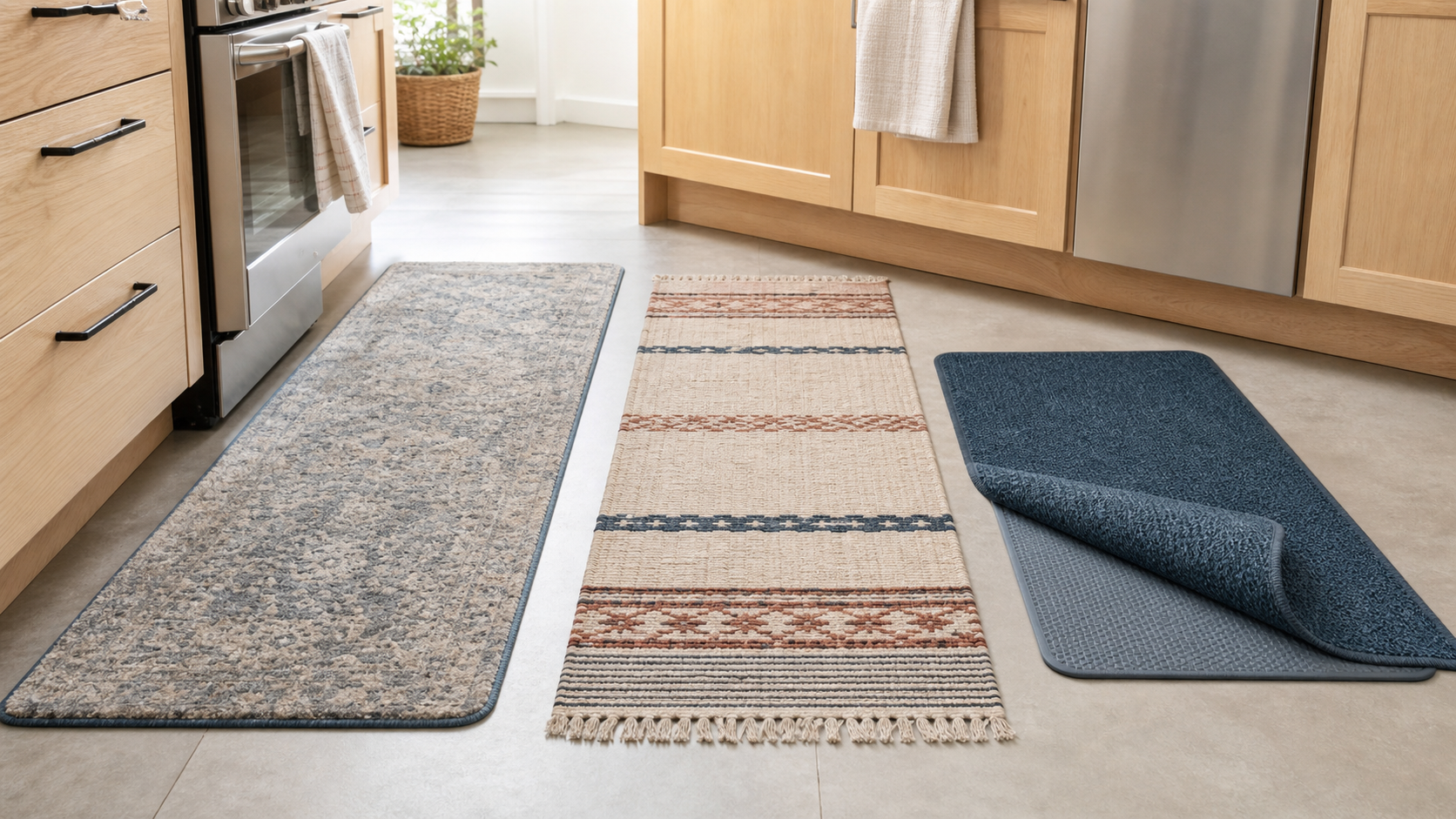
Choose the construction before the pattern: These affiliate searches are shopping starting points, not tested rankings. Confirm the current care label, full dimensions, backing, and washer requirements before buying.
- Browse category: Low-pile washable kitchen rugsA practical starting point for quicker drying and easier vacuuming, provided the backing suits the floor.
- Browse category: Flatwoven cotton kitchen runnersUseful when natural texture and flexible washing matter more than built-in grip.
- Browse category: Two-piece washable rug systemsWorth comparing when a removable top layer fits the washer better than a complete backed rug.
Check the maker’s fiber and backing details, machine capacity guidance, wash temperature, detergent limits, dryer instructions, expected shrinkage, floor compatibility, rug-pad requirements, and return policy. “Washable” does not always mean machine washable or dryer safe.
Quick Picks by Kitchen Routine
- Best for frequent food splashes: a low-pile synthetic rug with a care label that permits routine machine washing and air or low-heat drying.
- Best for a lightweight, flexible runner: flatwoven cotton, if you accept possible shrinkage and use a separate floor-compatible pad where needed.
- Best for a small washer: a two-piece system whose removable top layer fits the machine without tight folding or overloading.
- Best near a swinging door: a thin flatweave after you measure the door’s lowest clearance across its full arc.
- Best for less realignment: a low-profile rug with an integrated backing explicitly approved for the floor finish.
Comparison Framework
Low-Pile Synthetic Rugs
Polyester and other synthetic fibers are common in machine-washable rugs because they can hold color, keep a low profile, and dry faster than a thick cotton weave. Construction matters as much as fiber: a flexible printed top, dense woven surface, and tufted pile can behave very differently in the wash.
Choose one when: the kitchen gets frequent crumbs and splashes, fast drying matters, and the full rug fits the machine described on the care label.
Watch for: heat-sensitive backing, edges that curl after drying, vague fiber descriptions, and stain-resistant language that does not explain cleaning limits.
Flatwoven Cotton Rugs
Cotton flatweaves are flexible, easy to shake out, and often simple to fold into a washer. They usually absorb spills rather than keeping them at the surface. That can help with quick blotting but also means a wet rug may become heavy and need more drying time.
Choose one when: you prefer a natural-feeling weave, can air-dry or follow a low-heat care routine, and do not mind using a separate rug pad.
Watch for: shrinkage, dye transfer, fringe that traps crumbs, bunching underfoot, and a weave that arrives without useful grip.
Two-Piece Washable Rug Systems
These systems separate a thin decorative top from a reusable pad or base. Washing only the top can be easier than putting a whole backed rug into the machine, but the pieces must align correctly and remain compatible over time.
Choose one when: the removable layer fits your washer and you are willing to smooth and reattach it after each cleaning.
Watch for: proprietary replacement tops, corners that lift when the layers are misaligned, debris between layers, and care instructions that differ between the cover and base.
Thicker Tufted and Cushioned Rugs
A thicker rug can feel comfortable at a sink, but added pile and foam also hold more water, take longer to dry, and reduce door or appliance clearance. Some cushioned kitchen mats are wipe-clean products, not washable rugs at all.
Choose one when: the maker explicitly allows the cleaning method you plan to use and no door, drawer, dishwasher, or refrigerator vent passes over it.
Watch for: saturated foam, cracking backing, slow-drying pile, and “washable” instructions limited to spot cleaning.
Must-Have Buying Criteria
- A specific care label: look for water temperature, cycle, detergent, bleach, drying, and machine-capacity instructions—not “easy care” alone.
- Complete dimensions: record length, width, pile height, edge thickness, and any fringe. The bound edge may be thicker than the center.
- Known backing material: verify whether it is latex, rubber-like polymer, fabric, or an unbacked weave and whether the maker lists compatible floors.
- Manageable wet weight: a rug that barely fits dry can overload the machine or become difficult to lift when saturated.
- A realistic drying plan: confirm that there is room to air-dry it flat or that the care label permits the dryer setting available.
- Low, stable edges: no rug is trip-proof. Flat edges and correct placement reduce one common problem, but they still require routine checks.
Measure the Kitchen and the Washer
- Map the work zone. Measure the clear floor in front of the sink or prep area without covering floor vents or appliance access panels.
- Open everything. Swing cabinet and room doors, lower the dishwasher door, and pull drawers through their full travel. Measure the tightest clearance.
- Keep walking paths simple. Avoid placing a rug edge where people pivot, where a chair repeatedly catches it, or where the rug creates an abrupt transition.
- Check the washer manual. Compare the rug maker’s machine guidance with the washer’s capacity and rules for bulky or waterproof-backed items.
- Plan drying space. A rug draped over a narrow rail may stretch or dry unevenly. Follow the label and make sure air can reach both sides.
Backing, Grip, and Floor Finish
An integrated grippy backing is convenient, but it is not universally safe for hardwood, vinyl, laminate, tile, or heated floors. Heat, moisture, cleaning residue, and long contact can affect both backing and finish. Follow both the flooring manufacturer’s and rug maker’s guidance.
For an unbacked flatweave, choose a separate pad sized slightly inside the rug edges and approved for the specific flooring. A pad still needs cleaning: trapped grit can abrade a finish, and trapped moisture can discolor or damage some floors. Lift the rug after a large spill and let the floor and rug dry completely before replacing them.
Cleaning and Maintenance Reality
Vacuum or shake out crumbs before washing so they do not turn into residue in the machine. Treat spills according to the textile label, and never mix cleaning chemicals. Wash the rug by itself when instructed, distribute it evenly, and stop the cycle if the washer pounds or becomes unbalanced.
After drying, check the edges, backing, seams, and overall dimensions before returning the rug to a busy path. Replace it when backing sheds or cracks, edges no longer lie flat, layers stop aligning, or persistent odor remains after approved cleaning and complete drying.
Who Should Skip a Washable Kitchen Rug
Skip the category if a household member uses a walker, wheelchair, or other mobility aid and the added surface transition creates a snag or stability problem. A bare, floor-compatible surface may be easier to navigate and clean. Anyone with a fall concern should prioritize the individual’s needs over decorative coverage.
Also skip a rug where it would cover a vent, interfere with an appliance, sit in standing water, or block a required doorway. If the kitchen regularly has plumbing leaks rather than routine splashes, address the leak and dry the materials first; a washable rug is not a moisture-control system.
Skip machine-washable models if the rug does not fit the washer and there is no realistic laundromat or hand-cleaning plan. For tracked-in mud and pet traffic at the entrance, an entryway runner chosen for door clearance and washer fit is the better decision path.
Bottom Line
For most busy kitchens, a low-pile synthetic rug is the easiest material to maintain when its backing suits the floor and the whole rug fits the washer. Cotton flatweaves favor flexibility and simple texture but need shrinkage and grip planning. Two-piece systems make the washable layer smaller, with extra alignment and replacement-part tradeoffs. Measure every clearance, read the full care label, and choose the construction that fits the cleaning routine you will actually follow.