Best Washable Entryway Runners for Mud and Pets
A washable runner earns its floor space when it catches several wet or gritty steps, stays put under fast-moving feet and paws, and still fits the household's real laundry setup. The right choice is less about a fashionable pattern than measured door clearance, backing, washer fit, and how quickly the rug can return to service.
As an Amazon Associate, The Good Home Doc may earn from qualifying purchases.
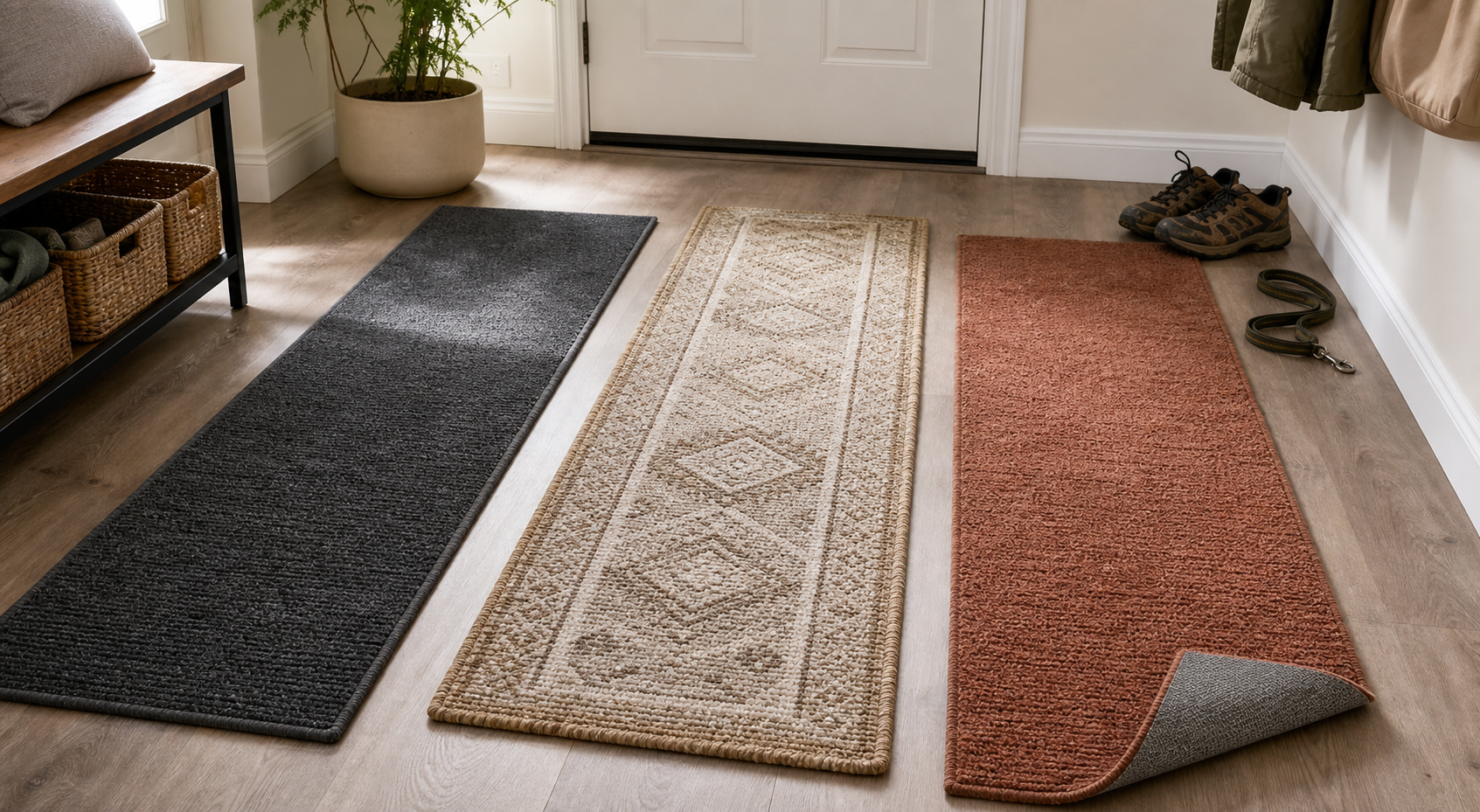
Product-category guide
Start with the runner your doorway and washer can handle
Measure the walking lane and door sweep first, then confirm the full rug will fit your washer and approved drying method. Compare low-pile, absorbent, and two-piece washable systems only after those limits are clear.
This guide compares runner types and fit criteria; it is not a hands-on test or a ranking of named products. Verify current dimensions, care instructions, backing compatibility, and warranty terms on the product listing. A “machine washable” label does not mean every runner fits every home washer.
Quick Picks by Entryway Problem
- Best for low door clearance: a tightly bound, low-pile flatweave with a total listed thickness comfortably below the measured door gap.
- Best for wet paws: a short, absorbent surface with a water-resistant or floor-compatible backing and simple wash instructions.
- Best for frequent washing: a lighter one-piece runner or removable-cover system that fits the washer without tight folding.
- Best for hiding everyday grit: a medium-tone, small-scale pattern that makes debris less obvious between vacuuming sessions.
- Best for a long indoor path: a flat runner sized to cover the first few steps without reaching a doorway, stair edge, or floor transition.
Selection Criteria That Matter
- Door and transition clearance: Measure the lowest gap across the full door swing and include any weather stripping. A runner should not bunch, drag, or stop the door from closing normally.
- Washer and dryer fit: Compare the rug's listed dimensions and weight with appliance guidance. Oversized or water-heavy rugs may require a large-capacity machine or laundromat.
- Backing-to-floor match: Rubber-like, latex, and coated backings can behave differently on wood, vinyl, laminate, and heated floors. Follow both the rug maker's and flooring maker's guidance.
- Edge stability: Bound edges should lie flat. A loose corner or rippled backing creates a trip and snag problem, especially in a fast entry.
- Drying time: Thick absorbent rugs may catch more water but stay out of service longer. Check whether air drying or machine drying is required and where a wet runner can dry flat.
- Debris release: Dense textures can hold grit and pet hair. A surface that vacuums easily may be more practical than the plushest option.
Comparison Framework
Low-Pile Flatweave Runner
A flatweave is the safest starting point for tight doors and narrow traffic lanes. It is generally lighter to move and easier to vacuum, though it may absorb less slush than a textured mat-style runner.
Choose it if: clearance and easy routine cleaning matter more than maximum water absorption.
Watch out for: separate rug pads that extend beyond the edge, corners that will not flatten, and a loose weave that catches pet claws.
Absorbent Short-Pile Runner
This type suits wet-paw and rainy-day entries when the surface can hold moisture until cleanup. Keep pile short enough that the rug still clears the door and releases hair during vacuuming or washing.
Choose it if: the runner sits fully indoors on a compatible floor and can be washed and dried often.
Watch out for: damp backing left on sensitive flooring, slow drying, trapped grit, and marketing language that implies unlimited absorbency.
Removable-Cover Runner System
A washable top layer attached to a reusable pad can make the textile portion lighter to launder. The tradeoff is a more involved reassembly process and dependence on the maker's matching sizes.
Choose it if: the cover fits the washer easily and the base is explicitly suitable for the floor and entry conditions.
Watch out for: misaligned edges, wrinkles after reattachment, proprietary replacement covers, and dirt caught between layers.
Indoor-Outdoor Washable Runner
A quick-drying synthetic weave may fit entries where grit and frequent spot cleaning matter most. “Indoor-outdoor” describes intended versatility, not automatic suitability for every finished floor.
Choose it if: easy debris removal and faster drying outweigh softness.
Watch out for: scratchy trapped grit, stiff edges, a backing that shifts indoors, and care instructions that allow hosing but not machine washing.
Measure Before You Buy
- Open the door through its complete swing and measure the lowest clearance point.
- Measure usable floor length and width without covering a threshold, vent, stair approach, or another door's path.
- Leave visible hard floor around the runner so curling and moisture can be spotted quickly.
- Check appliance capacity and drum dimensions against the maker's care directions; do not assume a long runner can be packed tightly into a small washer.
- Mark the proposed outline with painter's tape and walk the path while carrying bags or holding a leash.
Must-Haves vs Nice-to-Haves
Must-Haves
- A total thickness that clears the door with room to spare.
- Care instructions compatible with the washer, dryer, or drying space actually available.
- A backing or rug-pad plan approved for the finished floor.
- Flat, well-finished edges that remain visible for routine inspection.
- A width that covers the main step path without narrowing safe passage.
Nice-to-Haves
- A pattern that disguises light debris between cleaning days.
- A lighter color option for seeing tracked dirt sooner or a medium tone for a calmer look.
- Replacement covers in a two-piece system.
- A construction that can be vacuumed without lifting at the edges.
Cleaning and Floor Care
Shake or vacuum loose grit before washing so abrasive debris does not stay against the fibers. Follow the product label for water temperature, detergent, spin, and drying. Do not add bleach, high heat, or fabric softener unless the maker specifically permits it; these can affect fibers or backing.
Lift the runner regularly to inspect and clean the floor below it. Deal with trapped moisture promptly and identify the source rather than treating the rug as moisture containment. If water is entering from a leak, damaged threshold, or building envelope problem, move the rug and contact the landlord or a qualified professional as appropriate.
Who Should Skip a Washable Runner
Skip a runner if it would overlap stairs, thresholds, vents, or two competing door swings; if the floor maker prohibits the available backing; or if no appropriate washing and drying setup is available. A smaller apartment doormat or a rigid boot tray may be easier to manage.
Also skip thick absorbent runners when the door gap is tight or when anyone in the household is especially vulnerable to trip hazards. A clear hard-floor route with a compact mat outside the walking line can be the better choice.
If the rug will live in a cooking zone rather than an entrance, use the separate washable kitchen rug material guide; kitchen spills, appliance clearance, backing, and drying create a different decision from mud-control runners.
Bottom Line
For most muddy, pet-used entries, a low-pile washable runner with flat bound edges and floor-compatible grip is the most versatile choice. An absorbent short-pile runner makes sense when wet paws are the larger problem, while a removable-cover system helps only if reassembly is realistic. Measure the door and traffic path, confirm washer fit, and plan where the runner will dry before choosing a pattern.