Best Storage Bin Materials for Garages and Attics
The best storage bin material for a garage or attic depends less on color than on temperature swings, dust, occasional dampness, stacking load, and how often you need the contents. Start with the space and the item, then compare the resin information, wall stiffness, lid design, latches, visibility, and safe lifting weight.
As an Amazon Associate, The Good Home Doc may earn from qualifying purchases.
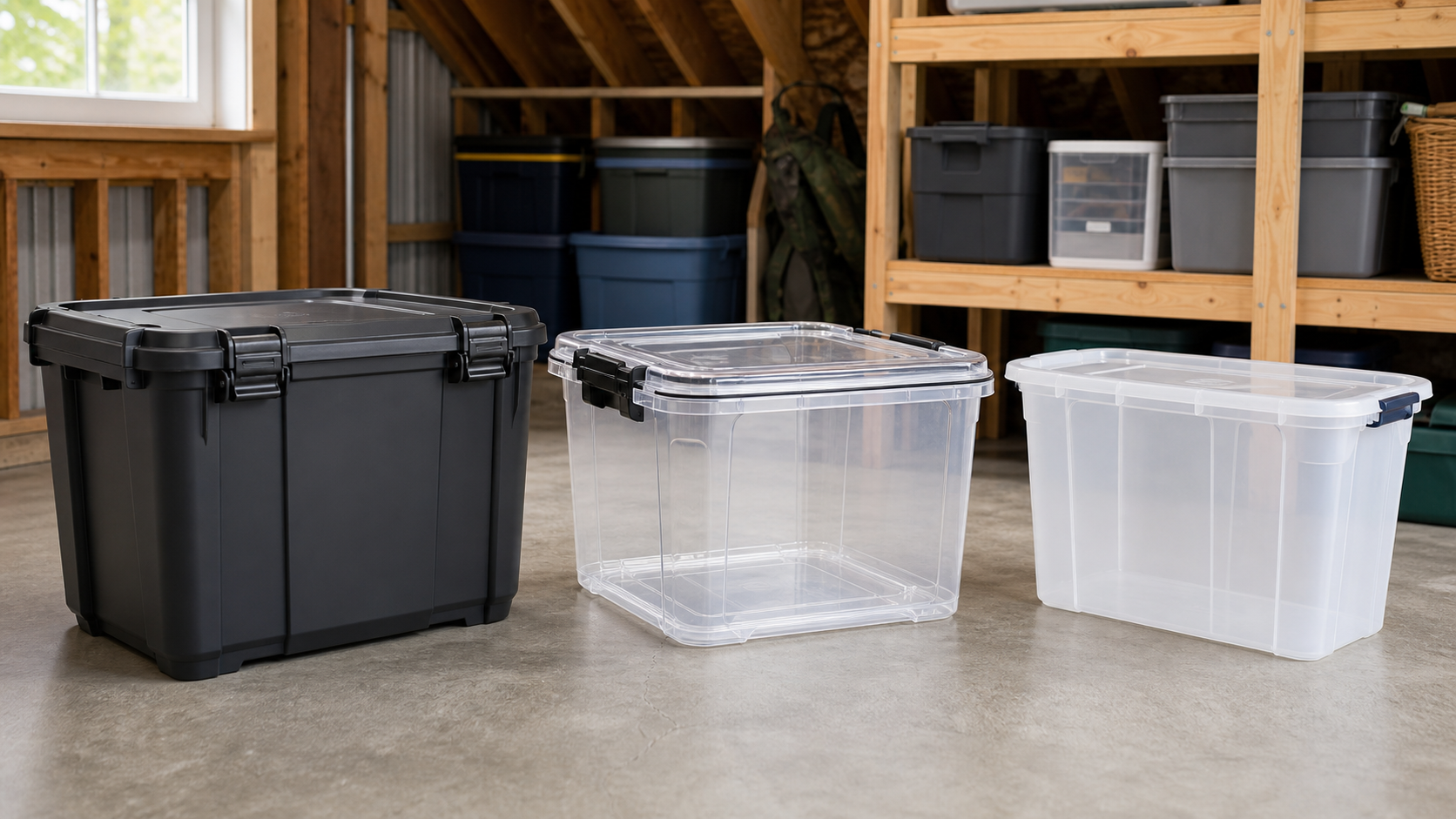
Choose the construction before the capacity: These affiliate category links are shopping starting points, not tested rankings. Confirm current material, dimensions, and environmental guidance with the manufacturer.
- Browse category: Heavy-duty opaque storage totesUseful for tools, outdoor gear, and light-sensitive contents when sturdy walls and positive latches matter.
- Browse category: Clear gasket-lid storage binsEasier to identify at a glance; compare gasket continuity, latch replacement, and the maker's temperature guidance.
- Browse category: Lightweight translucent totesA lower-cost fit for lighter, frequently accessed contents in a dry, moderate storage area.
Verify outside and inside dimensions, empty weight, resin type when stated, temperature and stacking guidance, latch and hinge design, lid availability, wheel limits, and return policy. A gasket or tight-looking lid does not make a consumer tote waterproof, airtight, pest-proof, or safe for every attic or garage.
This is a material-and-construction comparison, not a brand ranking or hands-on test. Manufacturers do not always identify the plastic resin or publish cold, heat, or stack-load limits. When those facts are absent, do not infer performance from a “heavy duty” label alone.
Quick Picks by Storage Condition
- Best for rough garage handling: a stiff-walled opaque tote with reinforced corners, replaceable positive latches, and published use guidance that fits the space.
- Best for finding contents quickly: a clear tote with a latching lid, provided sunlight exposure is limited and the contents are not light-sensitive.
- Best for dusty shelves: a latching tote with an even lid rim or gasket-style closure; treat it as dust-resistant, not airtight.
- Best for light seasonal items: a basic translucent tote that stays easy to lift and is not supporting a tall, heavy stack.
- Best for floor-level access: a wheeled tote whose wheels, axle area, handle, and loaded capacity are documented for the intended surface.
Comparison Framework
Heavy-Duty Opaque Plastic
Thicker walls, reinforced rims, and positive latches can make an opaque tote less likely to bow during ordinary handling. The dark material also hides clutter and limits light reaching the contents. The tradeoffs are weight, poor visibility, and the temptation to load a large tote beyond what one person can safely move.
Choose this construction when: the bin will hold tools, outdoor supplies, sports gear, or sturdy seasonal items and will be handled more than a lightweight closet tote.
Watch for: vague load claims, thin lid centers, latches molded as fragile living hinges, and stacks supported mainly by the lid instead of the rim.
Clear Rigid Plastic
Clear walls reduce the need to pull down several bins to find one item. That is especially useful on deep shelves. Clear plastics can show scuffs and may become less forgiving after environmental exposure, so current maker guidance matters more than appearance.
Choose this construction when: visibility prevents repeated lifting and the bin can stay out of direct sun.
Watch for: brittle-feeling corners, an oversized bin that becomes too heavy, contents that fade in light, and a clear body paired with a loose snap-on lid.
Lightweight Translucent Plastic
A basic translucent tote is inexpensive and easy to carry empty. It can work for soft decorations, lightweight household extras, and items accessed often. Flexible walls and lids are less suited to heavy stacks or sharp contents.
Choose this construction when: the contents are light, the space is dry and relatively moderate, and bins sit individually or in a short supported stack.
Watch for: bowing walls, lids that pop loose, handles cut into thin rims, and a footprint that does not sit fully on the shelf.
Gasket-Lid Bins
A compressible gasket can reduce gaps around the lid and help limit ordinary dust and drafts. Performance depends on a continuous gasket, even rim, enough latches, and careful closure. It does not justify submerging the bin or storing valuables where leaks, condensation, or flooding are possible.
Choose this construction when: dust control matters and the maker supplies useful closure and environmental information.
Watch for: a gasket that twists or falls out, corners without latch pressure, replacement lids that are unavailable, and marketing that never defines the claimed seal.
Material Labels: Useful, but Not the Whole Answer
Polypropylene and polyethylene are common storage-tote materials, but a resin name alone does not tell you wall thickness, additives, hinge life, impact behavior, or the temperature range of the finished bin. Two totes made from the same broad plastic family may perform differently because of geometry and manufacturing.
Use a stated resin type as one data point. Give more weight to finished-product instructions, temperature limits, intended use, warranty exclusions, and whether the lid and latches remain available. If the seller omits those basics, buy conservatively for light-duty use rather than assuming industrial performance.
Must-Have Selection Criteria
- Environmental fit: Follow the maker's finished-product temperature and location guidance. Attics can become much hotter than living space; garages may freeze or become damp.
- A supported footprint: The entire base should fit the shelf or platform without hanging over an edge.
- A lid that carries the intended stack: Look for reinforced rims and published stacking guidance rather than assuming a flat lid is load-bearing.
- Positive, serviceable latches: Separate latches may be easier to replace than thin flexing tabs molded into the body.
- A liftable loaded weight: Smaller bins often beat one huge tote, particularly on attic stairs or overhead shelves.
- Contents compatibility: Keep sharp edges from pressing on walls and do not store materials the bin maker excludes.
Nice-to-Have Features
- Replaceable lids and latches: Extends usefulness when a closure part fails before the bin body.
- Label areas on two sides: Lets you identify an opaque tote regardless of shelf orientation.
- Nesting when empty: Saves space, but confirm that nesting does not make full bins awkward to separate.
- Wheels for floor storage: Helpful on a smooth floor, but wheels reduce flat bearing area and can complicate stacking.
- Comfortable side grips: Test whether fingers fit without contacting a sharp rim when the tote is loaded.
Measure the Space and the Route
- Measure shelf width, usable depth, vertical clearance, and any door, rafter, duct, or garage-door-track obstruction.
- Measure the narrowest doorway, hatch, stair turn, and ladder opening on the route.
- Use outside bin dimensions for fit and inside dimensions for the contents; the difference can be substantial.
- Leave room to release latches and lift the lid without pulling down every bin above it.
- Set a loaded-weight limit before choosing capacity. Divide dense items among smaller totes.
- Plan labels and an inventory so rarely used bins can stay lower in the stack.
What Not to Store in a Hot, Cold, or Damp Space
A good tote cannot make an unsuitable garage or attic safe for sensitive belongings. Important papers, photographs, electronics, medicines, candles, many adhesives and finishes, musical instruments, delicate fabrics, and sentimental items may be damaged by heat, cold, humidity, condensation, or pests even inside a closed bin. Follow product-specific storage instructions and move sensitive items to conditioned space.
Do not use ordinary household totes to contain fuels, propane cylinders, pool chemicals, pesticides, oily rags, or other hazardous materials. Keep such products in their original containers and follow the label, local rules, fire-safety guidance, and facility requirements. A plastic tote can hide a leak or incompatible products rather than making them safe.
Stacking and Placement Cautions
Place the heaviest bins low, keep stacks short, and follow stated stack limits. Do not create a freestanding tower where a person, pet, vehicle, vibration, or garage door could strike it. Inspect lids for sagging, rims for cracks, and walls for bowing.
In an attic, use only areas designed for storage and able to support the intended load. Do not place bins on exposed ceiling drywall, between unsupported joists, against hot equipment, over wiring, or where they block ventilation or service access. If the safe load or suitable storage area is unclear, ask a qualified building professional before adding weight.
Who Should Skip This Category
Skip large plastic totes if the only access is a steep ladder or tight hatch, if you cannot lift the loaded bin with control, or if the shelf does not fully support it. Smaller handled bins, open shelving in conditioned space, or a different storage location may be safer and easier to use.
Also skip garage or attic storage when the contents require controlled temperature or humidity, when there is an active roof or plumbing leak, or when there are unresolved pest, mold, structural, electrical, or fire-safety concerns. Fix or professionally assess the underlying problem before adding containers.
Buying Checklist
- Confirm the space's heat, cold, dust, moisture, sunlight, and access conditions.
- Check outside dimensions, inside dimensions, empty weight, and loaded lifting plan.
- Read the finished bin's temperature, stack, and intended-use guidance.
- Inspect wall stiffness, base support, rim geometry, lid, hinges, and latches.
- Choose clear for visibility or opaque for light control and visual calm.
- Use a gasket as a dust-control feature, not proof of waterproof or pest-proof storage.
- Keep sensitive and hazardous contents out of unsuitable spaces and containers.
Bottom Line
For sturdy garage use, an opaque reinforced tote with positive latches is the most forgiving starting format. For frequently accessed household items, a clear rigid bin can prevent unnecessary lifting. Basic translucent totes fit lighter loads in dry, moderate conditions. Whatever the material, trust specific manufacturer guidance, modest stacks, supported shelves, manageable weights, and appropriate contents—not a vague “heavy duty” label.