Best Drawer Organizer Materials for Kitchens
A drawer organizer can have the right layout and still be wrong for the kitchen. Bamboo, plastic, metal, and lined trays differ in how they handle spills, movement, utensil noise, cleaning, and changing drawer sizes. Start with the material that fits the drawer's messes and maintenance routine, then choose the compartments.
As an Amazon Associate, The Good Home Doc may earn from qualifying purchases.
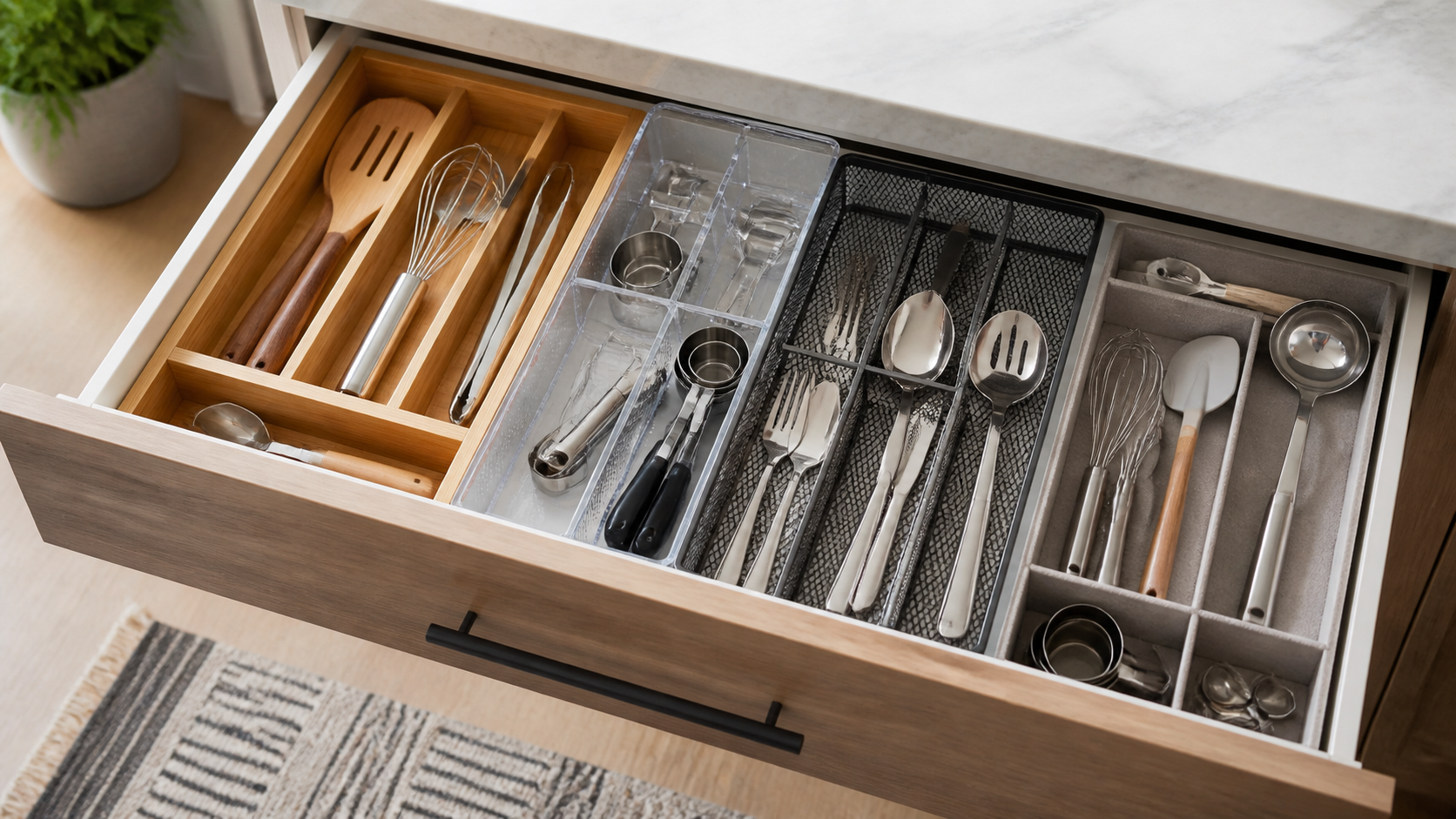
Compare the material that fits your cleanup and drawer:
- Browse category: Compare bamboo drawer organizersWarm-looking rigid trays, including expandable formats, for dry drawers with measured clearance.
- Browse category: Compare washable plastic organizersA practical starting category when easy wipe-downs and modular sizing matter most.
- Browse category: Compare metal mesh organizersRigid, ventilated trays worth checking for coated edges, base grip, and utensil noise.
- Browse category: Compare lined drawer traysSofter compartments for reducing movement and contact noise when the liner is removable and cleanable.
These are material categories, not tested rankings. Confirm exterior and compartment dimensions, care instructions, surface coatings, and return terms before buying.
This guide compares material tradeoffs without naming a universal winner. Construction and care vary within every category, so verify the current maker's dimensions and instructions after choosing a material.
Quick Material Match
- Best for frequent spills: smooth plastic with rounded, accessible corners and clear hand-washing or dishwasher instructions.
- Best for a furniture-like look: sealed bamboo in a dry drawer, with enough side and top clearance for seasonal movement.
- Best for rigid, low-profile compartments: coated metal mesh with protected edges and non-slip feet.
- Best for quieter utensil contact: a soft-lined tray with a liner that can be removed or thoroughly wiped.
- Best for an unusual drawer: modular plastic bins or narrow mixed-material inserts that can be rearranged around the actual utensils.
Measure the Drawer Before Comparing Materials
Measure the interior width and depth at the drawer bottom, then measure the usable height from the bottom to the lowest obstruction above it. Check the side walls, screw heads, curved corners, and any narrowing near the front. For an expandable organizer, measure both its closed and intended open width and confirm that the extension will not cover a lip or catch on drawer hardware.
Lay out the utensils by length and thickness. Long spatulas need uninterrupted compartments; bulky handles and nested measuring cups need more width and height than flatware. Leave finger room around frequently used items. An organizer that technically fits but fills every millimeter can be hard to lift out for cleaning.
Comparison Framework
Bamboo and Wood-Based Organizers
Bamboo trays bring a warm, built-in look and are often available in expandable designs. They are rigid and can feel substantial, but joints, seams, and expansion rails add places where crumbs or moisture may collect.
Choose this material when: the drawer stays mostly dry, appearance matters, and you are comfortable wiping rather than soaking the organizer.
Watch for: swelling or roughness after moisture exposure, binding expandable sections, finish wear, splinters, and care directions that rule out dishwashers or immersion.
Smooth Plastic Organizers
Plastic is usually the easiest category to find in one-piece trays and small modular bins. Smooth surfaces can make crumbs and spills visible and easier to wipe, although deep square corners and fixed dividers can still be awkward to clean.
Choose this material when: low-effort cleanup, light weight, and flexible modular layouts matter more than a furniture-like appearance.
Watch for: trays that flex under heavy tools, glossy bases that slide, molded ridges that trap residue, and unsupported dishwasher assumptions. Follow the stated temperature and care limits.
Coated Metal and Mesh Organizers
Metal trays can provide thin, rigid dividers without bulky walls. Open mesh makes crumbs visible below the organizer and allows airflow, but it does not contain spills and can create more contact noise with stainless-steel utensils.
Choose this material when: you want a rigid low-profile tray and can lift it out to clean both the tray and drawer beneath it.
Watch for: chipped coatings, sharp or unfinished edges, rust at damaged spots, utensil scratching, snagging mesh, and feet that leave marks or let the tray slide.
Soft-Lined and Felt-Like Trays
A soft lining can reduce clatter and keep polished utensils from sliding against a hard tray. The tradeoff is cleanup: fixed fabric-like surfaces can hold crumbs, oil, and moisture longer than smooth plastic.
Choose this material when: quiet handling and gentle contact matter, and the drawer stores clean, dry utensils rather than messy cooking tools.
Watch for: glued liners, unclear washing instructions, curled edges, staining, trapped moisture, and dark surfaces that hide crumbs.
Must-Have Features in Any Material
- Verified exterior dimensions: The tray must clear the drawer walls, hardware, and opening above.
- Usable compartment dimensions: Compare internal length, width, and depth with the utensils you already own.
- A stable base: Feet, grip pads, or a properly fitted liner should limit sliding without damaging the drawer finish.
- Realistic cleaning access: You should be able to reach corners and lift out the organizer without turning the drawer into a project.
- Finished contact surfaces: Edges and dividers should not scratch the drawer or snag hands, liners, and utensils.
Nice-to-Have Features
- Removable dividers: Useful when utensil sizes change, provided the slots do not become crumb traps.
- Lift points: Finger notches or handles make a close-fitting organizer easier to remove.
- Replaceable grip pads: Easier to maintain than a permanently sticky underside.
- Rounded interior corners: Faster to wipe than narrow right-angle channels.
- Modular add-ons: Small bins can fill leftover space without forcing every utensil into a fixed layout.
Cleaning, Moisture, and Drawer-Finish Checks
Empty and lift the organizer periodically so crumbs and moisture do not stay hidden underneath. Clean it according to the maker's instructions and let every part dry fully before it goes back into the drawer. Do not assume plastic is dishwasher safe, bamboo can be soaked, metal coating is corrosion-proof, or a fabric-like liner is machine washable.
If you add a separate shelf liner, confirm that it is suitable for the drawer finish and can be removed for cleaning. In rentals or newly finished cabinetry, test any grippy or adhesive material in an inconspicuous area and follow the cabinet maker's care guidance. Replace an organizer with sharp edges, spreading cracks, persistent odor, flaking coating, swelling, or a liner that no longer cleans fully.
Who Should Skip Each Material
- Skip bamboo if wet tools regularly go straight into the drawer or you need soak-and-rinse cleaning.
- Skip rigid one-piece plastic if the drawer has unusual corners or your utensils change often enough that fixed compartments will be wasted.
- Skip metal mesh if contact noise bothers you, the coating is already damaged, or fine crumbs falling through would be a constant nuisance.
- Skip lined trays for oily gadgets, damp tools, or any drawer where the liner cannot be removed and cleaned thoroughly.
Skip a new organizer entirely if the current problem is simply too many duplicate or rarely used utensils. Edit the contents first; then use the small-kitchen drawer organizer guide to match the remaining tools to an appropriate layout.
Bottom Line
Choose smooth plastic for straightforward cleanup and modular fit, sealed bamboo for a dry drawer where appearance matters, coated metal for thin rigid dividers, and a removable lined tray for quieter contact. The best material is the one you can measure, clean, lift, and maintain without hiding damage or turning ordinary spills into permanent grime.