Best Cordless Stick Vacuums for Small Apartments
A small apartment does not automatically need the smallest vacuum. The better fit is light enough for quick cleanup, capable on your actual floors, and easy to charge, empty, and store without turning a closet or wall into a project.
As an Amazon Associate, The Good Home Doc may earn from qualifying purchases.
Product-category guide
Compare cordless stick vacuum formats
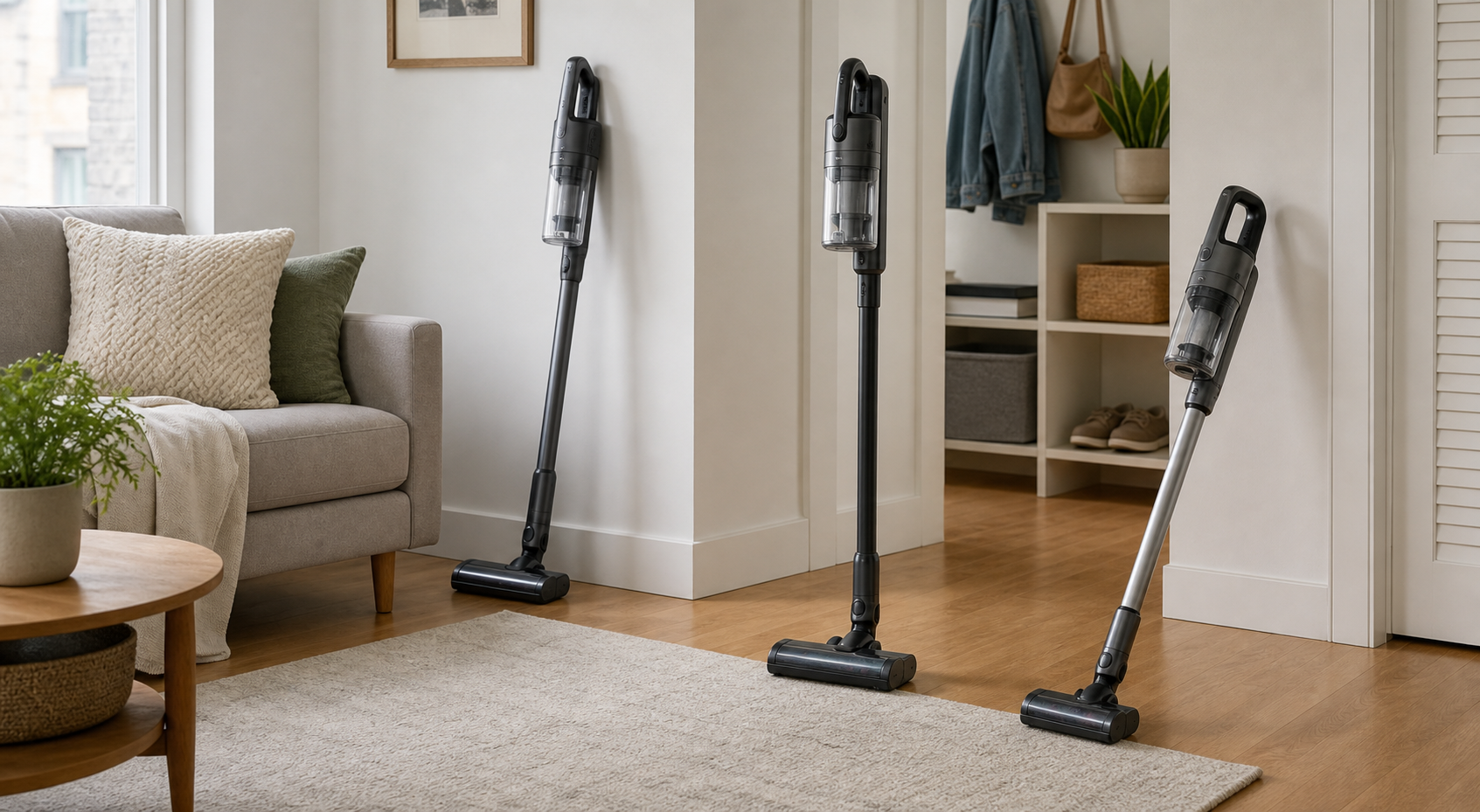
Start with your floors and storage spot. A light basic model suits daily crumbs, a convertible model reaches furniture, and a self-standing design can simplify storage when wall mounting is not allowed.
This is a best-fit category comparison, not a tested ranking of brands. Manufacturer runtime and noise figures may use different settings and methods, and real results change with floor heads, power mode, battery age, filters, and debris. Verify current specifications, replacement-part support, and floor-care instructions before buying.
Quick Picks by Apartment Setup
- Best for mostly hard floors: a light model with a soft or hard-floor-compatible head, good swivel control, and a low power setting for routine crumbs.
- Best for mixed hard floors and rugs: a model with a floor head approved for both and controls that do not require awkward head swapping.
- Best for pets: a model with a removable brush roll or other easy hair-access design, plus a bin you can empty without touching compacted fur.
- Best when wall mounting is prohibited: a stable self-standing, folding, or floor-dock design that fits an outlet nearby.
- Best for stairs, upholstery, and a car: a convertible stick vacuum with a genuinely manageable handheld weight.
Measure the Storage and Charging Spot First
Decide where the vacuum will live before comparing attachments. Measure the available height, width, and depth with the floor head attached, then check whether the handle folds or the tube detaches. Leave room to lift the vacuum from its dock without hitting a shelf.
Renters should not assume a wall dock is lease-safe. Look for a floor stand, self-standing hinge, or stable shelf arrangement if drilling is not allowed. Keep the charger ventilated and follow its clearance instructions; do not run a cord where it can be pinched by a door or become a walking obstacle.
Comparison Framework
Lightweight Basic Stick Vacuums
These prioritize low weight and quick pickups over a large bin or a long list of attachments. They make sense when the apartment is mostly hard flooring and the vacuum is used frequently rather than for a long weekly session.
Choose one when: easy handling, a small footprint, and fast daily use matter most.
Watch for: tiny bins, limited brush-roll access, short high-power runtime, and floor heads that struggle on thicker rugs.
Convertible Stick-to-Handheld Models
A removable motor unit and short tools can cover couch seams, shelves, stairs, and car interiors. The useful comparison is handheld weight with the chosen tool attached—not simply whether conversion is possible.
Choose one when: one machine needs to handle floors and small above-floor jobs.
Watch for: a top-heavy feel, awkward trigger controls, attachments that lack storage, and a handheld unit that is tiring to hold.
Self-Standing or Folding Models
These solve a real apartment problem: pausing or storing the vacuum without a permanent wall mount. A folding joint can also reduce storage height.
Choose one when: you cannot drill, have limited closet height, or often pause to move furniture.
Watch for: a narrow balance point, extra hinge weight, and designs described as freestanding only when parked in a precise position. Confirm the manual permits unattended upright storage.
Larger-Bin, Pet-Oriented Models
More bin space and easier brush-roll cleaning can help with frequent fur. The tradeoff is often more weight at the hand and a bulkier charging setup.
Choose one when: fur volume fills a small bin too quickly and brush maintenance is a regular task. For concentrated fur between full vacuuming sessions, see the pet hair removal tool comparison.
Watch for: vague anti-tangle language, hard-to-reach hair channels, expensive filters, and claims that do not specify the floor type or tool used.
Must-Have Features
- Floor compatibility: Check the maker's guidance for hardwood finish, laminate, tile, low-pile rugs, and any thicker rugs you own.
- Usable runtime: Compare the stated time in the mode and with the powered head you expect to use, not only the largest headline number.
- Easy bin emptying: The bin should clear into a trash can without requiring repeated hand contact with debris.
- Filter access: Filters should be easy to remove, clean or replace as directed, dry fully when washable, and source later.
- Brush-roll access: A removable roll or accessible channel makes wrapped hair less frustrating.
- A workable charging plan: Confirm outlet location, dock type, cord reach, charge time, and battery-storage instructions.
Nice-to-Have Features
- Removable battery: Helpful when the outlet is away from storage or if a replacement battery is actually sold for the model.
- Low-profile floor head: Useful under beds and sofas, provided the handle can recline far enough.
- Headlight: It can reveal crumbs on hard floors, but it does not improve pickup by itself.
- Two useful attachments: A crevice tool and a gentle upholstery tool are often more practical than a large bundle with no storage.
- Non-trigger power control: A continuous on/off button may be more comfortable for longer sessions.
Runtime, Battery, and Replacement Costs
Estimate how many minutes you actually vacuum, including furniture and edges. Maximum runtime is commonly associated with a lower setting, while powered heads and higher modes can reduce it. A small apartment may not need the longest-running model if the normal setting finishes the job with margin.
Before buying, check the battery warranty, whether a replacement is available, how it is installed, and what it costs relative to the vacuum. A removable battery is not automatically economical if replacements disappear quickly. Follow charging and storage directions, and stop using a battery or charger that is damaged, unusually hot, swollen, wet, or otherwise abnormal; contact the manufacturer or an appropriate qualified service provider.
Noise and Neighbor Considerations
“Quiet” is not a standardized promise across every listing. Look for a clearly stated measurement distance, mode, and test method when noise data is available, then treat comparisons across different methods cautiously. Floor-head rattle on hard flooring can matter as much as motor sound in an apartment.
Use the lowest effective setting, avoid late-night cleaning when sound carries, and maintain filters and brush rolls as directed. If quiet operation is the central need, a broom and dustpan may still be the better tool for a midnight spill; see our small-apartment broom and dustpan guide.
Maintenance Before Features
- Empty the bin before debris blocks the fill line or air path.
- Remove wrapped hair from the floor head using the method in the manual.
- Clean filters only as directed; never reinstall a washable filter before it is fully dry.
- Check small wheels and intake channels for grit that could mark a floor.
- Store attachments together so the crevice tool is available when needed.
A compact vacuum that is unpleasant to maintain becomes clutter. Favor clear access and available consumables over extra modes you may never use.
Who Should Skip a Cordless Stick Vacuum
Skip this category as your only vacuum if you have large areas of thick carpet, long cleaning sessions that exceed realistic battery time, heavy debris, or a floor covering whose maker calls for a different vacuum type. A corded upright or canister may offer a better whole-home fit, while a compact broom may be enough for a tiny hard-floor studio.
Also skip models you cannot lift and steer comfortably, charge safely, empty without difficulty, or store securely around children and pets. If dust exposure during bin emptying is a concern, compare sealed bagged options rather than assuming every cordless bin will suit you.
Bottom Line
For most small apartments, start with a lightweight convertible model that suits the actual floors, has accessible filters and brush-roll maintenance, and fits a confirmed charging spot. Move toward a larger-bin model for frequent pet hair or a self-standing design when mounting is off limits. The best choice is the one that completes a normal clean on a realistic setting and remains easy to store and maintain.