Best Pet Hair Removal Tools for Couches and Rugs
Pet fur that clings to a couch or works into a rug needs more than one generic lint brush. The best tool matches the surface: gentle contact for delicate upholstery, more reach for carpet pile, and a cleanup method you will actually use between vacuuming days.
As an Amazon Associate, The Good Home Doc may earn from qualifying purchases.
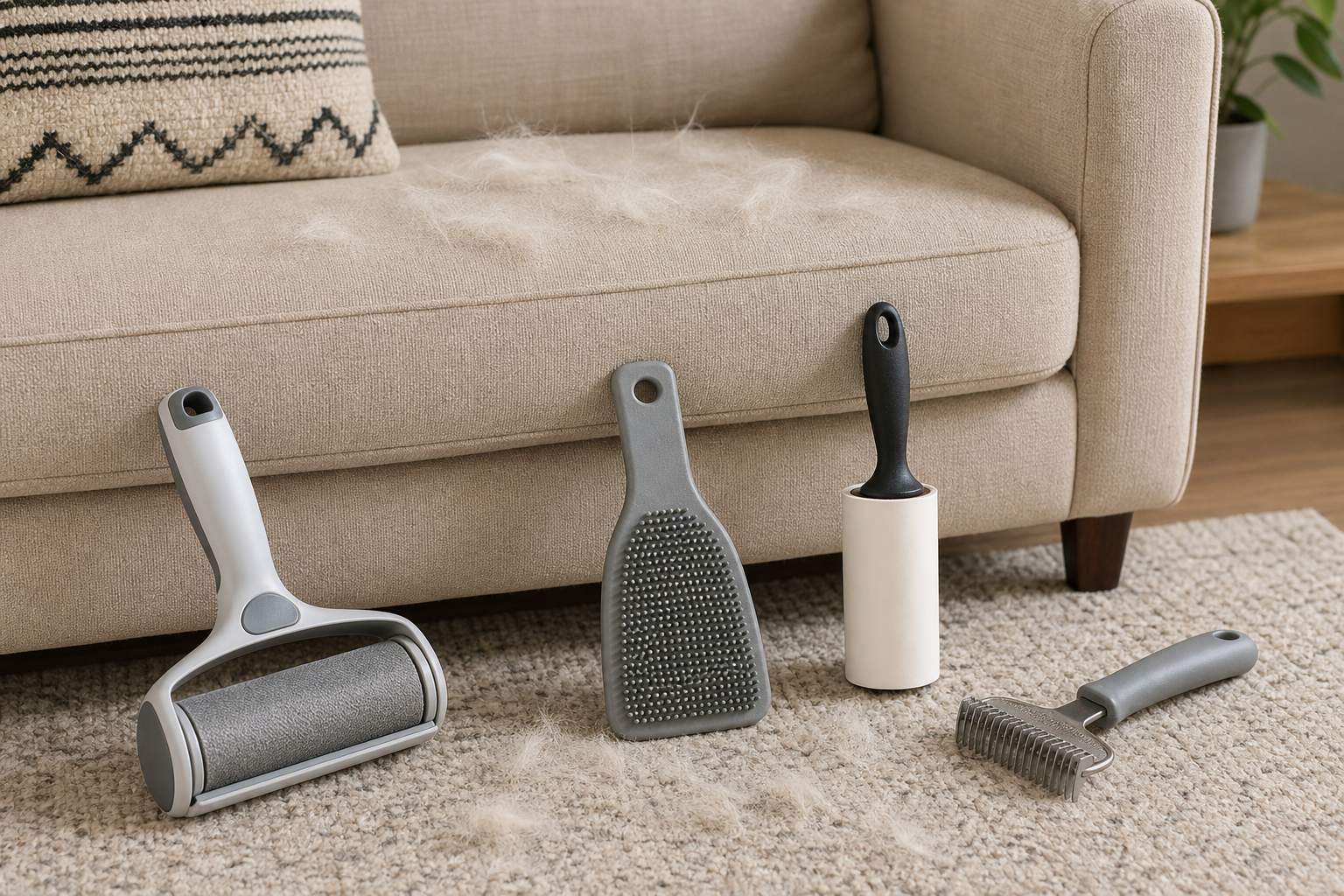
Product-category guide
Compare pet hair removal tools
Start with the surface you clean most. Reusable rollers suit broad upholstery, rubber brushes offer control, lint rollers handle quick touchups, and carpet rakes reach into compatible rug pile.
This is a best-fit category comparison, not a tested ranking of brands. Tool performance changes with fabric weave, rug construction, fur length, pressure, and upkeep. Test any contact tool in a hidden spot first and follow the furniture or rug maker's care instructions.
Quick Picks by Surface and Routine
- Best for broad couch cushions: a reusable roller-style remover with an easy-to-empty chamber.
- Best for seams and curved upholstery: a flexible rubber or silicone brush used with light pressure.
- Best for quick clothing and pillow touchups: an adhesive lint roller, if ongoing refill waste and cost are acceptable.
- Best for sturdy low- or medium-pile rugs: a short-tooth carpet rake or scraper explicitly approved for that rug type.
- Best for wall-to-wall cleaning: a vacuum with an upholstery or rug-appropriate attachment rather than a small manual tool.
Start With the Surface, Not the Tool
Check the upholstery tag and the manufacturer's care directions before scraping, brushing, or adding moisture. Loose weaves, velvet, chenille, suede-like materials, leather, and fabrics with pulled threads need special care. A stiff edge that works on a durable car mat can snag a couch.
For rugs, identify the material and construction. Loop pile can catch on teeth, shag can wrap around a rake, and hand-knotted or delicate rugs should not become a practice surface. When care guidance is unclear or the rug is valuable, use the approved vacuum method or ask a qualified rug cleaner.
Comparison Framework
Reusable Roller-Style Removers
These hand tools use a textured rolling surface to gather fur into a compartment. They cover flat couch cushions quickly and avoid disposable sheets.
Choose one when: you clean broad, durable upholstery often and want a compact tool with no refills.
Watch for: corners the roller cannot reach, awkward chamber doors, and models that need repeated back-and-forth strokes. Do not force a roller over buttons, piping, or loose fabric.
Rubber or Silicone Brushes
Soft rubber nubs can gather loose hair into clumps and fit along seams, stairs, and curved cushions. Many rinse clean, but they must dry fully before storage.
Choose one when: control and reach matter more than covering a large area in one pass.
Watch for: excess friction, dye transfer, and pressure that distorts a delicate weave. A soft-looking brush is not automatically safe for every fabric.
Adhesive Lint Rollers
Lint rollers are simple for small patches, throw pillows, and clothing just before leaving home. The adhesive surface also traps dust and crumbs that a reusable brush may leave behind.
Choose one when: speed and portability matter and the area is small.
Watch for: frequent refill purchases, disposable waste, and possible residue on sensitive surfaces. They become inefficient on a whole sofa or rug.
Carpet Rakes and Scrapers
A small rake can pull embedded fur toward the top of a compatible rug, especially along edges a vacuum misses. Tooth shape and stiffness matter more than an aggressive-looking design.
Choose one when: the maker permits brushing and the pile is sturdy enough for the tool.
Watch for: snagging loops, fraying edges, pulling fibers, or scraping the floor beyond the rug. Stop if rug fibers—not just fur—collect on the tool.
Vacuum Upholstery and Rug Attachments
A vacuum remains the more practical choice for floors, large rugs, and a full-room cleanup. A manual tool can loosen concentrated fur first, but it does not capture the broader mix of dust and debris.
Choose this route when: the area is large, fur volume is heavy, or you need one repeatable whole-room process. Our small-apartment cordless vacuum guide explains floor compatibility, brush-roll care, realistic runtime, and storage tradeoffs.
Watch for: brush rolls or suction settings that the surface maker does not recommend, plus wrapped hair that needs regular removal.
Must-Have Features
- A surface-appropriate contact edge: Soft nubs suit different jobs than metal teeth or rigid scrapers.
- Comfortable control: A secure handle helps you use light, even pressure instead of digging into the fabric.
- Easy hair release: Chambers, blades, and brushes should empty without making you pick fur from tiny gaps.
- Cleanable parts: Check whether the head can be rinsed, wiped, or brushed and how it must dry.
- Practical storage: Protect sharp or tacky surfaces, especially around children and pets.
Nice-to-Have Features
- Two head sizes: A broad face for cushions and a narrow edge for seams can reduce tool switching.
- A visible collection chamber: It makes the emptying point obvious.
- A hanging loop or cover: Useful when the tool lives near the couch instead of in a cleaning closet.
- Replaceable parts: Worth considering for a frequently used tool, provided replacements are realistically available.
Reusable Versus Disposable
Reusable tools cost more upfront but avoid rolls of adhesive sheets. Their tradeoff is maintenance: hair must be emptied, rubber washed when permitted, and damp parts dried before storage. A poorly cleaned reusable tool can become unpleasant enough that no one reaches for it.
Disposable lint rollers are convenient for occasional jobs and travel. Estimate how much surface you clean, how often refills run out, and where used sheets go. A mixed setup often makes sense: one reusable tool near the couch and a small lint roller for clothing.
A Practical Cleaning Routine
- Check care directions and test the tool in a hidden area.
- Pick up toys, hard debris, and loose objects before brushing.
- Use short, light strokes in a consistent direction; do not grind at one spot.
- Collect loosened fur, then vacuum the surface with an appropriate attachment if needed.
- Empty and clean the tool according to its directions, then let washable parts dry fully.
For a routine that does not consume the weekend, pair quick fur pickup with the broader schedule in our low-effort maintenance guide.
Who Should Skip a Manual Pet Hair Tool
Skip manual scraping tools when the upholstery or rug is delicate, already pilling, snagged, shedding fibers, or covered by care instructions that prohibit brushing. People with hand, wrist, shoulder, or mobility limits may find repetitive manual passes less practical than a suitable powered attachment.
A small remover is also the wrong main tool for several rooms of carpet or heavy daily shedding. In that case, prioritize a vacuum and filtration setup that fits the floors, storage space, noise tolerance, and maintenance routine. This guide addresses visible fur pickup, not allergen removal or indoor-air treatment.
Bottom Line
For most durable fabric couches, a reusable roller is the simplest starting point; add a soft rubber brush for seams and a lint roller for quick touchups. For rugs, choose a rake only when its teeth suit the pile and the rug's care guidance allows it. The best setup is the least aggressive tool that removes fur without damaging the surface or creating a cleanup routine you will avoid.