Best Drain Hair Catchers for Showers and Tubs
The best drain hair catcher is the one that matches your drain and stopper without slowing normal water flow. Start by identifying whether the drain is flat, raised, open, or fitted with a pop-up or toe-touch stopper. Then compare cleanup, grip, and material.
As an Amazon Associate, The Good Home Doc may earn from qualifying purchases.
Match the catcher to the drain first: These affiliate category links are shopping starting points, not tested rankings.
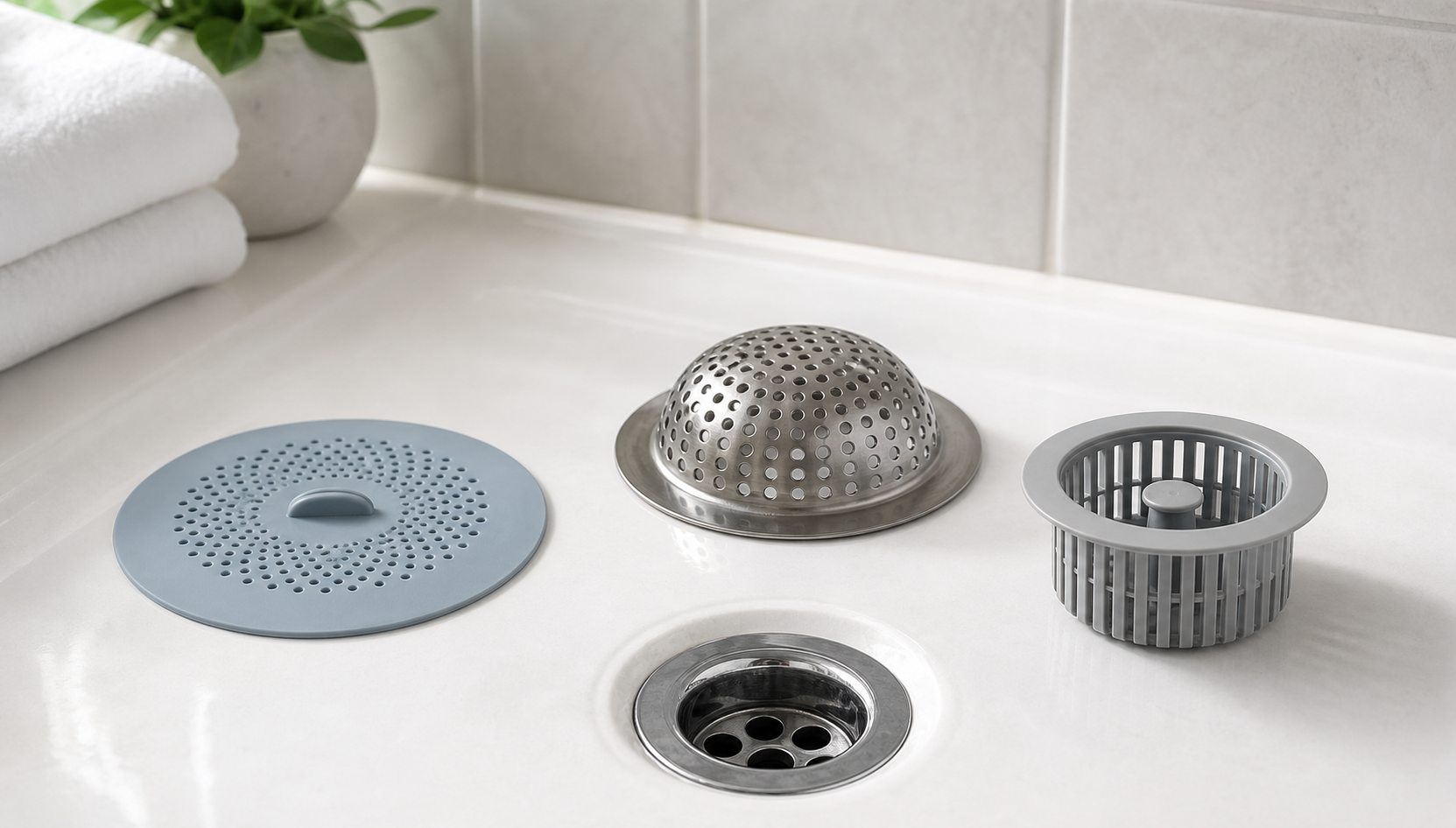
- Browse category: Flat silicone drain coversA practical starting point for smooth, flat shower floors with an unobstructed drain rim.
- Browse category: Domed over-drain catchersUseful when a raised stopper or drain fitting prevents a flat cover from sitting flush.
- Browse category: In-drain basket insertsLow-profile above the floor, but only when the opening, depth, and stopper design are compatible.
Measure the drain opening and surrounding flat area. Confirm stopper compatibility, product dimensions, material, and cleaning instructions with the maker before buying.
This is a fit-based comparison, not a ranking of individual brands. A catcher can intercept routine loose hair before it enters the drain, but it cannot clear an existing blockage or correct a damaged drain. Recurring slow drainage, backups, leaks, or odors may need building maintenance or a qualified plumber.
Quick Picks by Drain Type
- Best for a flat shower drain: a broad silicone cover with enough weight or suction to stay centered.
- Best around a raised stopper: a domed catcher tall and wide enough to surround the hardware without blocking movement.
- Best for a clean floor profile: a correctly sized in-drain basket, if it does not interfere with the stopper or sit too deep to retrieve.
- Best for easy wipe-off: a smooth silicone surface with simple perforations and no deep ribs.
- Best for a durable rigid option: a stainless-steel strainer with finished edges and holes that maintain useful flow.
Measure Before You Choose
Measure the visible drain diameter, the usable flat area around it, and the height and width of any stopper. For an insert, measure the clear inside opening and available depth only if the drain is designed to accept a removable basket. Product photos are poor guides to scale.
Also look at the floor. Silicone needs a reasonably smooth surface to grip; textured tile, small mosaic joints, and strongly sloped shower pans can let an edge lift. A flat cover that overlaps a raised rim may rock and allow hair underneath.
Comparison Framework
Flat Silicone Covers
These sit over the entire drain and use weight, tacky material, or small suction cups to resist moving water. They are easy to place and require no drain disassembly.
Choose one if: the drain and surrounding surface are flat, smooth, and wide enough for full contact.
Watch for: lifted edges, a cover that slides under foot, perforations too small for adequate flow, and ribs that make hair difficult to remove.
Domed Over-Drain Catchers
A dome can surround a raised tub stopper or shower fitting while catching hair on its sides. Silicone versions tend to grip; rigid metal versions hold their shape and rinse clean.
Choose one if: a stopper projects above the drain and there is enough clear space around it.
Watch for: insufficient interior height, a base that cannot sit level, sharp or unfinished edges, and a tall profile that feels awkward underfoot.
In-Drain Basket Inserts
An insert sits below or just inside the drain opening, leaving less material on the shower or tub floor. Fit is less forgiving than with an over-drain cover.
Choose one if: the drain has an open, compatible throat and you can confirm diameter, depth, and retrieval access.
Watch for: interference with crossbars or stopper parts, a basket that drops too far, difficult removal, and restricted flow when the basket begins to fill.
Rigid Metal Strainers
Stainless-steel covers and baskets resist warping and do not become tacky with age. They work best when their rim and diameter closely match the drain.
Choose one if: you want a rigid, easy-rinse option and the measured fit is precise.
Watch for: sliding on smooth surfaces, rough edges, an unstable rim, and products described only as “metal” without useful material or care details.
Must-Have Features
- Verified dimensions: Diameter, dome clearance, and insert depth matter more than a universal-fit claim.
- Unobstructed flow area: Openings should be distributed across enough surface to drain normally before debris collects.
- Stable placement: The catcher should remain centered without creating a loose edge or rocking point.
- Simple retrieval: A tab, rim, or accessible edge makes removal easier without reaching deep into the drain.
- Smooth, cleanable surfaces: Avoid deep channels and complex hinges that hold residue.
- Finished edges: Nothing should scratch the fixture, catch skin, or damage a tub coating.
Nice-to-Have Features
- A contrasting color: Makes a low-profile silicone edge easier to see on the shower floor.
- A weighted rim: Can help a flat cover resist moving where suction cups do not grip well.
- Dishwasher-safe care: Convenient only when the maker explicitly allows it and the household is comfortable washing it that way.
- A spare catcher: Useful for a second bathroom, but a multi-pack is not a bargain if both drains need different formats.
Flow, Cleanup, and Maintenance
Remove captured hair frequently rather than waiting for water to pool. Rinse the catcher as directed and clean residue from both sides so the openings remain clear. Let removable silicone pieces dry where they will not become a slip or trip hazard.
If water begins pooling, stop using the shower or tub until you confirm whether the catcher itself is full or poorly positioned. Removing the catcher may reveal an already slow drain; the accessory did not necessarily cause the underlying problem.
Who Should Skip a Drain Hair Catcher
Skip an over-drain catcher if it will not sit flat, moves underfoot, blocks the stopper, or noticeably restricts drainage while clean. Skip an insert when the drain has fixed crossbars, inaccessible stopper hardware, or no clear retrieval point. Renters should not remove drain components or alter fixtures without permission.
Skip the product category as a “fix” for recurring backups, standing water, leaks, sewage odor, or a stopper that no longer works. Those are maintenance or plumbing issues, not shopping problems.
Buying Checklist
- Identify a flat, raised, pop-up, toe-touch, or open drain.
- Measure the drain, stopper, surrounding flat area, and—only if relevant—the insert opening.
- Choose flat, domed, or in-drain placement based on that geometry.
- Check that the clean catcher provides ample flow openings.
- Prefer smooth surfaces and a retrieval tab or accessible rim.
- Confirm material and care instructions rather than relying on “universal” wording.
- Return or replace any catcher that shifts, rocks, scratches, or causes pooling.
Bottom Line
For a smooth, flat shower drain, start with a broad silicone cover that stays centered and wipes clean. Use a domed catcher around raised stopper hardware, and choose an in-drain basket only after confirming opening, depth, and retrieval access. The right catcher should intercept routine hair without becoming a drainage or footing problem of its own.