Best Food Storage Containers for Shallow Cabinets
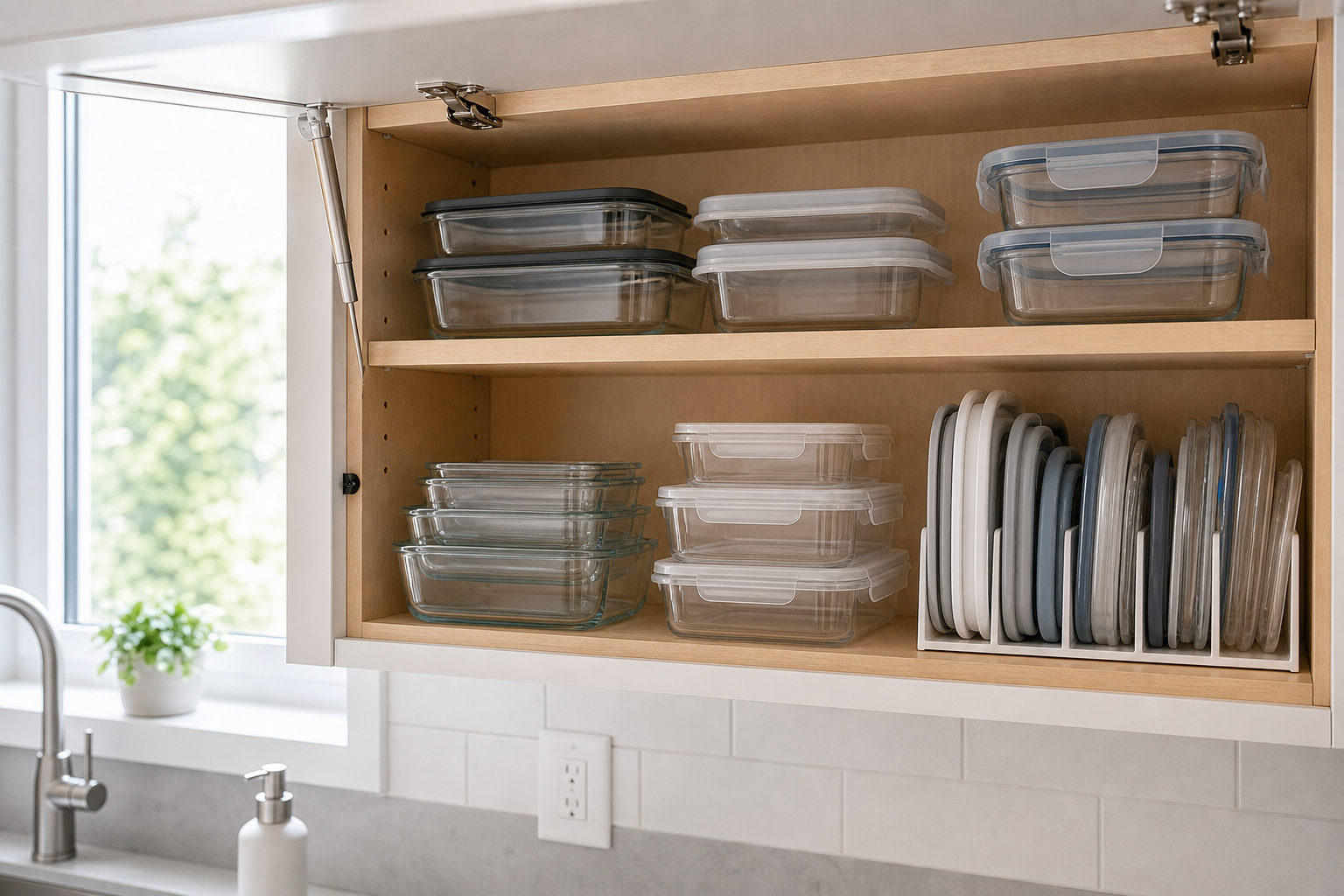
Food containers can overwhelm a shallow cabinet even when the set looks compact in its box. The best system fits front to back, nests without sticking, keeps lids visible, and includes sizes your household will actually use.
As an Amazon Associate, The Good Home Doc may earn from qualifying purchases.
Compare the category that fits your cabinet:
- Browse category: Shop nesting container setsBest starting point when empty-storage space is the main problem.
- Browse category: Shop rectangular glass containersWorth comparing for stain resistance and oven-to-table use where the maker permits it.
- Browse category: Shop lid organizersUseful when the containers fit but loose lids create the clutter.
These are shopping starting points, not tested rankings. Confirm exterior dimensions, care instructions, replacement-lid availability, and cabinet fit before buying.
This guide compares container types and storage systems rather than ranking brands. Dimensions and care limits vary by model, so use the framework below to narrow the category, then verify the manufacturer's current specifications.
Quick Picks by Cabinet Problem
- Best when depth is tight: short rectangular containers whose longest side runs across the cabinet rather than toward the back.
- Best for the smallest empty-storage footprint: a truly nesting plastic set with graduated sizes and lids that share one or two footprints.
- Best for stain and odor resistance: stackable glass containers, provided the shelf can handle the weight and the cabinet has enough vertical clearance.
- Best for simple lid matching: a set with interchangeable lids across multiple container depths.
- Best when the containers already work: a measured vertical lid organizer instead of a replacement set.
Measure the Cabinet Before Comparing Sets
Measure usable interior width, depth, and height—not the outside of the cabinet. Account for hinges, shelf pins, a face frame, door hardware, and any lip that reduces the opening. In a shallow cabinet, one inch can decide whether a container sits flat or blocks the door.
Also measure the shelf opening at the front. A container may fit inside yet be awkward to angle through a narrow opening. Leave enough finger room to lift a stack without dragging it across the shelf above.
Comparison Framework
Nesting Plastic Sets
Plastic containers are light and often provide the most efficient nesting. A well-designed set puts several useful sizes into one footprint and is easy to move from a high shelf.
Choose this type when: cabinet space, weight, and quick everyday handling matter most.
Watch for: sets padded with tiny novelty sizes, containers that wedge tightly when nested, lids that fit only one base, staining, odor retention, and unclear microwave or dishwasher guidance. Follow the maker's heating and cleaning limits rather than assuming all plastic handles the same conditions.
Stackable Glass Containers
Glass resists many food stains and odors and makes leftovers easy to identify. Rectangular shapes generally use shelf space more efficiently than round bowls, but glass stacks are heavy and do not always nest deeply.
Choose this type when: filled-container stacking, visibility, and stain resistance outweigh the empty-storage footprint.
Watch for: shelf load, chipped rims, bulky locking lids, slippery stacks, and thermal-shock limits. Oven, freezer, microwave, and dishwasher use must follow the specific product instructions.
Same-Footprint Modular Containers
A modular system uses a small number of lid and base footprints across different heights. That reduces matching time and lets filled containers stack predictably.
Choose this type when: you store multiple prepared foods at once and want a repeatable refrigerator-to-cabinet system.
Watch for: tall pieces that waste a shallow shelf, a large footprint that does not turn through the cabinet opening, and dependence on one proprietary lid that may be hard to replace.
Collapsible Containers
Collapsible silicone containers reduce height when empty and can help in a cabinet with very little vertical room. They are less rigid during carrying and may take longer to dry around folds.
Choose this type when: compact empty storage matters more than rigid handling.
Watch for: lids that do not collapse, folds that trap water, odor pickup, and sides that flex under a heavy meal. Confirm the maker's cleaning, heating, and temperature guidance.
Must-Have Features
- Published exterior dimensions: Capacity alone does not reveal cabinet fit.
- Stable nesting or stacking: Empty bases should separate without a struggle, while filled containers should not slide easily.
- A manageable lid system: Fewer lid footprints usually mean less searching and fewer orphaned pieces.
- Clear care guidance: Dishwasher rack placement, microwave venting, freezer limits, and permitted heating should be specific.
- Replaceable wear parts: Replacement lids, seals, or individual containers can extend the useful life of the system.
- Sizes matched to real meals: Count the lunch, leftover, snack, and batch-cooking sizes you use—not the total number of pieces on the box.
Nice-to-Have Features
- Interchangeable lids: One lid fitting several base depths simplifies storage.
- Clear lids: Helpful when lids stand vertically and need quick matching.
- Removable seals: They can make detailed cleaning easier if the design allows removal and correct reinstallation.
- Stacking rims: A shallow lip can keep filled containers aligned, as long as it does not trap wash water.
- Date markers: Useful only if the household will reset and use them consistently.
How to Compare the Real Storage Footprint
Ignore the piece count at first. Many packages count every base and lid separately, making a modest set sound large. Compare the footprint of all empty bases nested together, the stacked height of the lids, and the number of genuinely useful container sizes.
Then test the filled state on paper. Trace the advertised exterior dimensions onto scrap paper or cardboard and place the outlines on your cabinet shelf and refrigerator shelf. This catches doors, hinges, shelf edges, and awkward turning space before a large set arrives.
Lid Storage: Nested, Vertical, or Attached
Lids stored underneath nested containers look tidy until the needed lid is at the bottom. A vertical organizer makes each shape visible, but it needs enough cabinet height and width and should not bow flexible lids. Sort lids by footprint, not color, and keep only lids that match a container you still own.
Attached-lid designs eliminate matching but occupy more space and introduce a hinge that can wear. They make the most sense for a small number of frequently used lunch containers rather than a large mixed leftover system.
Cleanup and Seal Care
Check whether lids, seals, and bases can use the dishwasher and where the maker says to place them. Deep channels and removable gaskets need to dry fully before reassembly. If a seal holds odor, shows damage, or no longer seats correctly, follow the manufacturer's replacement guidance rather than forcing the lid closed.
Do not assume a snap lid is leakproof. Carry soups, dressings, and other liquids only in containers the maker specifically describes for that use, and keep them upright when required.
Who Should Skip a Large Matching Set
Skip a large set when you already own enough useful containers and the real problem is loose lids or an unmeasured cabinet. A small lid organizer, a shelf adjustment, or removing unmatched pieces may solve the problem with less cost and waste.
Also skip heavy glass stacks on a high shelf, a lightweight or damaged shelf, or anywhere a child must pull the stack down. People with limited grip or reach may prefer lighter containers and smaller stacks. If the cabinet is unusually shallow, buy a few measured pieces rather than assuming a boxed system will fit.
A Practical Cabinet Setup
- Remove every base and match it to a lid; recycle or discard pieces according to local rules when their mate is gone or the material is damaged.
- Measure the cleared shelf and decide whether containers should run across its width or front to back.
- Keep the most-used medium sizes at the front and occasional large pieces behind or on a lower shelf.
- Nest only compatible shapes and limit stack height to what you can lift comfortably.
- Store lids by footprint in a measured divider, leaving enough room to remove one without unloading the group.
For a broader plan that accounts for access, frequency, and limited square footage, use the small-home organization systems guide. If shelf surfaces need protection or easier cleanup, compare the fit rules in our cabinet and drawer liner guide.
Bottom Line
For most shallow cabinets, a restrained rectangular nesting set with a small number of interchangeable lid footprints is the easiest fit. Choose glass when stain resistance and filled stacking matter more than weight and empty-storage space. Measure the actual cabinet opening, compare the complete nested footprint, and buy for the meals you store—not the biggest piece count.