Best Hanging Closet Organizers for Folded Clothes
A hanging organizer can turn a section of closet rod into shelves without drilling or building a permanent system. The tradeoff is real: every organizer takes away hanging width, and a weak one can sag until folded stacks become hard to reach. The best fit is the narrowest supported organizer that holds your actual clothes without crowding the rod or closet floor.
As an Amazon Associate, The Good Home Doc may earn from qualifying purchases.
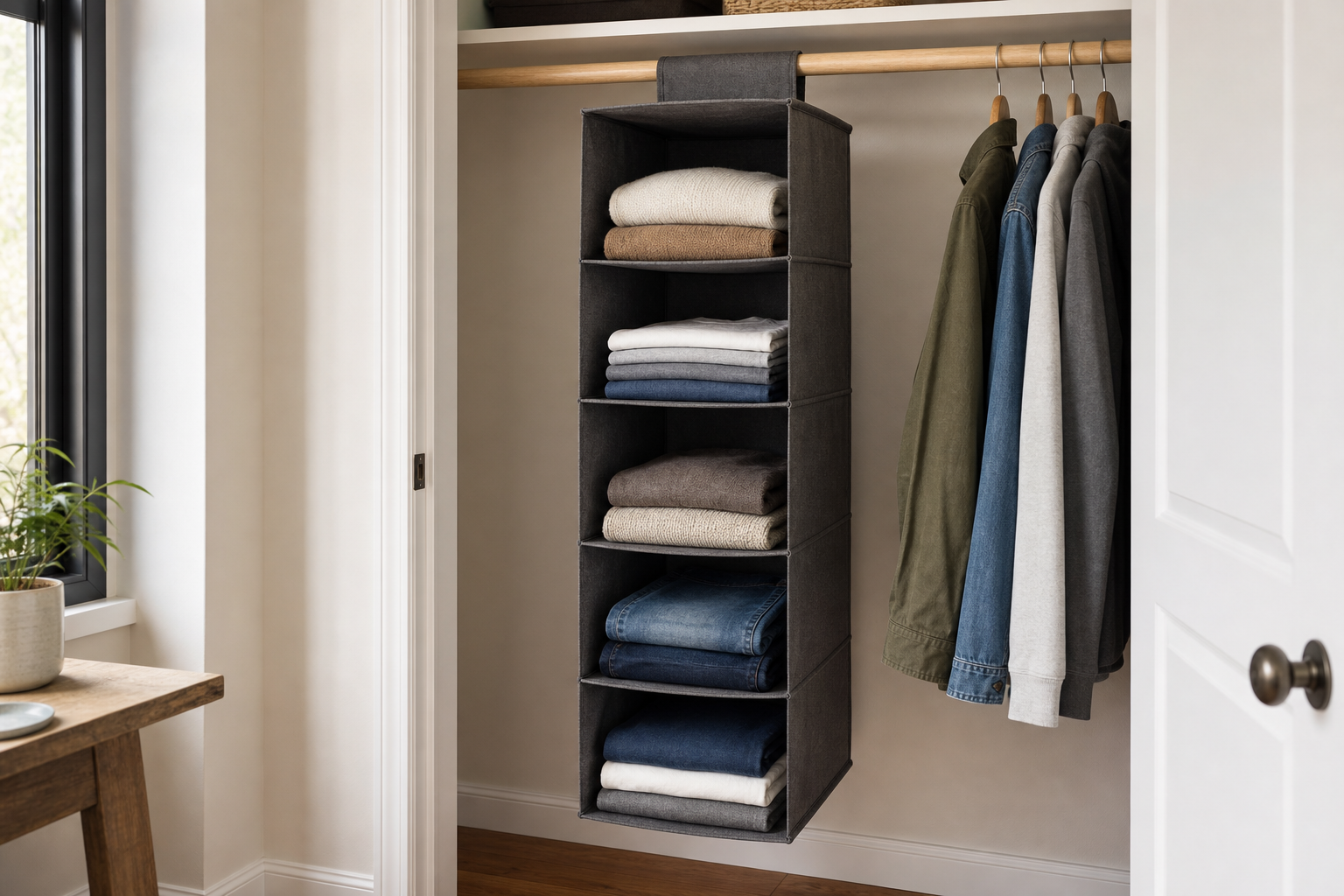
Product-category guide
Compare hanging fabric shelves
Start with available rod width and vertical clearance. Then compare attachment style, shelf reinforcement, compartment height, stated load guidance, removable drawers, and cleaning instructions.
This is a best-fit framework, not a ranked review and not a claim that we tested individual organizers. Product dimensions and load guidance vary, so verify the current manufacturer listing before choosing. Do not treat a fabric organizer as a substitute for a secure built-in shelf or use it above the maker's stated limits.
Quick Picks by Closet Problem
- Best for most folded clothes: a narrow five- or six-compartment organizer with reinforced shelf panels and a wide wraparound rod attachment.
- Best for sweaters: wider, taller compartments that hold one short stack without compressing knits or hiding the bottom item.
- Best for a crowded rental closet: a slim organizer that preserves enough rod width for shirts, jackets, and dresses.
- Best for socks and accessories: an organizer with one or two removable drawers rather than open cubes filled with loose small items.
- Best for occasional use: a collapsible model with removable support panels that stores flat when the closet needs to change.
Measure Before You Give Up Rod Space
First measure the usable rod width between the closet walls, supports, and door opening. Subtract the width occupied by clothes you still need to hang. A 12-inch organizer does not merely use 12 inches: leave a little working room so hangers can move and the fabric sides do not press into sleeves.
Measure from the top of the rod to the closet floor, shoe rack, hamper, or lower shelf. Compare that number with the organizer's full hanging length, including its attachment. Keep the bottom off the floor so it does not collect dust or buckle against shoes. Also check whether a sliding or folding closet door narrows access to one side.
Finally, measure the clothes rather than relying on compartment count. Fold a typical sweater, jeans, and T-shirt stack, then note the width, depth, and height. A tall stack may technically fit but becomes unstable and makes the bottom garment frustrating to remove.
Comparison Framework
Reinforced Open-Shelf Organizers
These use fiberboard, plastic, wire, or another insert to keep each fabric shelf flatter. They are the strongest general-purpose choice for folded clothes because stacks have a more predictable base.
Choose this type if: you need everyday access to T-shirts, jeans, light sweaters, or towels and want to see everything at a glance.
Watch out for: narrow openings, boards that cannot be removed for cleaning, and product pages that mention “strong” construction without clear dimensions or load guidance.
Organizers with Removable Drawers
Fabric drawers contain socks, underwear, scarves, and other small pieces that spill from open shelves. They can also make the organizer feel heavier and require two hands to open when the frame is flexible.
Choose this type if: the closet lacks a dresser and you need a mix of folded-stack and small-item storage.
Watch out for: drawers that consume usable height, weak pull tabs, and overfilling that distorts both the drawer and the shelf below.
Narrow Hanging Towers
A slim tower preserves more hanging width and keeps stacks small. It suits a shared closet or a wardrobe where only a few categories need shelves.
Choose this type if: shirts and jackets remain the priority and folded storage is a supplement rather than the whole system.
Watch out for: compartments too narrow for your normal fold, deep stacks that hide items, and side-to-side twisting when the attachment is much narrower than the organizer body.
Wide Sweater Organizers
Wider openings reduce compression and make knits easier to slide in, but the organizer can consume a large section of rod. Wide shelves also need better reinforcement to resist bowing.
Choose this type if: bulky folded sweaters are the main problem and the closet has spare rod width.
Watch out for: shelf sag, excessive stack height, shoulder room lost for hanging garments, and a loaded organizer stressing a light-duty rod.
Must-Have Features
- Published dimensions: Look for overall width, depth, and hanging length plus individual compartment dimensions.
- Supported shelf bases: Reinforcement helps a stack stay accessible, though it does not make the organizer suitable for unlimited weight.
- A secure rod attachment: Wide hook-and-loop straps distribute the load and fit many standard rods; metal hooks can be quicker to move but need the correct rod diameter and clearance.
- Useful compartment height: Short cubes control stacks, while taller ones suit sweaters. Match the opening to how you fold.
- Clear load guidance: Use manufacturer limits for the full organizer and, when supplied, each shelf. Spread weight rather than loading one compartment heavily.
- Realistic care instructions: Many organizers are spot-clean only because of internal boards. Confirm whether supports are removable before washing anything.
Nice-to-Have Features
- Removable drawers: Helpful for loose items, but buy only as many as the routine needs.
- Side pockets: Useful for light accessories; avoid filling them with heavy objects that pull the tower sideways.
- Label windows: Worthwhile in a shared closet or for seasonal rotation, less useful when every shelf is open and visible.
- Removable shelf boards: They make deeper cleaning and flat storage easier.
- Neutral, light-colored interior: It can be easier to see dark clothes in a dim closet than inside black compartments.
Rod Fit, Load, and Sag
Check the closet rod and its supports before adding concentrated weight. A hanging organizer puts several folded stacks into a small section rather than spreading garments across many hangers. If the rod bends, a bracket is loose, or the closet hardware is damaged, stop loading it and ask the property manager or an appropriate qualified professional to assess the installation.
Sag is controlled by more than fabric thickness. Shelf inserts, organizer width, attachment width, and how evenly clothes are placed all matter. Keep dense items such as jeans on lower supported shelves, use shorter stacks, and do not add storage bins unless their filled weight remains within the maker's guidance.
Access and Daily Use
A six-shelf organizer is only useful when each opening stays accessible. Put the most-used clothes between waist and eye level. Reserve the top for light, less-used items and the bottom for stable stacks that can tolerate a little dust. Avoid placing small loose pieces in an open compartment; a drawer or separate bin makes them easier to retrieve.
If stacks repeatedly collapse, the answer may be fewer items per shelf rather than more compartments. Store like with like, fold to a consistent width, and keep only one short stack in each opening. For broader closet planning, the renter-friendly closet organizer guide covers layout choices without permanent wall installation.
Cleaning and Maintenance
- Read the care label. Do not machine-wash an organizer with fiberboard or glued supports unless the maker explicitly allows it.
- Unload before moving it. Dragging a full organizer along the rod can strain straps, hooks, and closet hardware.
- Vacuum or wipe compartments. Use a low-suction attachment or a slightly damp cloth as appropriate, then let the fabric dry fully.
- Inspect attachments and seams. Retire the organizer if straps tear, hooks deform, inserts split, or shelves no longer support a stable stack.
- Rotate seasonal clothes. Reassess the load when dense winter items replace lighter summer clothes.
Who Should Skip a Hanging Organizer
Skip this category if hanging width is already scarce, the rod is loose or visibly bowed, long garments need the full vertical drop, or the closet has deep fixed shelves that already suit folded clothes. Existing shelf dividers may solve toppling stacks without sacrificing rod space.
Also skip it for very heavy items, damp clothing, or anything that requires a sealed dust barrier. A dresser, ventilated freestanding shelf, or lidded storage bin may fit better. Renters should avoid altering rods or supports without permission and report damaged closet hardware rather than trying to reinforce it with an overloaded organizer.
Bottom Line
For most renters, the best hanging closet organizer is a narrow, reinforced five- or six-shelf model with published dimensions, a secure wide attachment, and compartments sized for short folded stacks. Measure the rod space you can truly spare, keep dense clothes low, follow the stated load limits, and choose drawers only for the small items that need them.
Before buying, map the organizer into the rest of the room with the small-home organization systems guide. If you already have a fixed closet shelf, shelf dividers for stacks and handbags may be the simpler solution.