Best Long-Handle Shower Scrubbers for Routine Cleaning
A good long-handle shower scrubber lets you reach routine soap residue without turning the handle into a wobbly lever. Start with the surface: soft pads suit broad smooth walls, brushes reach texture and corners, and sponge heads spread light pressure over tubs and shower panels.
As an Amazon Associate, The Good Home Doc may earn from qualifying purchases.
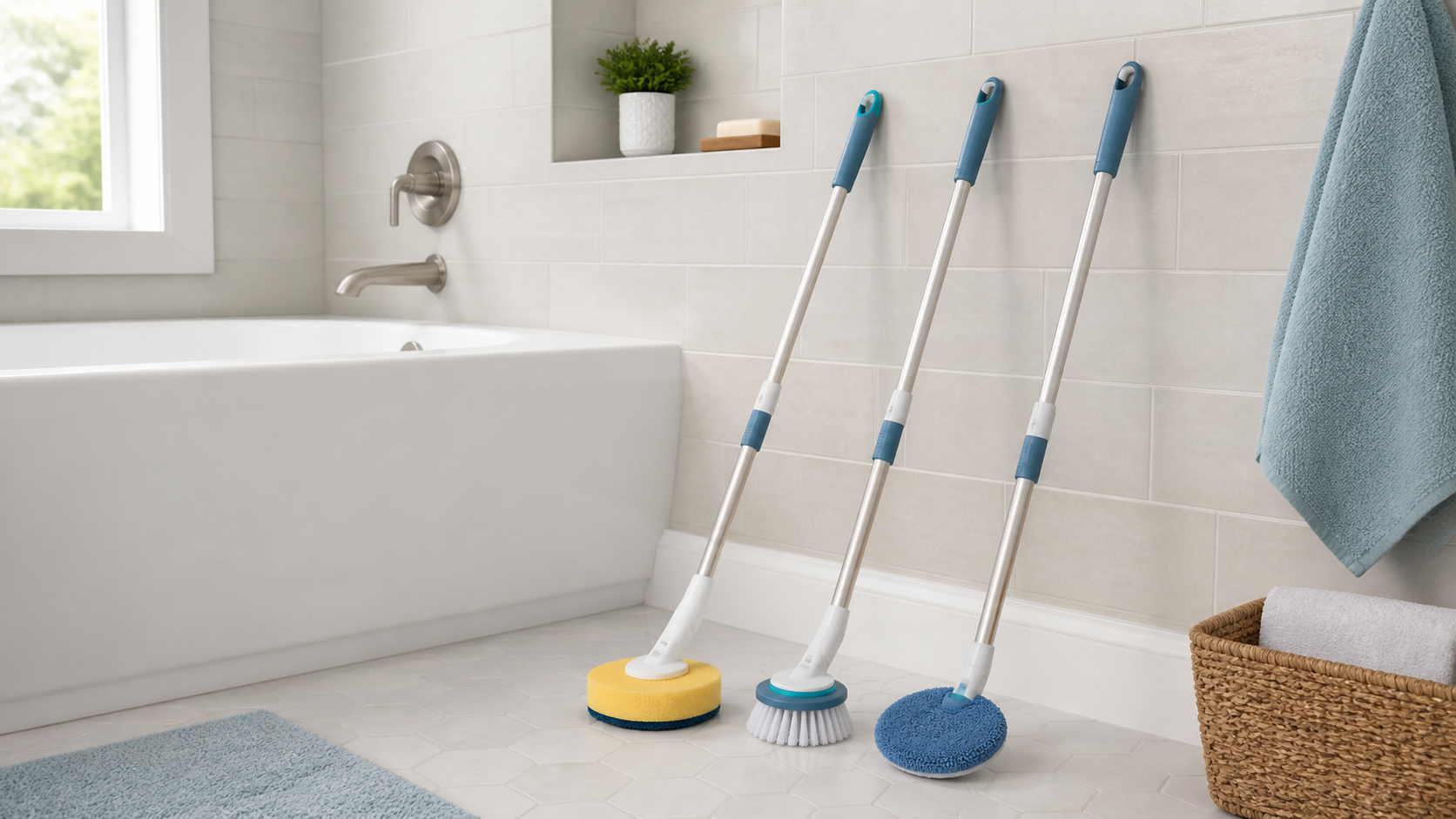
Compare the head format first: These affiliate category links are shopping starting points, not named winners or tested rankings.
- Browse category: Long-handle shower scrubbers with replaceable headsCompare handle locks, head angle, replacement availability, and stored length.
- Browse category: Soft-bristle long-handle shower brushesUseful for grout lines and lightly textured surfaces when the surface maker permits brushing.
- Browse category: Long-handle shower scrubbers with washable padsBest compared for broad smooth panels, pad attachment, rinsing, and complete drying.
Confirm the surface maker's care instructions, handle range, locked length, head dimensions, replacement-head supply, and drying setup before buying.
This guide covers routine cleaning of intact, compatible shower and tub surfaces. It does not cover mold remediation, damaged grout or caulk, active leaks, unknown staining, or mixing cleaning chemicals. Stop and use qualified help when moisture damage or recurring growth suggests a source problem.
Quick Picks by Cleaning Job
- Best for broad smooth walls: a flat washable pad with full backing and a pivot you can control.
- Best for textured tile and grout lines: a soft brush head whose bristles suit the surface instructions.
- Best for tubs and curved corners: a rounded sponge or pad head with no exposed hard edges.
- Best for compact storage: a locking telescoping handle that collapses without separating into loose wet sections.
- Best for precise buildup: often a short hand brush, not a long-handle tool.
Measure the Reach You Actually Need
Measure from a comfortable hand position to the highest wall area you routinely clean, then check the scrubber's working range rather than its maximum advertised extension alone. A very long pole can flex, rotate at the joint, or become difficult to steer in a small enclosure. Check the collapsed length against the place where it will dry.
A long handle reduces reaching, but it does not make unstable footing safe. Keep both feet on a dry, stable floor, never climb on a tub edge, and avoid scrubbing electrical fixtures or damaged surfaces.
Comparison Framework
Flat Microfiber or Fabric Pads
Flat pads give broad contact and make sense for smooth tile, solid shower panels, and glass only when the surface instructions allow the material. Look for full pad coverage, secure attachment, and replacements sold by a clearly stated size.
Watch for: exposed plastic corners, pads that bunch under pressure, and thick heads that miss inside curves.
Soft-Bristle Brush Heads
Brushes can follow textured tile and shallow grout lines better than a flat pad. Choose the softest stiffness that handles routine residue, and test an inconspicuous area first.
Watch for: bristles too stiff for acrylic, fiberglass, coatings, soft stone, aging grout, or delicate finishes. Seller claims never override the surface maker's care guidance.
Sponge and Foam Heads
A broad sponge spreads light pressure and can fit tubs or curved panels. It should rinse clean, attach without an exposed hard plate, and be replaceable before it begins to split or hold odor.
Watch for: foam that stays wet inside a dense head, abrasive layers with unclear compatibility, and proprietary replacements that are hard to identify.
Interchangeable-Head Kits
A kit is useful only if each head fits a real surface in your bathroom. Compare the connection, replacement availability, and drying needs—not the number of accessories.
Watch for: loose joints, wet heads stored together, redundant pads, and an oversized storage footprint.
Must-Have Features
- A positive handle lock: the pole should stay at the selected length under light working pressure.
- Controllable head angle: enough movement to meet walls and curves without flipping away.
- Covered hard edges: the pad, sponge, or bristles—not the plastic frame—should make contact.
- Clear replacement path: head sizes and attachment types should be documented.
- Complete drying: the head should rinse clean and hang or stand where air reaches it.
Nice-to-Have Features
- A hanging loop sized for the hook you already use.
- A removable head that can dry separately from the pole.
- A nonslip grip that remains easy to rinse.
- Color-separated pads if surfaces require different care.
Setup, Use, and Maintenance
- Read the surface maker's care instructions and test the head in a hidden spot.
- Rinse away loose grit before making broad passes.
- Lock the handle at the shortest comfortable reach and use light pressure.
- Work from higher areas downward without standing in pooled water.
- Rinse the head, remove trapped residue, and let every part dry before storage.
Do not combine products or chemicals unless their labels explicitly permit it. Ventilate as directed, follow label precautions, and never assume a scrubber head is compatible with abrasive cleaners.
Who Should Skip a Long-Handle Shower Scrubber
Skip one if the enclosure is small enough to clean comfortably with a hand pad or brush; the shorter tool usually gives better pressure control. Also skip a pole tool when the surface is cracked, loose, flaking, or needs close inspection.
A squeegee is better for removing water after showers, while a narrow grout brush is better for controlled detail work. A long-handle scrubber is for broad routine cleaning, not repair, remediation, or proof that a surface is sanitary.
Bottom Line
For smooth shower walls, start with a flat washable pad and a stable pivot. For textured tile and shallow grout lines, compare soft brush heads that the surface maker allows. Prioritize a reliable lock, covered edges, replaceable working parts, and a drying plan over extra attachments or maximum pole length.