Best Reusable Cleaning Cloths for Everyday Home Messes
The best reusable cleaning cloth is the one matched to the job. Plush microfiber can grab dust, cotton terry can absorb a kitchen spill, cellulose cloths can handle quick wipeups, and a smooth lint-free cloth can leave glass cleaner. Buying one giant pack for every surface often creates more laundry and worse results.
As an Amazon Associate, The Good Home Doc may earn from qualifying purchases.
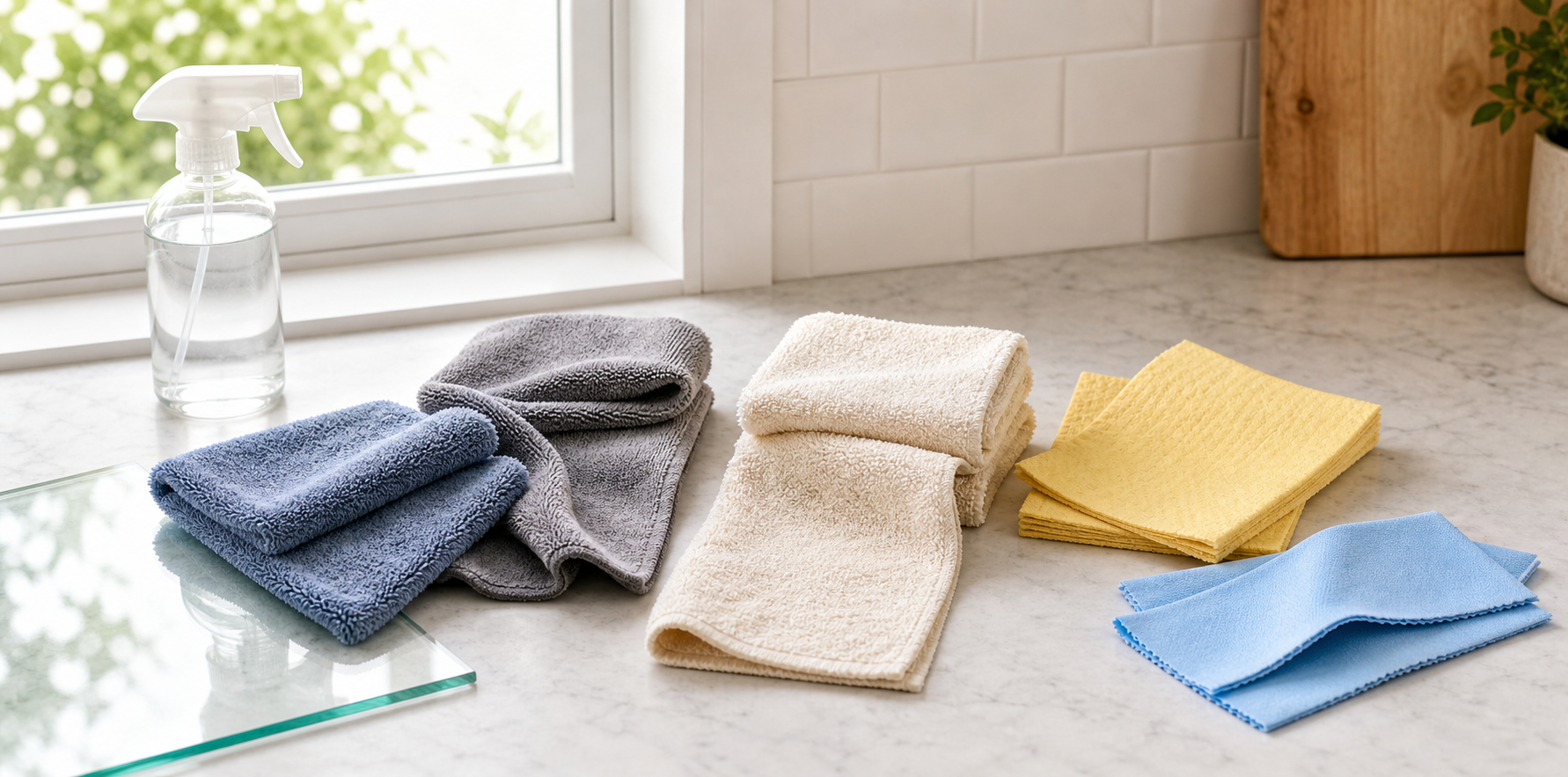
Compare by cleaning job
Shop the cloth type that fits the surface
Start with the material rather than the pack size. Check the maker's surface guidance and wash instructions before using a cloth on a finish you care about.
This is a best-fit material comparison, not a test-based ranking of brands. Material names do not guarantee performance, and care directions vary. For a wider plan that keeps repeat chores manageable, start with the low-effort home maintenance tools guide.
Quick Picks by Cleaning Job
- Best all-around starting point: a medium-pile microfiber cloth for routine dust, counters, and wipe-downs on compatible surfaces.
- Best for larger spills: a washable cotton terry cloth that can absorb liquid and fit your normal laundry routine.
- Best for quick kitchen wipeups: a thin cellulose sponge cloth that wrings out easily and has an open drying spot.
- Best for glass and mirrors: a smooth, low-lint cloth reserved for that job so grease and wash residue do not create streaks.
- Best simple system: two or three colors assigned to different zones, plus a breathable place for used cloths before wash day.
Comparison Framework
Microfiber Cloths
Microfiber uses fine synthetic fibers and comes in several weaves and pile heights. A plush cloth can collect ordinary dust and crumbs, while a tighter weave is usually easier to control on smoother surfaces.
Choose this type if: you want a versatile cloth for dry dusting and damp everyday wipe-downs. Look for finished edges that do not feel rough, a size that folds into clean sections, and care instructions you can follow.
Watch out for: lint from washing with towels, reduced absorbency after fabric softener, fibers snagging on rough surfaces, and using one dirty cloth across unrelated zones. Check surface directions before using any cloth on coated lenses, screens, glossy finishes, or easily scratched materials.
Cotton Terry and Flat-Weave Cloths
Cotton cloths are familiar, absorbent, and straightforward to wash. Terry loops can pick up a larger spill, while a flatter flour-sack-style weave is lighter and can dry faster.
Choose this type if: spills and kitchen cleanup matter more than a perfectly lint-free finish, or if you prefer a cloth that can join a compatible household laundry load.
Watch out for: lint on glass, shrinkage, slow drying when cloths are piled wet, and stains that make new soil hard to see. Wash dyed cloths according to their label before trusting them around light surfaces.
Cellulose Sponge Cloths
Cellulose sponge cloths sit between a thin sponge and a dishcloth. They absorb a small spill, become flexible when wet, wring out compactly, and take little drawer space when dry.
Choose this type if: you want a small cloth for repeat sink-side wipeups and have an open place where it can dry fully.
Watch out for: trapped food, odor, edge wear, staining, and care limits. They are not automatically appropriate for every cleaner or hot surface, and a damp cloth left crumpled beside the sink will not stay pleasant.
Smooth Lint-Free Cloths
Smooth glass cloths use a tight weave intended to leave fewer fibers than terry fabric. They work best when separated from greasy kitchen cloths and washed without products that leave a coating.
Choose this type if: mirrors, windows, chrome, or other maker-approved smooth surfaces are the main job.
Watch out for: expecting one pass to remove heavy grease, dragging grit across a surface, or using a cloth carelessly on a coated display. A glass cloth is a finish tool, not a substitute for safely removing abrasive dirt first.
Must-Have Features
- A job-appropriate weave: plush for pickup, terry for absorbency, thin sponge cloth for wipeups, and smooth low-lint fabric for finishing.
- A useful size: it should fold into several hand-size cleaning faces without becoming a bulky wet bundle.
- Clear wash directions: check water-temperature, dryer, bleach, and fabric-softener guidance before buying a large pack.
- Edges suited to the surface: thick stitched borders can be durable but awkward around details and unsuitable for delicate finishes.
- A drying plan: a cloth needs a hook, rack, or ventilated hamper rather than a sealed pile while damp.
- Easy separation: colors or dedicated baskets should distinguish kitchen, bathroom, glass, and general dusting cloths.
Nice-to-Have Features
- Color-coded sets: useful when everyone knows the simple system.
- Hanging loops: helpful when the loop lets the cloth hang open instead of bunched up.
- Mixed textures: a small variety pack lets you learn which weave fits each job before buying in bulk.
- Compact storage: thinner cloths are easier to keep near the point of use in a small kitchen or bathroom.
Use a Simple Color-Coding System
Color coding can reduce accidental crossover; it does not disinfect a cloth or make unsafe cleaning practices safe. Try one color for kitchen counters, one for bathroom surfaces, and one for dry dusting or glass. Store clean cloths near the job, but give used cloths a separate ventilated landing spot. Never return a damp used cloth to the clean stack.
Wash Care Matters More Than Pack Size
Read the product label first. Cloths generally last longer when grit is rinsed away, incompatible loads are separated, and the wash excludes products the maker warns against. Fabric softener can coat some fibers and reduce absorbency or create streaks. High heat may damage certain synthetic fibers, bindings, or sponge cloths.
Do not mix cleaning products in a laundry bucket or assume a normal wash makes every hazardous residue suitable for household laundry. Follow the cleaner label. Cloths used with strong chemicals, bodily fluids, pest products, mold cleanup, or unusual contamination may need a different procedure or disposal according to authoritative guidance.
Surface Cautions
A soft-feeling cloth can still carry grit. Before wiping glass, stainless steel, stone, wood, glossy appliances, or another finished surface, remove loose abrasive debris and check the maker's care instructions. Test an inconspicuous area when the finish is unfamiliar.
Electronics and screens deserve their own manufacturer-approved method. Do not assume a general microfiber cloth, glass cleaner, or damp kitchen cloth is suitable. Spray cleaner onto a cloth only when both product and surface directions allow it.
When to Replace a Reusable Cloth
Replace a cloth when it stays odorous after proper washing, sheds, has hardened residue, has torn edges that catch, no longer absorbs as expected, or cannot be confidently assigned to a clean job. Permanent staining alone does not always mean failure, but it can make new soil difficult to notice.
Who Should Skip Each Type
Skip plush microfiber if your main job is streak-free glass or you will wash it with linty towels and fabric softener. Skip cotton terry when lint is unacceptable or slow drying is a persistent problem. Skip cellulose cloths without an open drying spot. Skip a specialty glass cloth if you mainly need spill absorption.
Skip a bulk pack until you know the weave works with your surfaces, hands, laundry routine, and storage. A smaller mixed set is usually the better first purchase.
Bottom Line
Most homes do not need one supposedly universal cloth. Start with a modest set: medium-pile microfiber for routine dust and wipe-downs, cotton for absorbent cleanup, and a separate smooth cloth if glass and mirrors are recurring chores. Add cellulose cloths when their compact sink-side workflow fits the way you clean.
Choose by surface, wash care, drying space, and replacement habits—not the largest pack. For other repeat-chore decisions, continue with the low-effort maintenance hub or compare microfiber mop systems for small homes.