Best Rolling Under-Desk File Cabinets for Home Offices
A mobile file cabinet can give a small office useful document storage without consuming another wall. The right format is determined by the space beneath the desk, the files you actually keep, and whether every drawer can open without trapping your knees or making the cabinet tip.
As an Amazon Associate, The Good Home Doc may earn from qualifying purchases.
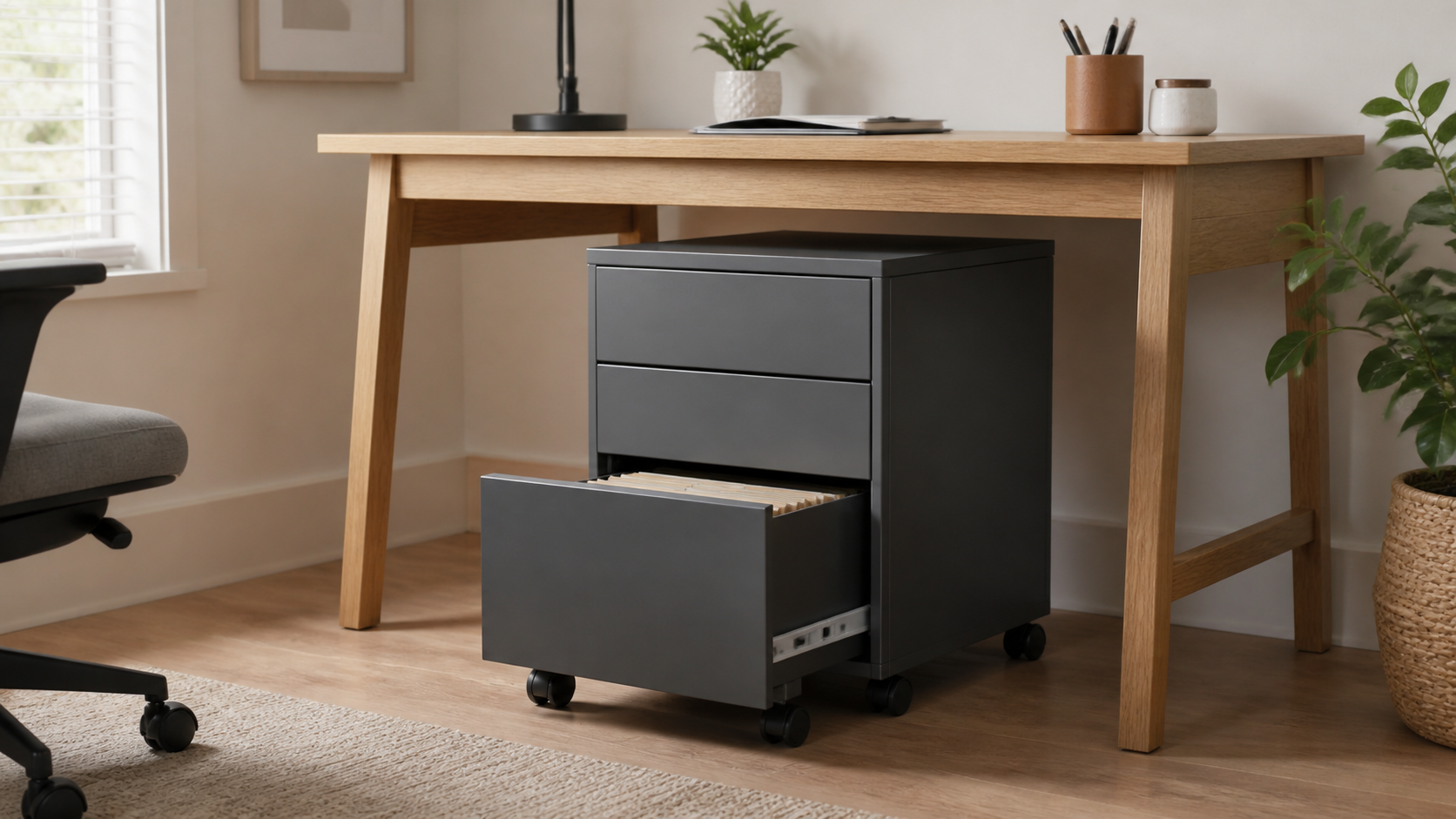
Product-category guide
Choose by clearance and file format, not drawer count
Low mobile pedestals preserve desktop space, but a useful cabinet must clear the desk frame, accept your letter- or legal-size folders, and leave room for full drawer extension.
This is a category comparison, not a hands-on test or a ranking of current models. Verify the current listing, manufacturer dimensions, supported file format, included casters, load guidance, assembly instructions, and lock design before buying.
Quick Picks by Home-Office Setup
- Best for everyday papers and supplies: a two-utility-drawer pedestal over one letter-file drawer, provided the cabinet clears the desk apron and your knees.
- Best for mostly hanging files: a compact cabinet with one or two dedicated file drawers and an anti-tip design that limits unsafe simultaneous opening.
- Best for changing desk layouts: a lighter mobile pedestal with reliable casters and a finished back, if its loaded weight remains manageable.
- Best for occasional sensitive paperwork: a locking cabinet whose lock coverage and construction match realistic privacy needs—not high-security storage.
- Best for very tight rooms: sometimes a stationary file box on a shelf; casters and drawer extension consume more space than product photos suggest.
Measure the Working Envelope
- Measure from the floor to the lowest desk apron, support rail, cable tray, or control box—not merely to the desktop.
- Measure usable width between desk legs and leave space so caster hubs and drawer pulls do not scrape them.
- Measure cabinet depth plus the full extension of its deepest drawer. Mark that distance on the floor.
- Sit at the desk and confirm the cabinet will not take the knee and foot space needed for a neutral working position.
- Check baseboards, rugs, floor transitions, chair casters, outlets, vents, and the route from the doorway to the desk.
Allow extra height for casters if they are optional or installed during assembly. A cabinet that fits while empty may also become hard to move once filled, especially on carpet.
Selection Criteria That Matter
- File orientation: Confirm whether the drawer accepts letter files front-to-back, side-to-side, or both. Legal-size support is not automatic.
- Usable drawer dimensions: Exterior width says little about folder fit. Look for interior measurements and rail orientation.
- Drawer extension: Full-extension slides improve access to rear folders but increase the open footprint and shift more weight forward.
- Tip control: Prefer designs that discourage opening multiple loaded drawers together. Follow anchoring or counterweight instructions where provided.
- Caster design: Check whether every caster swivels, which ones lock, whether they suit the floor, and whether the front support caster is included.
- Lock limitations: A basic furniture lock may discourage casual access, but it is not a substitute for a rated safe or secure records process.
- Assembly: Flat-pack cabinets require square panels and accurately installed slides. Preassembled steel pedestals reduce setup but can be heavy to carry.
- Surface and edges: Smooth handles, finished corners, and an easy-clean top matter in a narrow workspace.
Comparison Framework
Steel Mobile Pedestals
Steel cabinets are usually compact for their interior volume and often arrive mostly assembled. Their thin panels can maximize file space, but the cabinet may be heavy, noisy, or prone to visible dents.
Choose one if: you want a conventional office format and can manage the cabinet's delivered and loaded weight.
Watch for: sharp unfinished edges, limited caster access, ambiguous lock coverage, and drawers that cannot accept your folder orientation.
Wood-Composite Drawer Cabinets
These can blend with home furniture and offer useful supply drawers. Thicker panels reduce interior width, and careful assembly is essential for aligned slides.
Choose one if: appearance and mixed office-supply storage matter more than minimum exterior dimensions.
Watch for: swelling from spills, drawer bottoms with modest load limits, and a total height that grows after casters are attached.
File-First Mobile Cabinets
A file-first design dedicates most of its space to hanging folders. It makes sense for active paper records but can waste room when most of your work is digital.
Choose one if: you have measured a real folder collection and expect frequent access.
Watch for: unsupported legal files, tabs rubbing the drawer above, and overfilled folders that prevent smooth closing.
Mixed Utility-and-File Pedestals
Two shallow drawers over one file drawer are convenient for stationery, cables, notebooks, and a modest record set. The tradeoff is less dedicated file volume.
Choose one if: the cabinet will replace both a desk drawer and a small file box.
Watch for: tiny utility drawers, removable trays that consume height, and clutter that makes the file drawer hard to reach.
Must-Haves vs Nice-to-Haves
Must-Haves
- Verified height beneath every desk obstruction.
- Interior rails that fit the intended folders.
- Enough forward room for full drawer access.
- Stable operation on the actual floor.
- Clear load, assembly, and tip-safety instructions.
Nice-to-Haves
- A finished top for temporary supply space.
- Labels or removable dividers for mixed records.
- A fifth support caster beneath the file drawer.
- Replaceable or removable casters when the setup changes.
Setup, Filing, and Maintenance
Assemble the cabinet on a protected, level surface and install every supplied support part. Test each empty drawer before loading. Place heavier files low, distribute folders evenly, and open one loaded drawer at a time. Do not use an open drawer as a seat, step, or printer shelf.
Leave cable paths, outlets, vents, and chair movement unobstructed. On delicate flooring, use only caster materials or protective surfaces approved for that floor. Periodically tighten permitted fasteners, remove debris from caster axles, inspect slides, and reduce the load if drawers bind or the cabinet leans.
A furniture lock is most useful for casual household privacy. Store identity records, irreplaceable documents, valuables, or items needing fire or water protection according to their actual security and retention requirements.
Who Should Skip a Rolling File Cabinet
Skip this category if the desk is already short on knee room, the drawer would open into the chair or doorway, the floor is too uneven for safe rolling, or you must move a fully loaded cabinet up stairs. A stationary lateral cabinet, shelf file box, wall storage, or a smaller active-file caddy may fit better.
Also skip it if you keep very little paper. Sorting and securely discarding outdated records before buying furniture can solve the problem without adding another object to the room.
Bottom Line
The best rolling under-desk file cabinet is the one that fits the complete working envelope: desk clearance, knee space, open-drawer depth, floor conditions, and the exact folders you use. Start with those measurements, favor stable one-drawer-at-a-time access, and treat locks as basic privacy rather than serious security.