Best Spray Mops for Quick Kitchen Cleanup
A good spray mop makes crumbs, footprints, and small cooking splatters easier to handle before they become a full floor-cleaning project. The best fit is usually a light mop with a refillable bottle, washable pads, a dependable trigger, and a head that reaches cabinet toe kicks without leaving the floor overly wet.
As an Amazon Associate, The Good Home Doc may earn from qualifying purchases.
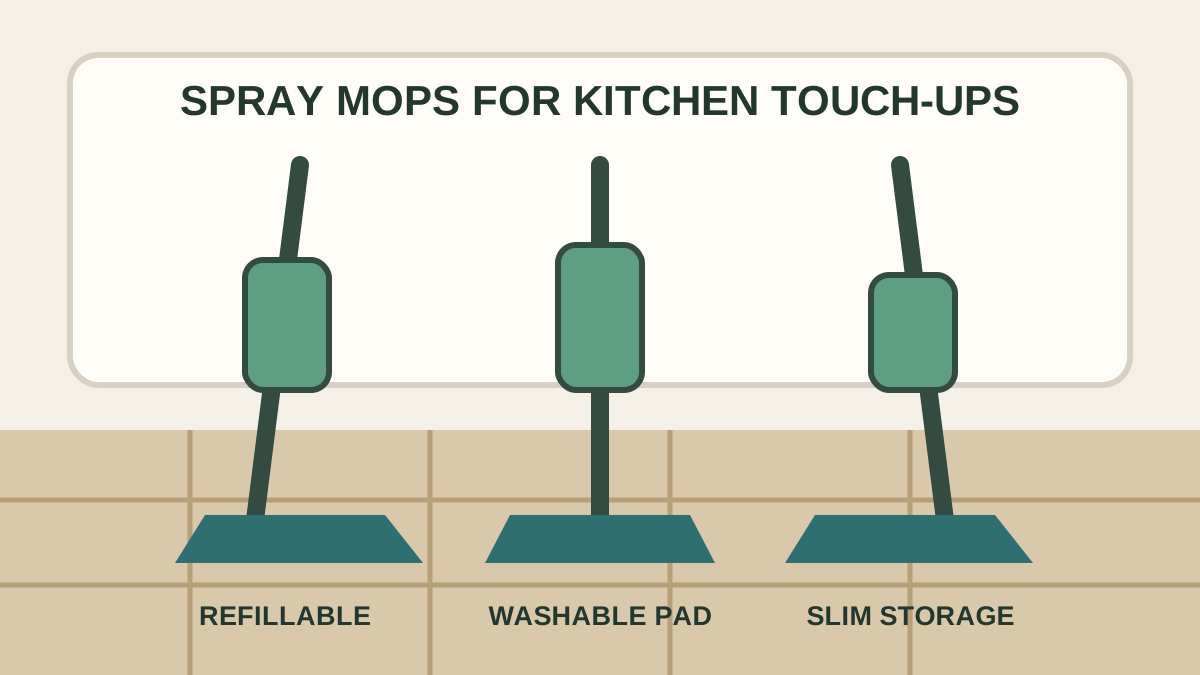
Product-category guide
Compare spray mop types
Use these affiliate shopping routes to compare current models, then verify floor compatibility, bottle design, pad availability, and storage dimensions before buying.
This is a best-fit comparison framework, not a tested ranking. Spray mops occupy a useful middle ground between wiping one spot by hand and carrying out a bucket. They are most useful on compatible sealed hard floors when the kitchen needs frequent, light damp cleaning—not deep scrubbing or large-spill pickup.
Quick picks by kitchen problem
- Best for most kitchens: a refillable trigger mop with washable microfiber pads and a low-profile swivel head.
- Best for very small kitchens: a slim one-piece mop with a removable bottle and a hanging loop.
- Best for frequent sticky spots: a model with a broad, even spray pattern and scrub-textured washable pads approved for the floor.
- Best for households that dislike laundry: a system offering both washable and disposable pad options, provided replacement cost and waste are acceptable.
- Best for sensitive flooring: whichever mop allows the lightest controllable mist and works with the floor maker's approved cleaner.
Start with the floor, not the mop
Check the flooring manufacturer's care instructions before choosing a cleaner or damp-mopping method. Sealed tile and many resilient floors tolerate routine damp cleaning, while some wood, laminate, cork, stone, and specialty finishes have stricter moisture or cleaner limits. “Hard-floor safe” on a mop listing does not override the floor maker's instructions.
A spray mop should leave a light, workable mist—not puddles. If flooring is swollen, loose, discolored by a leak, or soft underfoot, stop adding moisture and address the underlying problem. A mop is a cleaning tool, not a repair for damaged flooring.
Comparison framework
Refillable bottle systems
These let you use an appropriate cleaning mixture rather than buying proprietary cartridges. Look for a wide opening, clear fill line, secure cap, and bottle that removes without excessive force. Confirm that the maker permits your intended cleaner; mixing products or using unapproved concentrates can damage parts or leave residue.
Proprietary cartridge systems
Cartridges are convenient and reduce measuring, but they lock the household into a specific solution and recurring replacement cost. They make sense when convenience matters more than flexibility and the supplied cleaner suits the floor.
Washable-pad systems
Washable microfiber pads are the practical default for frequent kitchen touch-ups. Compare attachment security, pad availability, laundering directions, and whether you can keep separate pads for the kitchen and bathroom. Two or three pads are more useful than one pad that must be washed after every small cleanup.
Disposable-pad systems
Disposable pads reduce handling and laundry but cost more over time and create more waste. They can suit occasional use, but check whether the pad stays attached around table legs and whether refills are easy to find.
Must-have features
- Controlled, even spray: the nozzle should wet the cleaning path without soaking one small patch.
- Reliable manual trigger: a mechanical trigger avoids batteries and should be comfortable for repeated squeezes.
- Secure pad attachment: hook-and-loop strips, pockets, or clips should hold through turns and backward pulls.
- Replaceable pads: confirm that compatible pads are sold separately before committing to a system.
- Low-profile swivel head: useful under cabinet overhangs, around stools, and beside appliances.
- Practical bottle access: the reservoir should be easy to remove, rinse, dry, and reinstall without leaking.
Nice-to-have features
- A hanging loop or slim freestanding profile for tight storage
- A transparent bottle that makes the fill level easy to see
- Color-coded pads for keeping kitchen and bathroom use separate
- A small scrub zone on the pad for dried splatters, if approved for the floor
- A handle length that suits the regular user without hunching
Measure storage and working clearance
Measure the intended storage height and the mop head's width. A wide head cleans open floor quickly but can be awkward between an island and cabinets. Check whether the mop can stand securely, hang from an existing hook, or fit beside the refrigerator without blocking ventilation or a walkway. Avoid leaning it where a child or pet can knock it over.
Residue, pad care, and maintenance
More solution does not necessarily clean better. Excess cleaner can leave a tacky film that attracts new dirt. Follow the cleaner's dilution instructions, use only compatible products, and switch to a clean pad when the current one is spreading grime. Never mix cleaning chemicals.
Empty and rinse a refillable bottle according to its instructions rather than storing an unknown solution indefinitely. Wash pads as directed and skip fabric softener unless permitted because coatings can reduce microfiber performance. Let the bottle, pad, and head dry before enclosing them in a closet.
Who should skip a spray mop
Skip this category if the floor maker advises against damp mopping, if most of the home is carpet, or if the usual mess is heavy mud, grease, renovation dust, or large liquid spills. Those jobs may need vacuuming, hand cleaning, a conventional mop-and-bucket routine, or professional help depending on the material.
Also skip a spray system if squeezing a trigger is uncomfortable, replacement pads are hard to obtain, or you want one tool for deep cleaning. A simple flat mop with separately applied cleaner may be easier to maintain, while the broader microfiber mop guide compares that route.
Buying checklist
- The floor manufacturer permits damp cleaning and the intended solution
- The spray is controllable and the trigger feels practical
- The bottle is refillable or cartridge costs are acceptable
- Replacement pads are available and easy to wash or dispose of
- The head fits between cabinets, stools, and appliance edges
- The full mop fits the planned dry storage spot
- The return policy covers poor spray, leaking, or awkward fit
Bottom line
For most quick kitchen cleanups, start with a refillable manual-trigger spray mop with washable pads, an even mist, and a slim swivel head. Choose a cartridge system only when its cleaner fits the floor and the recurring cost feels reasonable. The best mop is not the one with the longest feature list; it is the one that matches the floor instructions, stores close to the kitchen, and can be cleaned easily after use.