Best Storage Ottomans for Small Living Rooms
A storage ottoman earns its floor space only when it fits the room both closed and open. Measure the walking path, lid clearance, and usable interior before comparing fabric or color. Then verify what the manufacturer actually permits: some ottomans are footrests or storage boxes only, while others are explicitly rated for seating.
As an Amazon Associate, The Good Home Doc may earn from qualifying purchases.
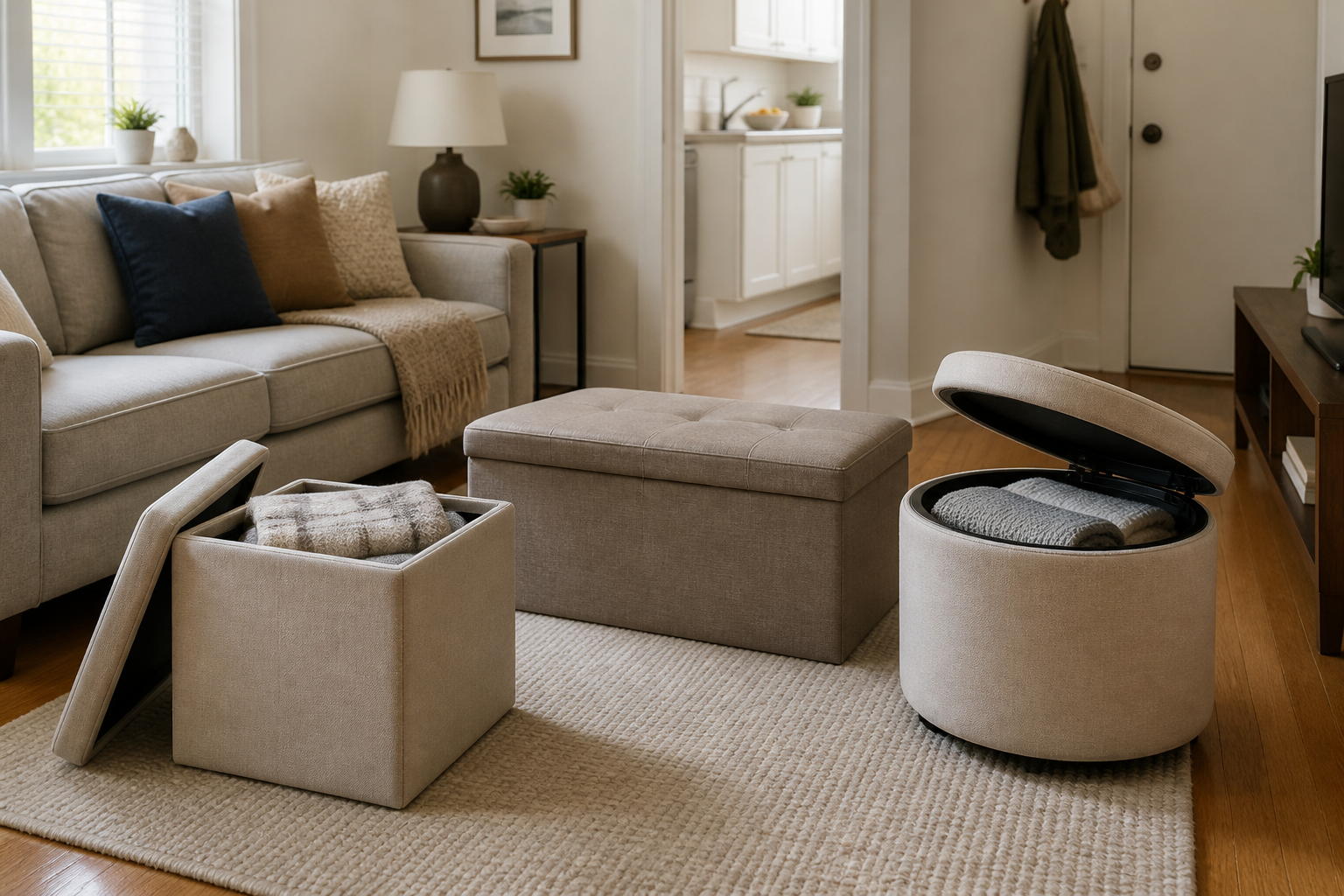
Compare the format that fits your floor plan:
- Browse category: Compare compact cube storage ottomansA practical starting point when the ottoman must tuck beside a chair or move easily.
- Browse category: Compare small storage ottoman benchesUseful for blankets or games when a longer wall or sofa edge is available.
- Browse category: Compare round lift-top storage ottomansWorth considering where softened corners improve circulation around the furniture.
These are category searches, not tested rankings. Verify current exterior and interior dimensions, lid mechanism, assembly, upholstery care, floor-contact materials, and manufacturer-rated uses before buying.
This guide compares storage-ottoman formats and buying criteria without naming unsupported winners. Product specifications change, and appearance alone cannot establish stability, seating capacity, or durability. Use the maker's current instructions for every load and use decision.
Quick Best-Fit Guide
- Best for the smallest open spot: a compact cube with a fully removable lid and enough hand clearance to lift it safely.
- Best for folded blankets and board games: a rectangular bench with a wide interior and a supported hinge or easy-to-handle lid.
- Best beside a busy walking path: a round or softly cornered ottoman that preserves the required passage width.
- Best for frequent access: a hinged or lift-top design that can open without moving drinks, lamps, or nearby furniture.
- Best when every inch matters: skip the ottoman if under-sofa bins or wall storage solve the problem without consuming permanent floor area.
Measure It Closed, Open, and in Use
Mark the proposed footprint on the floor with painter's tape. Keep the normal route between the sofa, doorway, and other furniture open. Record width, depth, and height, then add the space needed to remove or swing the lid. A hinged lid may need wall clearance; a removable lid needs a safe place to land during access.
Compare exterior measurements with usable interior measurements. Thick padding, tapered sides, hinge hardware, and a raised base can make the storage cavity much smaller than the outside suggests. Measure the blankets, games, or remotes you intend to store rather than relying on a volume label alone.
Comparison Framework
Cube Ottomans with Removable Lids
Cubes are easy to place beside a chair or pair in front of a sofa. A fully removable lid gives unobstructed access, but it takes two hands on some designs and must be stored while the compartment is open.
Choose one when: footprint and mobility matter more than holding long or bulky items. Check whether the base folds, how it locks into shape, and whether the maker allows use as a footrest or seat.
Rectangular Storage Benches
A bench-shaped ottoman can hold folded throws, game boxes, or larger soft items without forcing them into a cube. It also occupies a longer strip of floor and can become heavy once filled.
Choose one when: you have a measured wall or sofa edge and need a wide opening. Confirm hinge behavior, required opening clearance, interior obstructions, and any stated anti-tip or placement instructions.
Round Storage Ottomans
Round shapes avoid projecting corners and can make circulation feel less cramped. Their curved interiors are less efficient for rectangular boxes, and the lid may be awkward to align if it is fully removable.
Choose one when: the ottoman sits near a turning path and will mainly hold soft goods or small loose items in organizers.
Lift-Top and Tray-Top Designs
A lift-top can bring a surface closer to the sofa, while a reversible tray lid can hold light objects when the maker permits it. More moving parts mean more hinges, gaps, and hardware to inspect. Never assume a raised top is a desk or dining surface without explicit guidance.
Choose one when: frequent access or a temporary surface matters enough to justify added weight and complexity. Keep fingers clear of hinges and follow the product's closing instructions.
Must-Have Buying Checks
- Complete dimensions: Verify exterior footprint, usable interior, open-lid height or swing, and clearance around handles.
- Manufacturer-rated use: Confirm whether the item is approved for storage, footrest use, seating, or a tabletop. Do not infer one use from photos.
- Controlled lid access: Look for a lid you can grip and operate without pinching fingers or striking a wall.
- Stable construction: Check assembly directions, fasteners, leg attachment, base panels, and placement requirements.
- Floor compatibility: Verify feet, glides, or base material against your flooring and add maker-compatible protection if needed.
- Practical upholstery care: Match spot-cleaning or removable-cover instructions to pets, children, food, and everyday use.
Nice-to-Have Features
- A supported hinge: Can make frequent access easier, provided the mechanism is sturdy and fingers stay clear.
- Interior lining: Helps keep soft items away from rough hardware, though it can make spills harder to clean.
- Handles or a manageable empty weight: Useful when the ottoman must move for cleaning; empty it before lifting unless instructions say otherwise.
- Replaceable floor glides: Easier to maintain than a broad rough base in contact with the floor.
- A removable washable cover: Helpful in active households if the cover is designed to come off without disassembling the frame.
What Should Go Inside?
Storage ottomans work best for light, dry items used in the same room: throws, spare cushion covers, game controllers, or compact games. Use small fabric organizers for loose items so they do not collect around hinges. Keep contents below the closing path and within any stated storage limit.
Avoid damp textiles, food, candles, leaking batteries, heavy tools, or anything children could be tempted to climb inside to retrieve. An ottoman is not a toy chest unless its manufacturer explicitly designs and labels it for that use. For child-accessible rooms, review hinge, ventilation, entrapment, and tip guidance from the manufacturer.
Who Should Skip a Storage Ottoman
- Skip it if the taped footprint narrows a doorway, main walking path, or access to another piece of furniture.
- Skip foldable fabric cubes when you need verified seating or heavy-duty use and the maker does not clearly rate them for it.
- Skip a heavy hinged bench if you need to move it often for cleaning or cannot operate the lid comfortably.
- Skip pale, spot-clean-only upholstery in a pet, food, or craft zone if routine stains will make the furniture a maintenance burden.
- Skip this category when under-sofa, cabinet, or wall storage can hold the same items without adding another obstacle.
Buying Checklist
- Tape the closed footprint on the floor and preserve a comfortable walking path.
- Measure the required lid swing, lift height, and temporary landing spot for a removable lid.
- Compare usable interior dimensions with the exact items you plan to store.
- Verify every intended use and load against current manufacturer instructions.
- Check hinge behavior, assembly, floor contact, empty weight, and upholstery care.
- Choose cube, bench, round, or lift-top form based on the room—not on the longest feature list.
- Review return terms before assembling or using the ottoman.
Bottom Line
For most small living rooms, the best storage ottoman is the smallest format that holds the intended items, opens without rearranging the room, and has clear manufacturer guidance for every planned use. A cube is flexible, a bench fits wider soft goods, and a round design can ease circulation. If the footprint compromises the walking path, choose storage that stays under existing furniture instead.