Best Under-Door Noise Blockers for Apartments
A door-bottom blocker can soften sound that travels through a large open gap, but it cannot soundproof an apartment or stop noise moving through walls, vents, glazing, or the door itself. The best type is the one that fits the measured gap, moves with your door, stays out of the walking path, and remains easy to remove.
As an Amazon Associate, The Good Home Doc may earn from qualifying purchases.
Compare the blocker style that fits your gap and door:
- Browse category: Compare under-door noise blockers for apartmentsUse the framework below to separate slide-on blockers, movable door snakes, and removable sweeps.
This is a category search, not a tested ranking. Verify current dimensions, stated gap range, door thickness, floor compatibility, mounting method, cleaning instructions, return terms, and building or lease limits before buying.
This guide compares product categories and fit criteria, not named winners. Retail acoustic claims are difficult to compare without a shared test method. Treat foam, fabric, and sweep products as modest gap-sealing tools rather than proof of a specific sound reduction.
Quick Best-Fit Guide
- Best for a frequently used interior door: a properly sized slide-on twin blocker that moves smoothly without bunching.
- Best for a door that stays closed most of the time: a weighted fabric door snake you can position against the gap.
- Best for a consistent gap and smooth floor transition: a low-profile removable sweep whose maker lists your door material and gap range.
- Best for an uneven threshold: no purchase until you confirm that the blocker will not catch, roll, or prevent full closure.
- Best for a rated corridor or unit-entry door: ask building management before attaching or altering anything.
Measure Before You Shop
- Close the door and measure the gap at the hinge side, center, and latch side. Use the smallest clearance when checking whether a moving blocker can pass.
- Measure the door thickness and width. Slide-on products must fit both, while a door snake should cover the full opening without projecting into the walkway.
- Open the door through its full swing and note changes from hard floor to rug, mat, threshold, or carpet.
- Check which way the door swings and whether the product would interfere with a closer, weather seal, latch, threshold, or required clearance.
- Photograph the door and review the lease before using adhesive, screws, trimming, or any semi-permanent attachment.
Comparison Framework
Slide-On Twin Draft Blockers
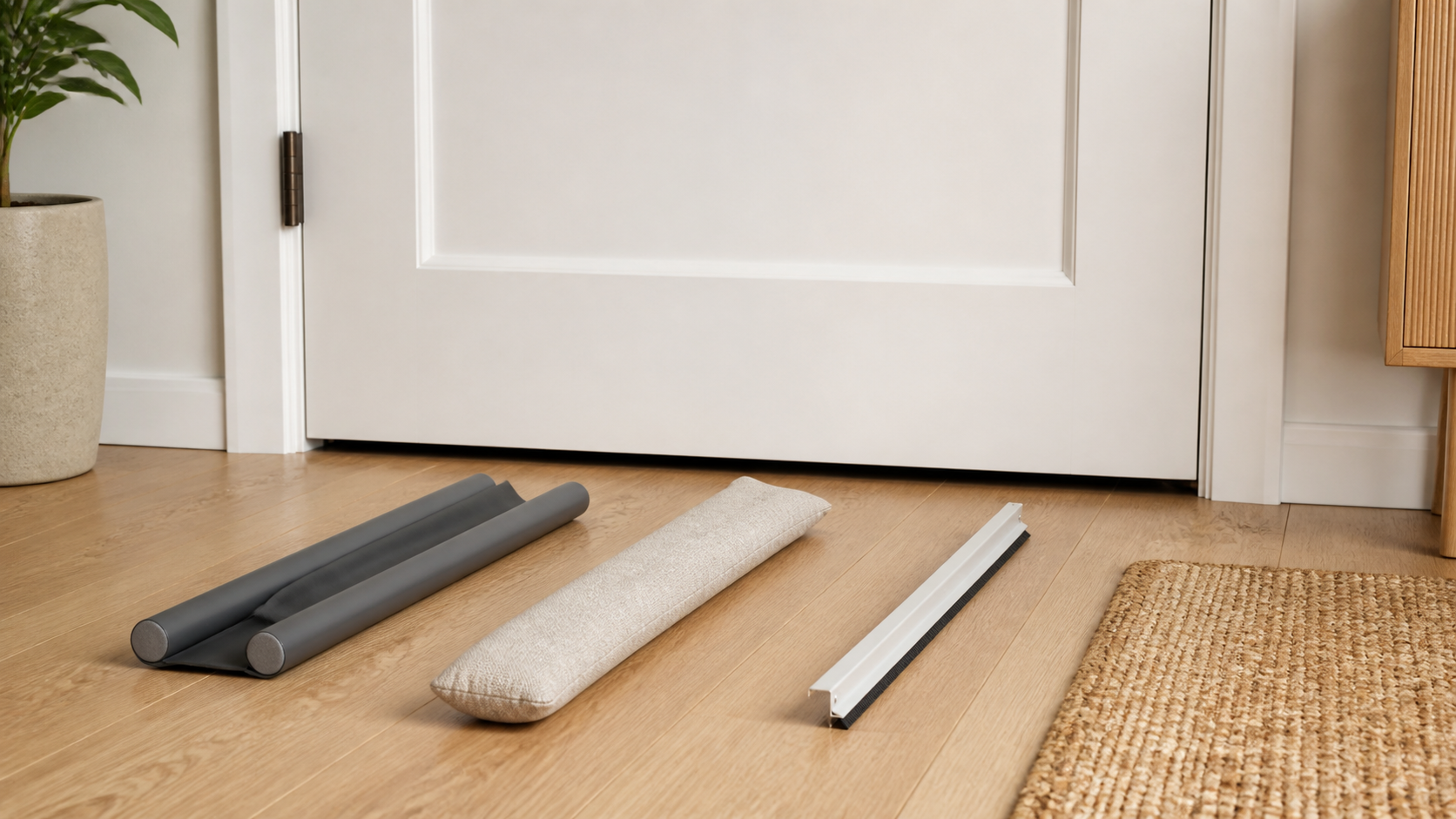
These place a foam or fabric cylinder on each side of the door, connected by material that slides underneath. Because the blocker travels with the door, it can be convenient for a bedroom or home-office door that opens often.
Choose one when: the door thickness and gap match the published range and the floor stays level through the swing. Skip it when: it bunches, drags heavily, catches a rug, prevents latching, or creates a trip edge.
Weighted Fabric Door Snakes
A movable fabric tube is the simplest and least permanent option. Its mass and soft surface can cover a visible gap while the door is closed, and a washable cover can make upkeep easier.
Choose one when: you want a no-attachment option and do not mind repositioning it. Skip it when: the door is used frequently, bending to move it is impractical, children or pets displace it, or it sits in an exit path.
Removable Door Sweeps
Sweeps attach to the door face or bottom using a slide-on channel, removable adhesive, magnets on compatible steel doors, or another maker-specified method. A well-fitted flexible edge can stay aligned across a consistent gap.
Choose one when: the mounting method is approved for the surface and the sweep clears the entire swing. Skip it when: installation changes a managed entry door, adhesive risks the finish, or the sweep interferes with closing and latching.
Must-Have Buying Checks
- Published fit range: Match the actual door thickness, width, and smallest-to-largest gap instead of relying on “universal.”
- Full door operation: The door must open, close, latch, and use any closer normally after installation.
- Floor compatibility: Check hard flooring, carpet pile, rugs, thresholds, and transitions across the complete swing.
- Removable setup: Renters should favor movable or explicitly removable formats and obtain permission where required.
- Cleanable contact surfaces: Floor-level fabric and foam collect dust and hair; look for a removable cover or clear care directions.
- Realistic claim language: Prefer dimensions and construction details over promises to soundproof a room.
Nice-to-Have Features
- Trim-to-fit foam: Helpful when the maker provides clear cutting and closure instructions.
- Washable outer sleeve: Easier to maintain in a pet household or dusty corridor.
- Low-friction underside: Useful only when it still stays positioned and does not mark the floor.
- Neutral, low-profile finish: Less visually intrusive on a frequently seen apartment door.
- Easy removal: Important for cleaning, inspection, move-out, and any door that building staff may need to service.
What Noise Reduction to Expect
A visible air gap is also a path for conversation, television sound, and hallway noise. Filling that path may make some sound less direct, especially higher-frequency speech, but the result depends on the entire door assembly and surrounding construction. A hollow door, thin wall, shared vent, or poorly sealed frame can remain the dominant route.
Do not compare products using isolated decibel claims unless the seller identifies the test method, assembly, frequencies, and conditions. Even then, a laboratory setup may not represent your apartment. Evaluate whether the gap is covered and daily use improves without creating a new obstruction.
Door, Lease, and Exit Limits
Do not alter a unit-entry, corridor, fire-rated, smoke-control, or self-closing door without written building approval. Do not remove existing seals, drill the door, disable a closer, or add material that prevents full closure and latching. Door requirements vary, and a retail product page cannot determine what your building permits.
Keep exits and walking routes clear. If the door rubs, does not latch, is damaged, has an unusually large or changing gap, or needs force to operate, report it to the landlord or building manager rather than using a blocker to hide the condition.
Who Should Skip Under-Door Noise Blockers
- Skip the category when most noise comes through a wall, ceiling, window, vent, or the body of a lightweight door rather than the bottom gap.
- Skip moving door snakes when repositioning them is difficult or they would sit in a walking or emergency path.
- Skip a slide-on blocker when carpet, rugs, or an uneven threshold make it drag or bunch.
- Skip attached sweeps when the lease or building rules prohibit them or the surface cannot release adhesive cleanly.
- Skip any setup that prevents normal opening, self-closing, latching, inspection, or required clearance.
Bottom Line
For a frequently used interior door with a level floor, start by comparing a correctly sized slide-on twin blocker. Choose a weighted door snake for the simplest no-attachment setup when the door stays closed, or a removable sweep for a consistent gap when the mounting method is approved. Measure the whole swing, keep expectations modest, and never trade reliable door operation for a small comfort improvement.