Best Water Leak Detectors for Washing Machines
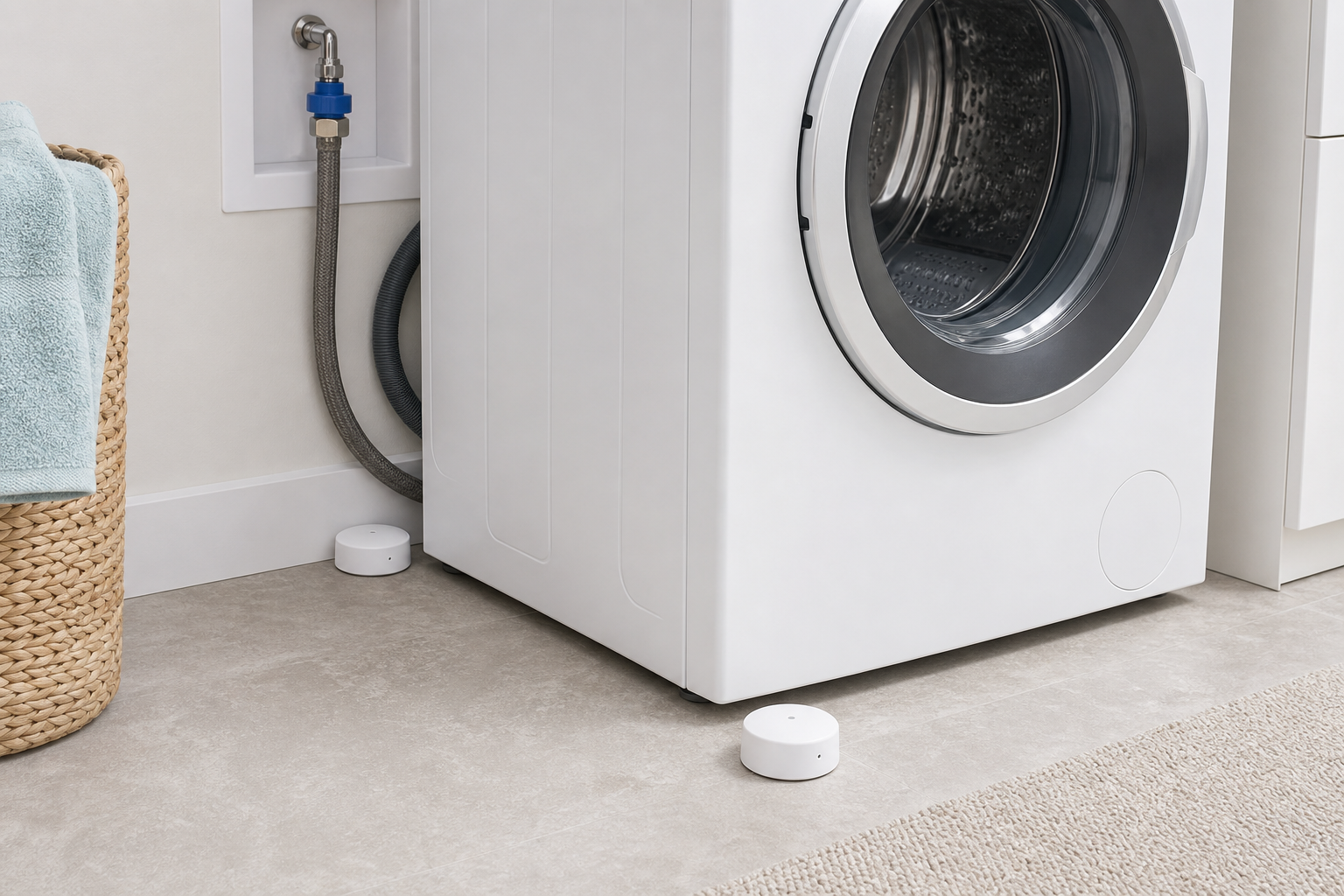
For most laundry areas, start with a loud battery-powered detector that fits flat at the lowest likely water path and can be tested without moving the washer. Add phone alerts when the machine runs while nobody is nearby, but do not pay for smart features unless the detector can maintain a reliable connection from the laundry location.
As an Amazon Associate, The Good Home Doc may earn from qualifying purchases.
Compare the alert and placement first: These affiliate category links are shopping starting points, not tested rankings.
- Browse category: Loud local water leak alarmsA simple starting point when someone is usually home and can hear the laundry area.
- Browse category: Wi-Fi water leak detectorsWorth comparing when remote alerts matter and the laundry location has dependable Wi-Fi.
- Browse category: Leak detectors with sensor cablesUseful for monitoring a longer path behind or beside a washer when the cable can stay accessible.
Confirm sensor dimensions, contact layout, alarm volume, notification requirements, battery type, hub or subscription needs, test method, and placement instructions before buying.
A detector gives an early warning; it does not stop water or diagnose the source. Use the home leaks and moisture prevention guide for the broader inspection routine. If limited containment also fits the room, compare washing machine leak pans separately.
Quick Picks by Laundry Setup
- Best for most accessible laundry rooms: a stand-alone battery alarm with a loud local siren, visible test control, and low-battery warning.
- Best for a basement or detached laundry area: a connected detector that sends phone alerts and still sounds locally if internet service fails.
- Best for a tight closet: a low-profile sensor or remote sensing cable that fits the lowest water path without being crushed by the appliance.
- Best for monitoring behind the washer: a detector with a replaceable remote probe or sensing cable that can be tested and retrieved from the side.
- Best for unreliable Wi-Fi: a loud local alarm, or a hub-based system only after confirming signal at floor level in the closed laundry space.
Comparison Framework
Stand-Alone Local Alarms
These compact detectors use metal contacts on the base or a short probe and sound a siren when water bridges the contacts. They are inexpensive, simple, and do not depend on an app. Their main limit is obvious: somebody must be close enough to hear them.
Choose one if: the laundry area is occupied regularly and the alarm can sit where water is likely to reach first. Skip it if: the washer often runs while the home is empty or the alarm would be muffled behind doors and appliances.
Wi-Fi or Hub-Connected Detectors
Connected detectors can send alerts away from home and may report battery or connection status. Check whether they connect directly to Wi-Fi or need a separate hub, which wireless band they support, what happens during an outage, and whether useful alerts require a paid service.
Choose one if: remote notification solves a real absence problem and you can verify reliable floor-level signal. Skip it if: setup, account dependence, notification permissions, or a required subscription will keep the system from being maintained.
Remote Probes and Sensor Cables
A separate probe can reach behind a washer while the alarm body remains accessible. A sensing cable covers a longer path, which can help where the exact first drip point is uncertain. More coverage also means more cable to route, inspect, dry, and protect from pinching.
Choose one if: the probe or cable can follow the actual low point and remain retrievable. Skip it if: installation would cross moving parts, hot surfaces, sharp edges, the washer feet, or a walkway.
Map the Water Path Before Buying
- With the machine off, identify the supply valves, hose connections, drain hose, standpipe, appliance base, nearby floor seams, and the room's lowest reachable point.
- Check whether a drip from each source would run forward, backward, into a pan, under baseboard trim, or beneath the appliance.
- Measure the available sensor height and footprint. Leave all appliance feet, vents, access panels, hoses, cords, and required clearances unobstructed.
- Stand at the farthest occupied room with laundry doors closed and decide whether a local alarm would be heard.
- For a connected model, verify Wi-Fi or hub signal at the intended floor-level placement before relying on remote alerts.
Must-Have Selection Criteria
- Correct sensing geometry: the contacts, probe, or cable must touch the likely water path without needing a deep puddle.
- Testable placement: you should be able to trigger the test control, inspect the sensor, and replace batteries without moving the washer.
- Useful local alarm: even a connected model should provide an audible warning in the laundry area.
- Low-battery warning: look for a clear audible, visible, or app warning and a common replaceable battery when practical.
- Connection-status visibility: smart models should make an offline detector noticeable instead of silently disappearing.
- Reset and drying instructions: confirm how the sensor is silenced, dried, retested, and returned to service after contact with water.
Nice-to-Have Features
- Remote probe: keeps the alarm and battery accessible while the sensing point sits behind the machine.
- Multiple notification contacts: useful in a shared home if alerts can be routed without exposing unnecessary account access.
- Alert history: can help show when a detector triggered or went offline, but it does not identify the leak source.
- Adjustable alert volume: helpful only if the chosen setting remains easy to hear.
- Device naming: makes a multi-sensor alert easier to locate quickly.
Placement and Maintenance Tradeoffs
Place the sensor according to its instructions on a stable surface where the contacts can reach water. Do not wedge it under a leveling foot, attach it to plumbing without approval, cover a drain, place it inside the washer cabinet, or route a probe across a power cord. Keep it out of normal mop water and splash paths that would create avoidable alarms.
Test the alarm on the manufacturer's schedule and after battery replacement, an app update, router changes, or moving the appliance. Confirm both the local sound and every expected remote notification. Replace batteries promptly, clean contacts only as directed, and replace a detector that is cracked, corroded, unreliable, or no longer supported by its app.
What a Detector Cannot Do
A basic detector does not shut off water, protect a floor, prove that hoses are sound, or prevent a standpipe overflow. Automatic shutoff systems are a different and more involved product category; installation may affect plumbing, appliance instructions, building rules, and reliability during power or network failures. Get qualified guidance before changing supply plumbing.
If water is already present, stop using the washer and address the source. Avoid touching plugs, outlets, cords, or powered equipment in a wet area. Use building maintenance, an appliance technician, a qualified plumber, or emergency help as the situation requires.
Who Should Skip a Washing Machine Leak Detector
Skip any detector that cannot be placed, heard, tested, or maintained in the actual laundry setup. Skip an app-dependent model when connectivity is unreliable or nobody will monitor its alerts. Do not treat a detector as a substitute for replacing damaged hoses, correcting a drain problem, preserving shutoff access, or investigating stains, soft flooring, recurring moisture, or previous overflow.
Renters should report leaks and follow lease rules instead of altering supply lines or fixed plumbing. Homeowners with a concealed laundry area or repeated leaks may need a qualified professional to find the source and evaluate containment or shutoff options.
Bottom Line
The best washing machine leak detector is the one that reaches the first likely water path, gives an alert the household will actually receive, and stays easy to test. Choose a loud local alarm for simplicity, add remote alerts for real away-from-home coverage, and use a probe or cable only when it improves placement without creating a new obstruction. Keep hoses, drains, shutoffs, flooring, and the detector itself visible and maintained.