Best White Noise Machines for Noisy Apartments
A white noise machine cannot soundproof an apartment, but a steady, comfortable sound can make irregular hallway voices, traffic changes, and neighboring doors less noticeable. The right category depends on which noise interrupts you, how close the machine can sit, and whether you prefer moving air, electronically generated noise, or recorded soundscapes.
As an Amazon Associate, The Good Home Doc may earn from qualifying purchases.
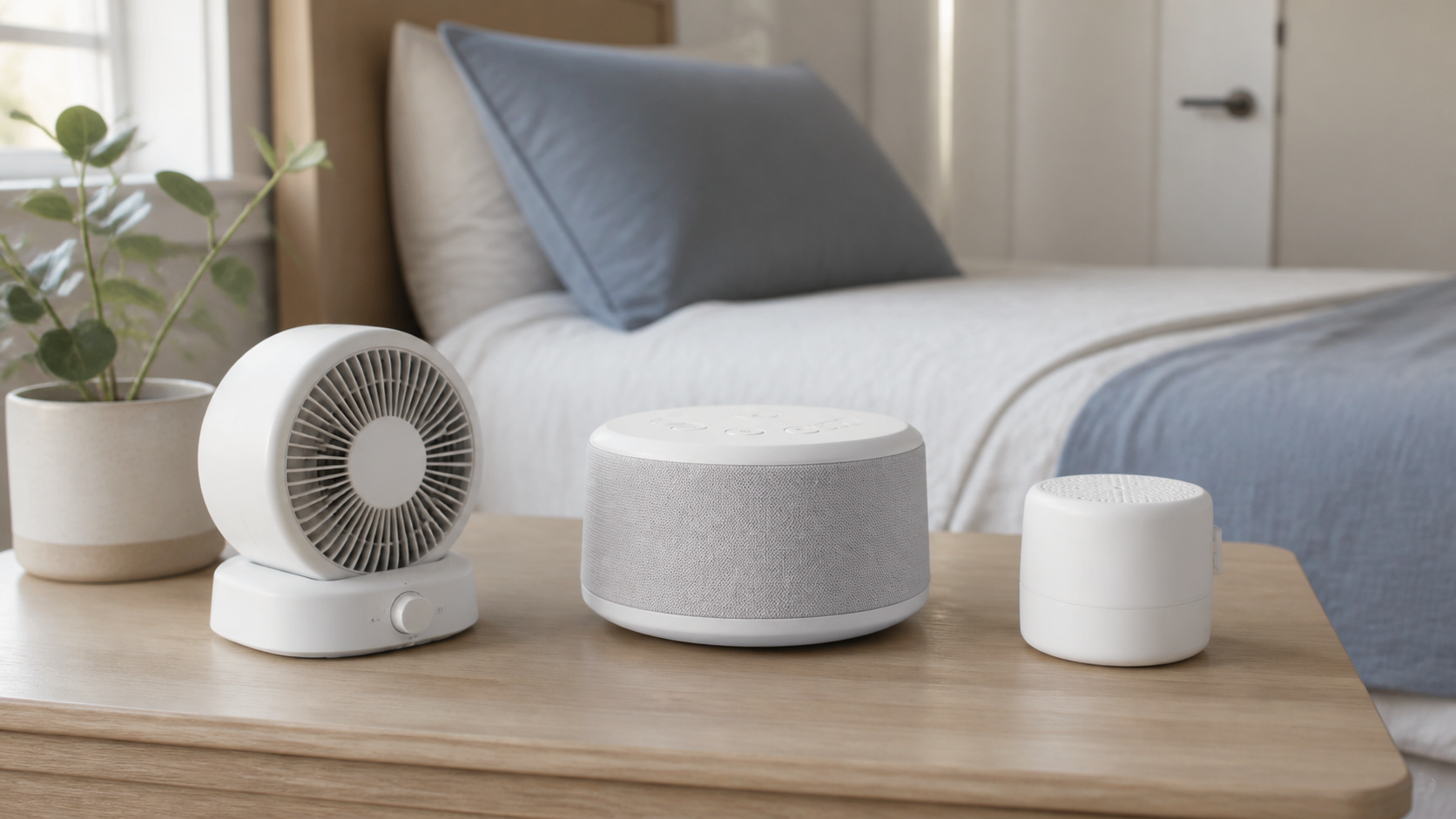
Compare the machine style that fits your room:
- Browse category: Compare mechanical fan-style machinesAdjustable moving-air sound without recorded tracks; check size, airflow, and control range.
- Browse category: Compare digital white noise machinesMultiple noise colors and sound options; prioritize fine volume steps and clearly described playback.
- Browse category: Compare portable travel machinesSmaller units for changing rooms or travel; verify charging, battery behavior, and usable controls.
These are product categories, not tested rankings. Confirm current controls, power method, timer behavior, dimensions, return terms, and manufacturer instructions before buying.
This is a category comparison, not a tested ranking. Listings use “white noise” loosely, and sound preference is personal, so a useful return policy and simple bedside controls can matter more than a long feature list.
Quick Category Match
- Natural, continuously variable sound: a mechanical fan-style machine with adjustable tone or vents.
- White, pink, or brown noise choices: a digital machine with fine volume steps and clearly labeled controls.
- Travel or room-to-room use: a compact rechargeable machine with a physical power button and battery indicator.
- If steady noise bothers you: skip the category or audition timer-based soundscapes before committing.
Start With the Noise You Want to Make Less Noticeable
Steady background sound works best against intermittent noises that are not dramatically louder than the room: footsteps in a hall, distant conversation, plumbing sounds, or traffic that rises and falls. It does not remove sound, and it will not reliably cover bass vibration, impact noise through a ceiling, alarms, or very loud neighbors.
Before buying, try lower-cost room changes from the noisy apartment guide. Move the bed away from a shared wall, address appropriate gaps with lease-safe products that do not interfere with required door operation, and add soft furnishings where they fit. A machine is most useful after obvious placement problems have been addressed.
Comparison Framework
Mechanical Fan-Style Machines
These create sound by moving air through an enclosure. Their appeal is continuous physical sound with tone adjusted by vents or housing position rather than a recorded track.
Choose this style when: you like fan sound, want simple controls, and have enough bedside space for a vented device.
Watch for: noticeable airflow, dust at openings, vibration on a hollow nightstand, limited timer options, and a sound range that may still be too bright or low for your preference.
Digital Noise Machines
Digital units can offer white, pink, brown, and other broadband noise plus fan or nature-style tracks. More choices help only if the controls remain easy to use in the dark.
Choose this style when: you want to tune the sound character, need a timer, or want a smaller footprint than many mechanical machines.
Watch for: short audible loops, large jumps between volume levels, bright indicators, startup sounds, touch controls that are hard to find at night, and app dependence for basic functions.
Portable and Rechargeable Machines
Portable machines trade speaker size and maximum output for compact storage and flexible placement. They can suit travel, temporary sleeping spaces, or a household that moves one unit between rooms.
Choose this style when: small size and cordless use matter more than room-filling sound.
Watch for: vague battery claims, charging lights, proprietary cables, automatic shutoff, weak low-frequency output, and controls that can be pressed accidentally in a bag.
Must-Have Features
- Fine volume control: enough steps to find a useful level without making the machine the disturbance.
- A sound you tolerate: prefer an audition, sound sample, or return window over labels such as “soothing.”
- Simple physical controls: power and volume should be easy to find without unlocking a phone.
- Stable power behavior: check whether it resumes after an outage, remembers settings, and can run all night in the intended mode.
- Safe placement: the base should be stable with vents clear and the cord outside walkways and away from bedding.
Nice-to-Have Features
- Timer with continuous mode: useful for winding down without losing the overnight option.
- Display dimming: better than covering lights in a way that blocks vents or controls.
- Setting memory: restoring the last sound and volume reduces bedtime adjustments.
- Multiple noise colors: helpful for preference matching, but not automatically better than one well-controlled sound.
- Common charging connection: convenient for portable units when it matches cables you already carry.
Placement and Neighbor Considerations
Place the machine between the sleeper and the bothersome sound source when practical, rather than automatically putting it beside your head. Start low and raise it only enough to soften sudden changes. Keep it on a stable surface, leave required ventilation clear, and prevent cords from crossing a walking path.
A louder machine is not a substitute for addressing a serious building problem. Keep the volume comfortable enough that you can still respond to smoke and carbon-monoxide alarms, a child, a door, or another signal you need to hear. If sound is affecting hearing, health, sleep, safety, or tenancy, seek appropriate professional or property-management help rather than masking it indefinitely.
Who Should Skip a White Noise Machine
- Skip it if you need soundproofing: it adds sound; it does not block transmission through walls, floors, windows, or doors.
- Skip it if steady sound makes rest harder: no noise color is universally comfortable.
- Skip app-first models if you want dependable offline controls or do not want another account and wireless device in the bedroom.
- Skip a portable model if you need strong room coverage and will not recharge it regularly.
- Skip any unsafe setup that masks essential alerts or requires excessive volume, unstable placement, blocked vents, or a cord across the floor.
Bottom Line
Choose a mechanical machine for adjustable moving-air sound, a digital model for sound and timer flexibility, or a portable unit for travel and changing rooms. Prioritize comfortable low-level output, fine controls, simple operation, safe placement, and a return policy. Treat the machine as one layer in an apartment noise plan—not as soundproofing or a fix for a building problem.