Cool Mist vs Warm Mist Humidifier for a Bedroom
Both types add moisture to dry bedroom air, but they create it differently. The practical choice comes down to household safety, nighttime sound, mineral control, energy use, and whether you will keep the water-contact parts clean.
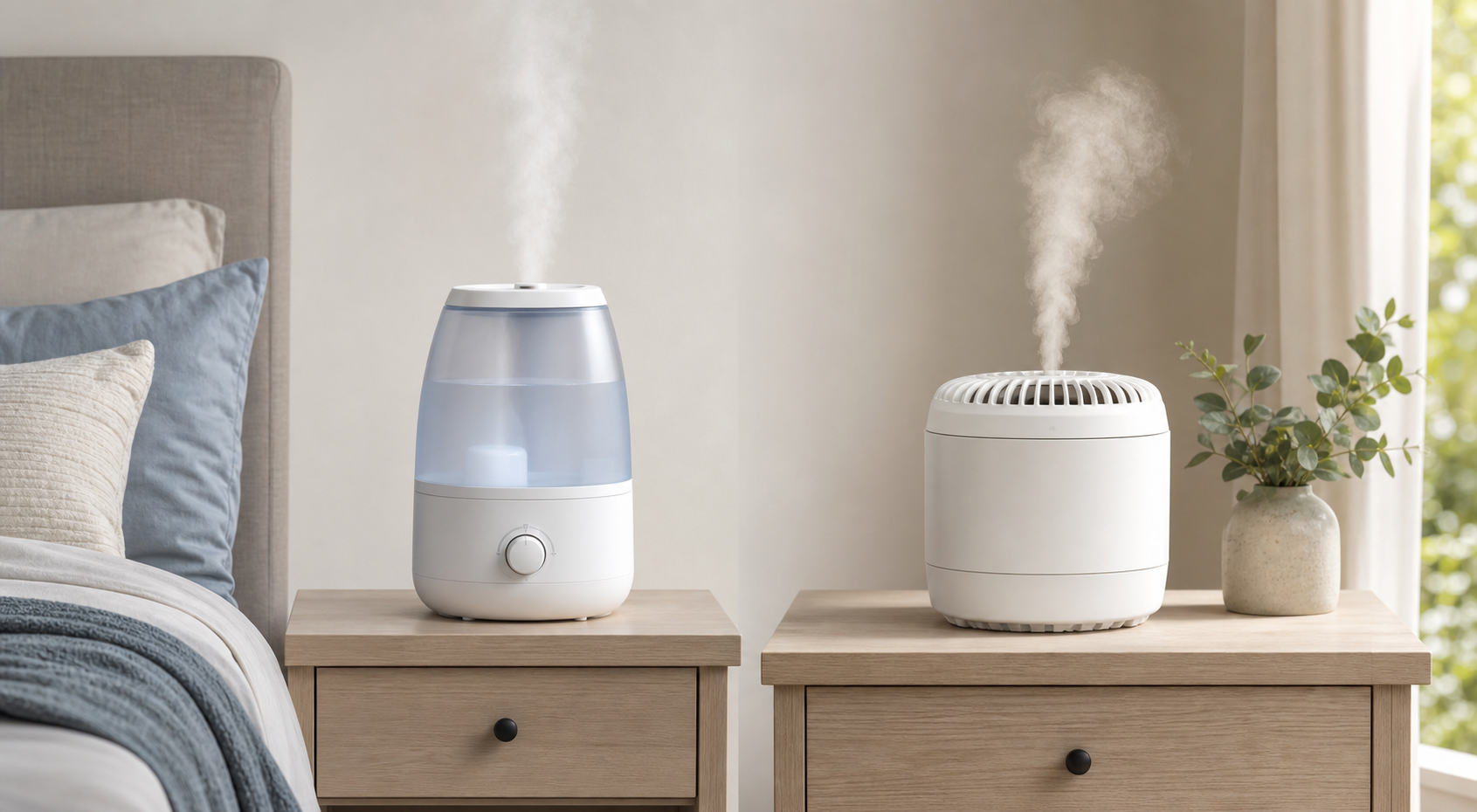
As an Amazon Associate, The Good Home Doc may earn from qualifying purchases.
Compare the formats after checking your room: Match the unit to the manufacturer's room-size guidance, cleaning instructions, and required clearances.
- Browse category: Easy-clean cool mist humidifiersUsually the safer format around children and pets because the emitted mist is not heated.
- Browse category: Warm mist humidifiersA quieter fan-free format in many designs, but hot water and steam require stricter placement.
- Browse category: Bedroom humidity monitorsUseful for checking whether the room needs moisture and whether nearby surfaces stay dry.
These are category shopping routes, not tested winners. Confirm tank access, operating sound, replacement supplies, electrical use, safety instructions, return policy, and room fit before buying.
If you need help deciding whether a humidifier fits the room at all, start with the air purifier versus humidifier comparison. For tank access, controls, and cleanup features across humidifier types, use the broader easy-clean bedroom humidifier guide. This page stays focused on cool mist versus warm mist.
Quick Answer
Choose a cool mist humidifier for most bedrooms with children, pets, tight surfaces, or concern about hot water. Choose a warm mist humidifier only when you can keep the hot-water unit securely out of reach, follow its clearance instructions, and accept its higher energy use.
Mist temperature does not make either format a universal winner. Both need regular cleaning, both can make a room too damp, and neither should be used to cover up condensation, a musty odor, a leak, or another existing moisture problem.
Cool Mist Humidifiers: Who They Fit
Cool mist models release room-temperature moisture. The category includes quiet ultrasonic units and fan-driven evaporative units, so “cool mist” does not describe one maintenance pattern.
Choose cool mist if:
- Children or pets could enter the bedroom or reach the appliance.
- You want to avoid a heated water reservoir and steam outlet.
- Lower operating energy use matters for frequent overnight use.
- You can manage the unit's specific mineral or wick maintenance.
Skip or reconsider cool mist if:
- You plan to use hard tap water in an ultrasonic unit but will not manage possible mineral dust.
- A fan-driven evaporative model would be too noticeable at your preferred sleep setting.
- The tank has narrow openings or hidden channels you cannot clean and dry.
- You assume “cool” means maintenance-free; standing water and residue still require routine care.
Warm Mist Humidifiers: Who They Fit
Warm mist units heat water and release warm vapor. Many designs operate without the fan noise of an evaporative unit, although boiling, cycling, or bubbling sounds can still be noticeable in a quiet room.
Choose warm mist if:
- The bedroom is used only by adults who can maintain safe placement.
- The unit can sit on a stable, water-resistant surface where it cannot be bumped or pulled by its cord.
- You prefer the format and accept the additional electricity used to heat water.
- The reservoir and heating chamber are accessible enough to descale as directed.
Skip warm mist if:
- A child, pet, or unsteady sleeper could touch, tip, or pull down the unit.
- Your only placement is a cramped nightstand near bedding, curtains, books, or electronics.
- You want the lowest practical operating energy use.
- You will not remove scale from the heating chamber on the schedule in the manual.
The Tradeoffs That Actually Matter
Burn and tip risk
Cool mist avoids the hot-water and steam hazard built into warm mist operation. That makes cool mist the more practical default around children and pets. A warm mist unit needs a stable out-of-reach location, careful cord routing, and every clearance specified by its manufacturer.
Nighttime noise
Ultrasonic cool mist units are often quiet, but they may hum or gurgle. Evaporative cool mist units use a fan, and the setting needed for the room can be audible. Warm mist units often avoid fan noise but may bubble or cycle. Treat published sound information as model-specific and buy from a seller with a workable return policy if you are sound-sensitive.
Minerals, filters, and scale
An ultrasonic unit can disperse minerals from tap water as pale dust. The manual may call for distilled or demineralized water or a mineral cartridge. Evaporative models commonly use a wick that needs drying, cleaning, or replacement. Warm mist units can leave mineral scale in the heating chamber. None of these formats eliminates maintenance; they move the work to different parts.
Energy use
Warm mist uses energy to heat water, so it generally draws more power than a small ultrasonic cool mist unit. Actual use varies by model and output setting. Compare the rated wattage on the product or manual instead of relying on broad “efficient” marketing language.
Room comfort
Once moisture mixes into room air, the useful decision is how steadily the unit can maintain an appropriate level without wetting nearby surfaces. Warm mist is not a substitute for space heating, and cool mist is not air conditioning. Choose output control and room fit over the temperature label.
Setup and Maintenance Checklist
- Check humidity first. Do not add moisture to a bedroom that already has condensation, damp surfaces, or a musty smell.
- Follow the room-size guidance. Oversizing can make it easier to over-humidify a small bedroom.
- Choose a stable surface. Keep the unit away from bedding, walls, curtains, electronics, and traffic paths; follow the manual's exact clearances.
- Route the cord safely. Do not create a trip path or leave a cord where a child or pet can pull the unit down.
- Use the water the manual specifies. Water choice affects mineral dust, scale, and supply cost.
- Empty and clean on schedule. Follow the manufacturer's cleaning and descaling directions, and do not mix cleaning chemicals.
- Watch the room, not just the display. Reduce output or stop if windows, walls, furniture, or bedding become damp.
When to Skip Both
Skip both mist types when the bedroom already feels damp, windows collect condensation, materials smell musty, or there is a known leak or ventilation problem. Adding moisture can worsen the underlying issue. Use the home leaks and moisture prevention guide to plan the next check, and bring in an appropriate qualified professional for persistent dampness, visible growth, or a suspected building problem.
Also skip a new humidifier if you cannot commit to cleaning the water-contact parts or cannot place it safely. A simpler room setup is better than an appliance that creates wet surfaces, stale water, or a hot-water hazard.
Bottom Line
Cool mist is the practical default for most bedrooms, especially around children and pets, but the exact type determines whether you manage mineral dust, a wick, or fan noise. Warm mist can suit an adult-only room with secure placement and careful descaling, but its hot water, steam, and energy use are real tradeoffs. Whichever type you choose, prioritize a cleanable tank, adjustable output, automatic shutoff, clear instructions, and evidence that the room actually needs more moisture.