Felt vs Rubber Rug Pad for Hardwood Floors
Felt is mainly for cushion and support under a large, furniture-anchored rug. Rubber is mainly for grip with less added height. On hardwood, the right choice starts with explicit floor-finish compatibility—not a universal claim that one material is always safer.
As an Amazon Associate, The Good Home Doc may earn from qualifying purchases.
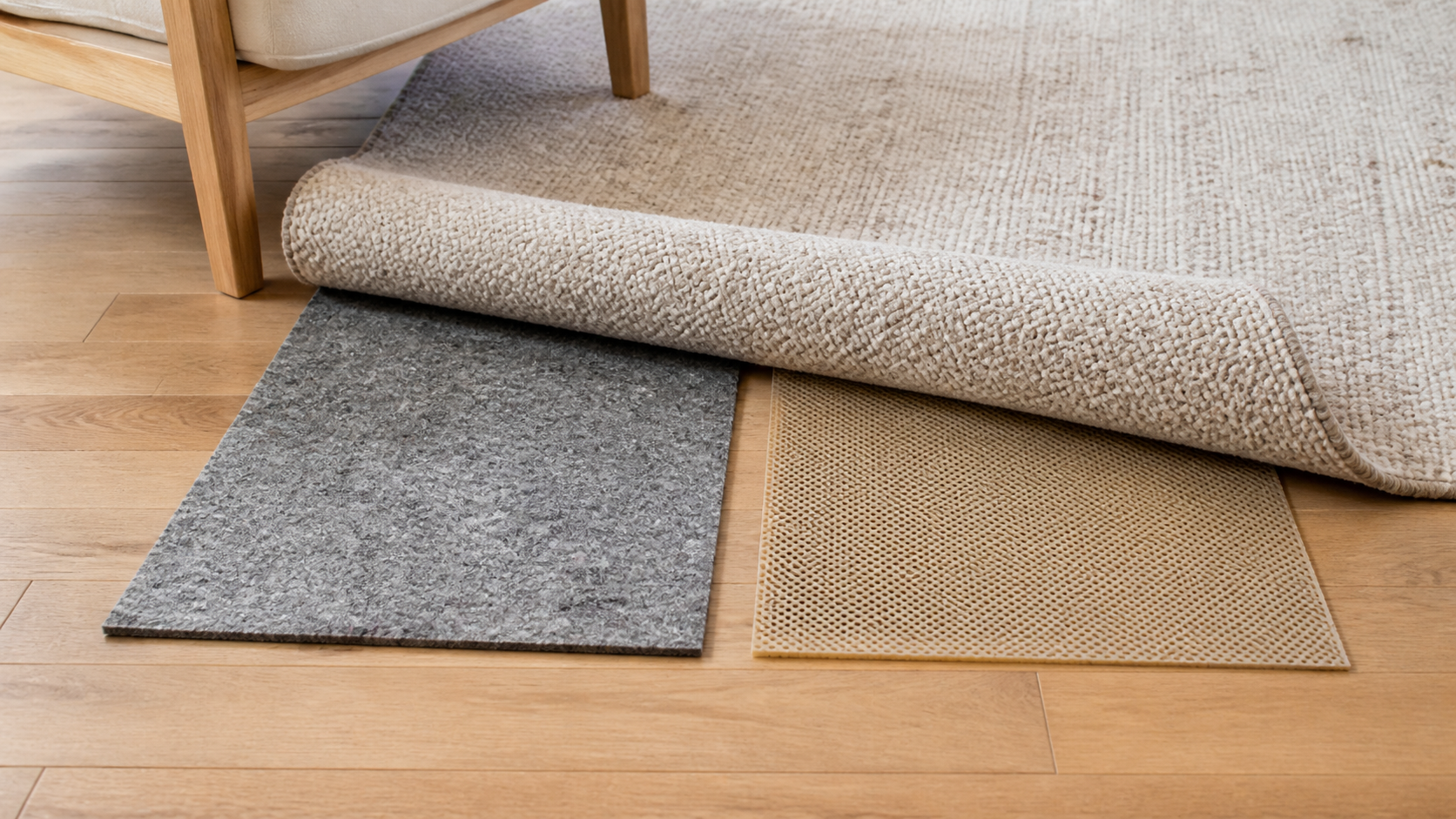
Compare by material and room fit
Shop floor-compatible rug pad types
Confirm the pad label supports your exact flooring and finish, then compare rug size, thickness, grip, cleaning instructions, and door clearance.
This comparison covers single-material felt and rubber pads. Many products combine felt on top with a rubber gripping layer underneath; that hybrid can be a practical middle ground when you need both cushion and grip. For a wider look at hybrid, mesh, and washable-rug systems, use the non-slip rug-pad guide for hardwood floors and rentals.
Quick Comparison
Choose felt when a large rug is held by furniture and you want cushion, support, or separation from a rough rug backing. Choose rubber when a runner or smaller rug needs stronger grip and the doorway or furniture leaves little room for added thickness.
Choose neither until the pad maker and flooring manufacturer support the combination. “Rubber” can mean natural or synthetic material, and vague PVC-like mesh is not interchangeable with clearly labeled natural rubber. Hardwood finishes and flooring warranties also differ.
Option A: Felt Rug Pad
Felt pads are dense fiber layers designed mainly to add cushion and protect the floor from rough rug backing. Plain felt has limited grip, so it works best where a large rug is already steadied by a sofa, bed, or table.
Who felt fits
- Living-room and bedroom rugs with furniture holding several areas in place.
- Large rugs where comfort and support matter more than aggressive grip.
- Rugs with a coarse backing that need a dense buffer above the floor.
- Rooms with enough clearance for the combined pad-and-rug height.
Tradeoffs
Felt adds more height and can make a rug feel fuller, but plain felt may slide with a lightweight runner or unanchored rug. Softer is not automatically better: a thick pad can raise edges, interfere with doors, or make some furniture sit unevenly. Fiber pads can also hold dust or spills if they are not lifted and cleaned according to their care instructions.
Skip felt when
- The rug slides now and no furniture will anchor it.
- A door, rolling chair, low furniture, or transition strip barely clears the rug.
- The room is damp or spills cannot be dried promptly.
- The pad lacks clear compatibility guidance for the floor and finish.
Option B: Rubber Rug Pad
A rubber pad emphasizes grip and can add less height than dense felt. It is often the more useful format under runners, small rugs, and low-clearance placements. Look for specific material labeling and floor instructions rather than assuming every tan, waffle, or mesh pad is natural rubber.
Who rubber fits
- Hallway runners, kitchen rugs, and smaller rugs that are not held by furniture.
- Doorways and compact rooms where a thick pad would cause interference.
- Households that prioritize grip over a plush feel.
- Rugs that already provide enough cushion on their own.
Tradeoffs
Rubber provides less cushion than felt and its suitability depends heavily on the formulation, floor finish, heat, sunlight, and care instructions. Some poorly labeled synthetic or PVC products may discolor, stick, crumble, or leave residue. Strong odor or vague “safe for all floors” language is a reason to pause and verify the product.
Skip rubber when
- The flooring or pad instructions do not approve the material combination.
- The floor was recently refinished and has not completed its stated cure time.
- You mainly want deep cushion under a large, anchored rug.
- The product does not identify its material, cleaning method, or suitable floor types.
Tradeoffs That Matter Most
Grip versus cushion
Plain felt favors cushion; rubber favors grip. A felt-and-rubber hybrid is worth considering for a larger unanchored rug that needs both. Do not use extra thickness to compensate for a curled, warped, or badly placed rug.
Thickness and clearance
Measure the rug and pad together. Check doors in their full swing, closet clearances, floor vents, low furniture, and the transition into adjacent flooring. A raised edge can be annoying even when the pad itself fits beneath the rug.
Floor-finish compatibility
Read both sides of the pairing: the flooring maker's care or warranty guidance and the rug-pad maker's approved surfaces. Do not assume “hard floors” includes every hardwood coating, engineered-wood finish, laminate, or vinyl surface.
Cleaning and moisture
Vacuum the rug as directed and periodically lift it to remove grit from the pad and floor. Address spills promptly and let every layer dry fully before reassembly. A rug pad should not cover dampness, finish changes, or a recurring leak.
Setup Checklist
- Confirm the floor. Identify the flooring and finish; ask the owner or property manager if a rental surface is unclear.
- Read compatibility instructions. Check flooring and pad documentation before leaving the material in place.
- Measure the rug. Follow the pad maker's trimming instructions so the pad stays hidden and the rug edges taper down.
- Test total height. Check doors, furniture, transitions, vents, and frequently walked edges with the rug and pad together.
- Clean and dry the floor. Trapped grit and moisture can mark a finish regardless of pad material.
- Place the correct side down. Follow the product directions; do not infer orientation from texture alone.
Maintenance
Lift a corner after the first few days and inspect again periodically for residue, discoloration, grit, moisture, odor, or material breakdown. Clean the pad only as directed; dense felt and rubber do not necessarily share the same washing or drying method. Replace a pad that crumbles, becomes tacky, holds an odor, or no longer lies flat.
When to Skip Both
Skip both if the rug curls, crosses a door path, sits on a damp floor, or is too small for a busy walkway. A flatter rug, different size, different placement, or no rug may solve the real problem better. Also skip improvised adhesive tape or sticky grippers unless the flooring and product instructions explicitly allow them.
Bottom Line
Felt is the better fit for cushion beneath a large, anchored rug. Rubber is the better fit for grip beneath a smaller or low-clearance rug. A felt-and-rubber hybrid can cover both needs, but no material earns a blanket approval for every hardwood finish. Verify compatibility, measure total height, and inspect under the rug early.
Next Steps
Compare hybrid pads, thin grippers, and other formats in the rug-pad guide for hardwood floors and rentals. Then use the home product category buying framework to check measurements, maintenance, return terms, and skip criteria before buying.