Is a Bedroom Air Purifier Worth It?
A bedroom air purifier can be worth it when you have a defined airborne-particle problem, can size the machine to the room, and will tolerate the noise and recurring filter cost. Skip it when the real problem is moisture, an active pollution source, poor maintenance, or a building condition the machine cannot correct.
As an Amazon Associate, The Good Home Doc may earn from qualifying purchases.
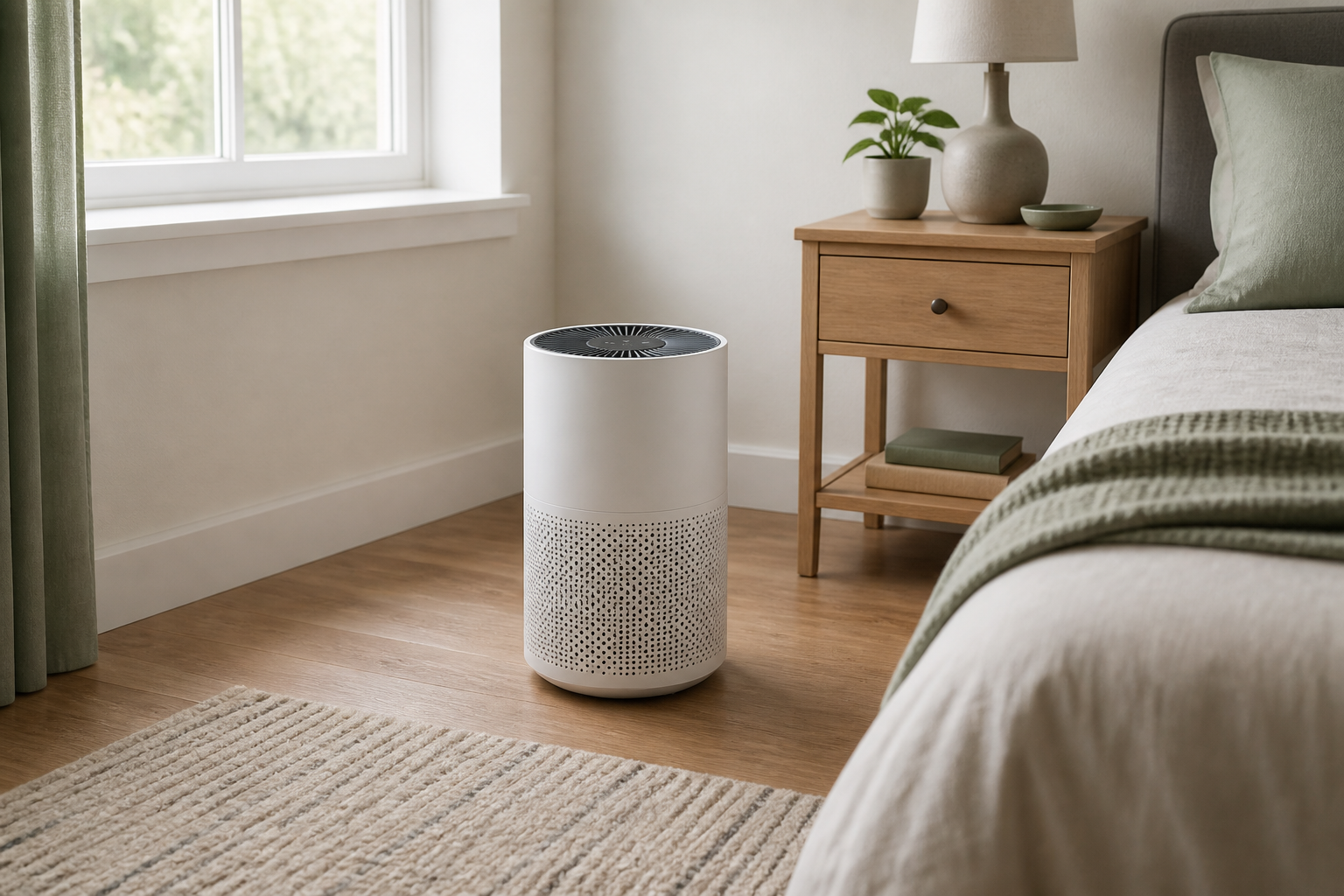
Compare the category only after defining the problem: Browse category: Shop bedroom air purifiers on Amazon.
This is a category shortcut, not a tested ranking. Confirm the maker's room-size method, clean air delivery information where provided, filter type and replacement schedule, noise settings, clearance, electrical instructions, and warranty.
Quick Decision: Buy, Skip, Delay, Choose an Alternative, or Escalate
- Buy: you want to reduce airborne particles in one defined bedroom, a filter-based model fits the room and placement, and replacement filters and usable fan noise fit your budget and routine.
- Skip: you expect the machine to remove settled dust without cleaning, eliminate a continuing source, fix dampness, ventilate the room, or treat a health condition.
- Delay: you have not measured the room, identified the likely source, checked the home HVAC filter and cleaning routine, priced replacement filters, or found a safe place with adequate airflow.
- Choose an alternative: improve source control, vacuum and damp-dust regularly, change an appropriate HVAC filter on schedule, ventilate when outdoor conditions allow, or address bedding and pet-access routines.
- Escalate: seek appropriate qualified help for combustion concerns, major smoke intrusion, persistent strong odors, visible moisture damage or growth, a suspected ventilation or building defect, or symptoms needing medical advice.
When a Bedroom Air Purifier Earns Its Keep
The strongest case is a bedroom with a specific particle concern—such as outdoor smoke that reaches the room, pet dander, pollen, or ordinary airborne dust—after reasonable source control. A portable purifier works on the air that passes through it, so a correctly sized unit running consistently is more useful than a small unit advertised for an oversized area.
It can also be worthwhile when closing a bedroom door creates a manageable single-room zone. The value is practical rather than magical: filtered recirculation may reduce some airborne particles, but it does not remove every pollutant and does not clean dust already settled on bedding, floors, or furniture.
Define the Problem Before Shopping
- Particles: a filter-based purifier is most directly suited to airborne particles. Look for clear filter information rather than vague “fresh air” language.
- Odors and gases: particle filters alone do not remove gases. Some units include activated carbon, but the amount and useful life vary, and source removal or ventilation may matter more.
- Humidity and dampness: a purifier is not a dehumidifier. Condensation, damp materials, recurring musty odors, or water staining call for the leaks and moisture prevention path.
- Heat and stale air: a purifier recirculates indoor air; it does not cool the room or bring in outdoor air. A fan, shade, or ventilation change may fit that problem better.
- Health symptoms: do not use a consumer machine to diagnose or treat illness. Discuss persistent or serious symptoms with an appropriate healthcare professional.
Room Fit, Noise, and Placement Tradeoffs
Measure the bedroom's length and width and note whether it opens continuously into another space. Compare models using a current, clearly explained room-size or clean-air-delivery method; coverage claims based on a low number of air changes can make a unit look more capable than it will feel in routine use.
Noise is part of capacity. A purifier that meets the room only on its loudest setting may be a poor bedroom fit if you turn it down every night. Compare documented noise information by fan setting when available, but remember that tone and sleep sensitivity differ. A larger unit on a lower setting can sometimes be more livable, though it costs more and occupies more space.
Placement must follow the manufacturer's clearance instructions. Keep the intake and outlet away from curtains, bedding, walls, and furniture; leave access for filter changes; use a stable surface; and route the cord away from walkways. Do not use an extension cord or smart plug unless the product instructions explicitly allow that setup.
Purchase Price Is Only the First Cost
Budget for replacement filters, electricity, and pre-filter cleaning where applicable. Check the current price and availability of the exact replacement filter before buying the machine. A cheap purifier with expensive or hard-to-find filters can become a short-lived purchase.
Filter schedules are starting points, not promises. Conditions and run time affect useful life. Follow the maker's inspection and replacement directions rather than assuming an indicator measures every kind of filter loading. If a washable pre-filter is included, clean and dry it exactly as directed; do not wash a filter that is not labeled washable.
Red Flags and Features to Avoid
- Broad promises to prevent, cure, or treat illness, or claims that one device solves every indoor-air problem.
- No clear replacement-filter model, cost, care instructions, or continuing source for filters.
- Room coverage presented without an understandable test method, airflow figure, or context.
- Intentional ozone generation. The EPA advises against using ozone generators in occupied spaces; choose straightforward mechanical filtration when possible.
- An ionization, plasma, or similar feature that is poorly explained or cannot be disabled when you want filter-only operation.
- A planned location with blocked vents, a pinched cord, damaged outlet, water exposure, or no practical way to change the filter.
Who Should Skip a Bedroom Air Purifier
Skip it if you will not run the unit consistently, cannot sleep with the necessary fan setting, or do not intend to buy filters. Also skip it when basic source control is clearly the better first purchase: smoke produced indoors, a heavily shedding textile that can be cleaned, dirty return vents, or a pet routine you are willing to change.
Do not let a purifier delay action on carbon-monoxide or fuel-burning-appliance concerns, fire or smoke damage, substantial outdoor-smoke entry, moisture damage, suspected mold, or an unexplained persistent odor. Use working required alarms and contact the landlord, emergency service, healthcare professional, or qualified building professional appropriate to the concern.
Bottom Line
A bedroom air purifier is worth it when airborne particles are the defined problem, the unit can deliver useful filtration at a noise level you will actually use, and the recurring cost is realistic. Delay until you measure and price the full ownership cycle. Choose cleaning, source control, ventilation, humidity control, or another comfort product when that better matches the problem—and escalate conditions a portable filter cannot safely evaluate or repair.