Is a Quiet Bedroom Fan Worth It Without Central Air?
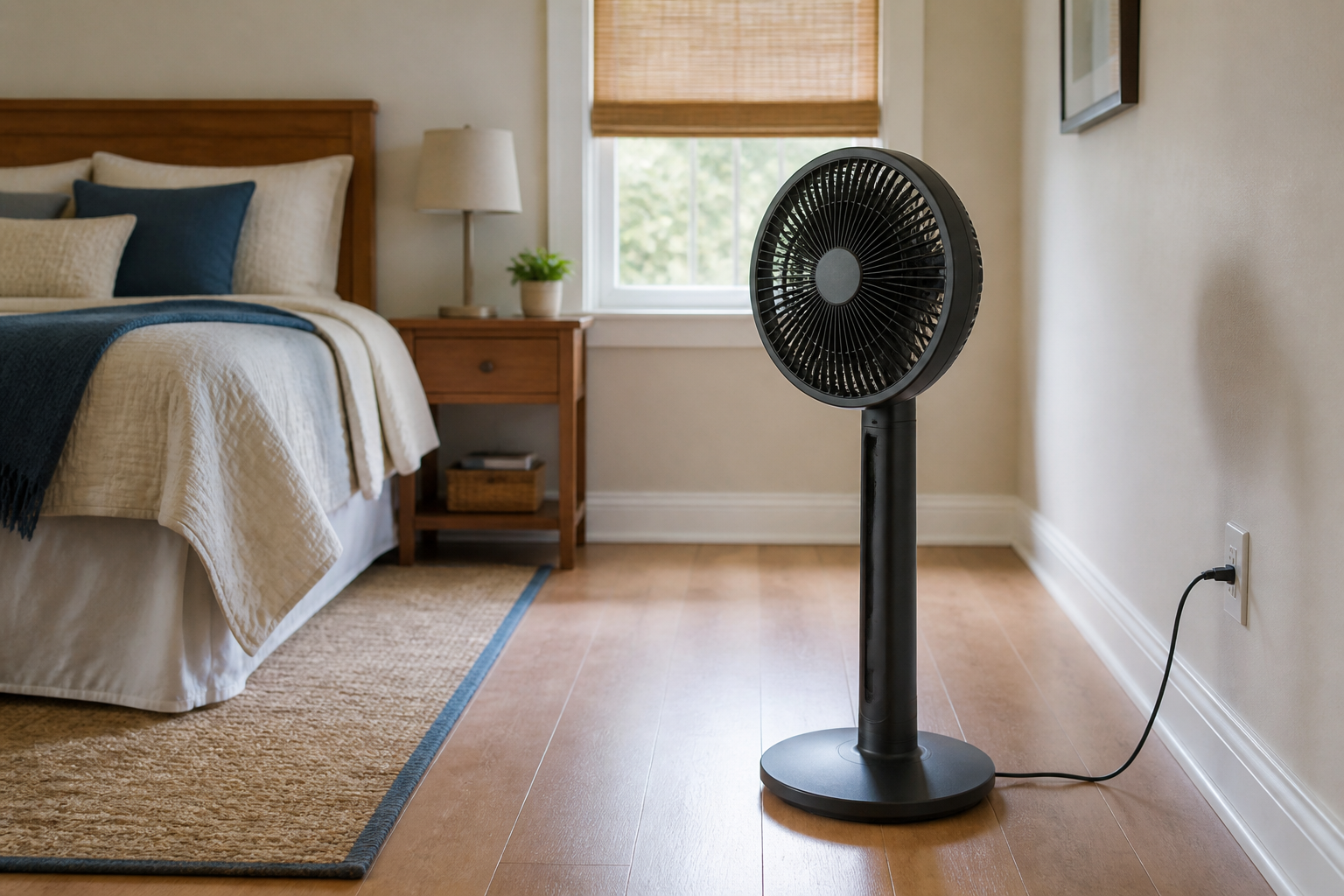
A quiet bedroom fan is worth it when the room is warm but otherwise safe, moving air makes you feel more comfortable, and you can place the fan securely without blocking a walkway. A fan does not lower room temperature like air conditioning, so skip or delay the purchase when the real problem is trapped daytime heat, unsafe indoor temperatures, poor outdoor air, or a building issue that needs attention.
As an Amazon Associate, The Good Home Doc may earn from qualifying purchases.
Shop only after checking the room and placement: Browse category: Compare quiet bedroom fans on Amazon.
This is a category shortcut, not a tested ranking. Check current maker documentation for dimensions, sound information, airflow settings, controls, cleaning access, tip stability, cord length, electrical instructions, and warranty.
Quick Decision: Buy, Skip, Delay, Choose an Alternative, or Escalate
- Buy: the room is moderately warm, air movement improves comfort, the fan has a stable location and clear airflow, and its sound and controls fit your sleep routine.
- Skip: you expect the fan to cool the room itself, have nowhere safe to place it, cannot tolerate motor or air noise, or will not clean it.
- Delay: first track when the room heats up, test shade and cross-ventilation, measure the floor or furniture footprint, and decide whether outside air is suitable to bring indoors.
- Choose an alternative: exterior or interior shade, safe nighttime ventilation, a securely installed window fan, or appropriately sized air conditioning may address the actual heat problem better.
- Escalate: seek appropriate help for dangerously hot indoor conditions, heat-related symptoms, damaged outlets or cords, windows that cannot be secured, or a rental ventilation or cooling problem covered by building rules or the lease.
What a Fan Can—and Cannot—Do
A fan moves air. That movement can make skin feel cooler and can help distribute air from a cooler window or another room. It does not remove heat from a closed bedroom the way an air conditioner does, and its motor adds a small amount of heat. This distinction matters most when the room remains hot well into the night.
The strongest case for buying is a room where air feels still, the temperature is tolerable, and direct or circulating airflow improves comfort. The weakest case is a sun-baked top-floor room that remains excessively hot after sunset. In that situation, shade, heat-source control, ventilation when outdoor conditions allow, or real cooling deserves priority.
Check the Room Before Shopping
- Find the heat pattern: note whether direct sun, a closed door, electronics, poor cross-flow, or hot outdoor air is driving the problem.
- Test airflow: try opening an interior door or using an existing fan before buying. If moving air does not help, a quieter new fan may not change the result.
- Measure placement: allow for the base, oscillation path, intake and outlet clearance, plug location, door swing, bedding, curtains, and nighttime walking route.
- Judge outside air: a window strategy is not automatically better when outdoor air is hotter, smoky, polluted, very humid, or the window cannot be secured.
- Set a noise limit: manufacturer sound figures are useful only when the test conditions and speed are clear. Expect more airflow to produce more sound.
Cost, Setup, and Maintenance Tradeoffs
A fan generally has a lower purchase and operating commitment than portable or window air conditioning, but it delivers a different result. Price rises with remote controls, timers, more speed steps, oscillation, displays, and compact styling. Pay for features that reduce bedtime friction; do not pay for vague “cooling” language that disguises ordinary air movement.
Setup should leave the fan level and stable with the grille unobstructed. Route the cord where it will not cross a walkway, run under a rug, contact moving parts, or be pinched by furniture. Follow the maker’s outlet and extension-cord instructions. A window fan adds fit, weather, screen, security, fall-prevention, and emergency-egress questions.
Dust collects on grilles and blades, reducing airflow and sometimes increasing noise. Check whether the grille is removable, what tools cleaning needs, and whether filters or other parts require replacement. Unplug and clean only as directed. A design that looks sleek but is difficult to open may become a poor long-term value.
Must-Haves Versus Nice-to-Haves
Must-haves: a stable base, guarded moving parts, a footprint that fits, usable low-speed airflow, accessible controls, a workable cord route, and realistic cleaning access. If the fan will sit on furniture, the surface must support it securely without putting it near an edge.
Nice-to-haves: a timer, remote, display-dimming or display-off option, many speed steps, oscillation, and a carrying handle. These can make sleep use easier, but none compensates for poor stability, blocked airflow, irritating sound, or an undersized airflow path.
Red Flags and Who Should Skip
- The listing promises to lower room temperature without refrigeration or evaporative cooling and gives no clear explanation of the mechanism.
- The fan would sit in a damp location, beside loose curtains or bedding, on unstable furniture, or where a child or pet could easily tip or reach it.
- The cord, plug, outlet, grille, base, or controls show damage, looseness, overheating, or unusual odor or sound.
- A window unit would prevent the window from locking, conflict with lease or building rules, admit rain, or block required egress.
- You need strong airflow but can sleep only in near silence; the basic tradeoff may make another heat-management step a better investment.
Skip a bedroom fan as the primary solution if the room reaches unsafe heat, if a household member is especially vulnerable to heat, or if anyone has symptoms of heat illness. A product-shopping page cannot set a safe temperature for every person or situation. Follow current local public-health guidance and seek appropriate medical or emergency help when symptoms or conditions warrant it.
When an Alternative Is Better
Use shades or curtains when daytime solar gain is the main driver. Use cross-ventilation or a window fan only when outdoor temperature and air quality are favorable and the opening can be secured. Consider appropriately sized air conditioning when the room needs actual heat removal rather than a comfort breeze. Renters should report broken windows, nonworking provided equipment, or persistent ventilation problems instead of modifying the building without approval.
If you do buy, the quiet fan comparison guide explains how tower, pedestal, circulator, box, and window formats trade footprint for airflow direction, cleaning, and noise. That is the product-selection step; this page is the decision about whether a fan is the right category at all.
Bottom Line
A quiet bedroom fan is worth it for tolerable warmth and stagnant air when you value a breeze more than actual temperature reduction. Buy after testing airflow, measuring a safe location, and accepting cleaning and sound tradeoffs. Delay to control daytime heat first, choose air conditioning when heat removal is necessary, and escalate unsafe heat, electrical damage, or building problems instead of asking a fan to solve them.