Robot Vacuum vs Cordless Stick Vacuum for a Small Apartment
A robot vacuum saves hands-on time only when your floor plan lets it move reliably. A cordless stick vacuum asks you to do the cleaning, but it can chase crumbs, reach edges, and handle furniture or stairs on demand. The better choice depends on the obstacles you have and the cleaning you will actually keep up with.
As an Amazon Associate, The Good Home Doc may earn from qualifying purchases.
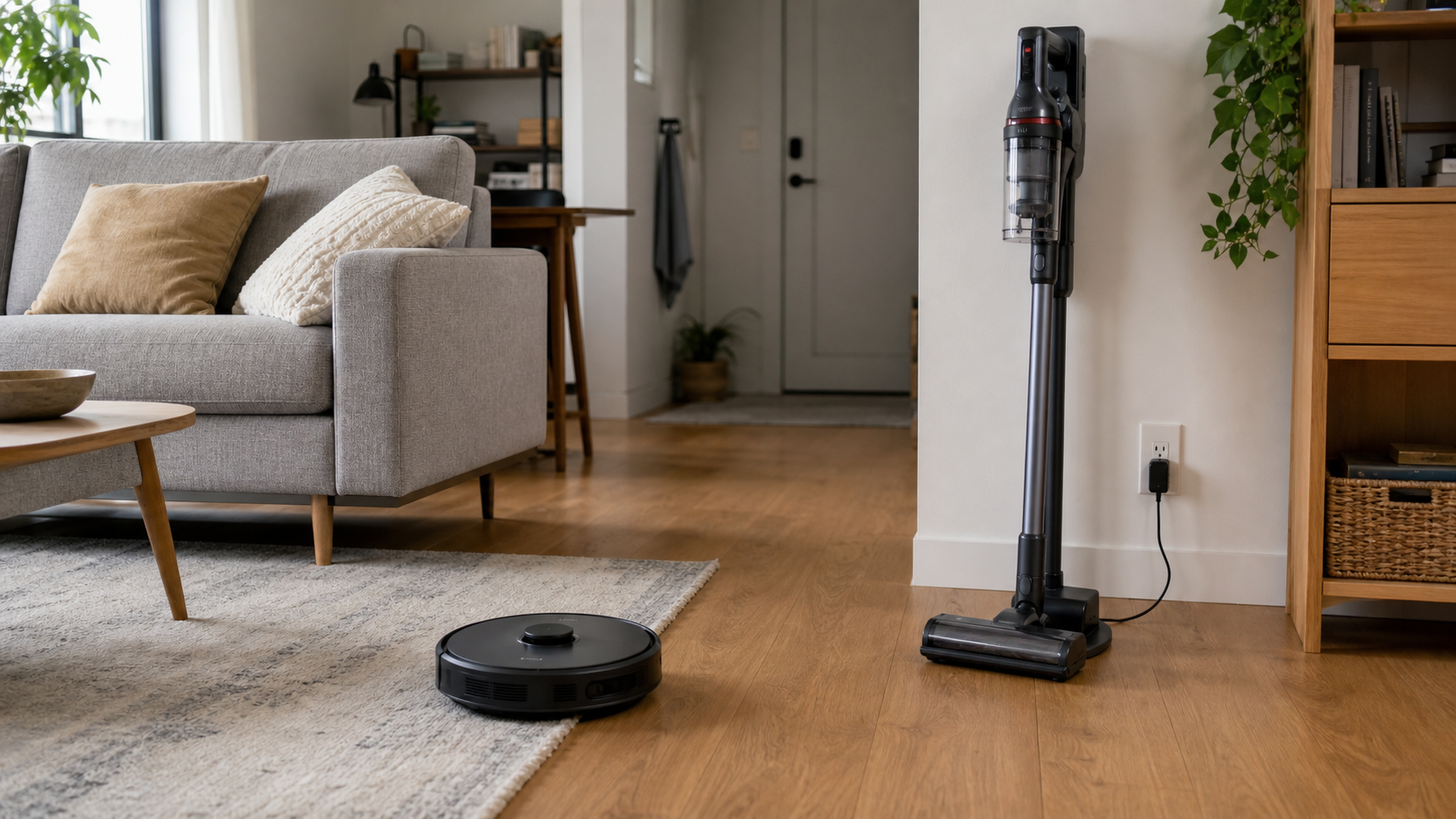
Compare the two formats
Match the vacuum to your floor plan
Robot vacuums favor clear, connected floors and routine pickup. Cordless stick vacuums favor direct control, mixed surfaces, furniture, and quick spot cleaning.
This is a format comparison, not a tested brand ranking. Floor compatibility, runtime, clearance, mapping features, and replacement-part support vary by model. Check the current manual and specifications before buying.
Quick Answer
Choose a robot vacuum when most cleaning is on one connected level, floors stay reasonably clear, the charging dock can remain accessible, and frequent automated pickup matters more than cleaning furniture or stairs.
Choose a cordless stick vacuum when you want one tool for floors and above-floor messes, have thresholds or clutter that interrupt a robot, need control around rugs, or can commit a few minutes to manual cleaning.
Neither is automatically complete. A robot may leave edges, stairs, upholstery, and tight areas for another tool. A stick vacuum may not suit long sessions, thick carpet, or a household that routinely forgets to charge it.
Side-by-Side Tradeoffs
| Decision point | Robot vacuum | Cordless stick vacuum |
|---|---|---|
| Daily effort | Can run on a schedule after setup and floor pickup | Requires hands-on cleaning each time |
| Best floor plan | Open, connected, single-level space with manageable thresholds | Mixed rooms, obstacles, stairs, and spot-cleaning zones |
| Furniture and edges | Depends on body height, navigation, and side-brush reach | You direct the head and use crevice or upholstery tools |
| Storage | Needs a permanent dock with approach clearance | Needs a charging spot; some models require a wall mount |
| Upkeep | Small bin, brushes, sensors, wheels, and dock need attention | Bin, filter, floor head, and battery need attention |
| Connected features | Some features may depend on an app, account, or Wi-Fi | Usually works without an app, though features vary |
Who a Robot Vacuum Fits
A robot vacuum is strongest as a routine floor-maintenance tool. It can help when crumbs, dust, and tracked debris return faster than you want to pull out a manual vacuum. Scheduling may maintain a baseline between deeper cleaning sessions.
It fits best when chair legs, loose cables, pet bowls, floor-length curtains, and small objects can be kept out of its route. Low furniture needs enough clearance for the machine to enter and leave. Measure the robot’s full height, including any raised sensor housing, against the lowest opening.
Robot vacuum setup checks
- Thresholds and rug edges: Compare the maker’s climbing guidance with the actual height and shape of transitions.
- Dock location: Follow specified side and front clearances. Keep the cord out of walking paths.
- Navigation: Decide whether basic navigation is enough or room maps and keep-out zones solve a real layout problem.
- App requirements: Check whether scheduling, mapping, updates, or core controls require an account, Wi-Fi, or phone permissions.
- Floor preparation: Expect to pick up cords, socks, lightweight mats, and small items before a run.
Who a Cordless Stick Vacuum Fits
A cordless stick vacuum is the more flexible single-tool option for many apartments. You choose the route, see where debris remains, lift the machine over thresholds, and convert compatible models for upholstery, baseboards, or a car. It works immediately after a spill without preparing every room.
The tradeoff is physical effort and battery planning. Compare weight in the configuration you will use, not only the bare machine. Published maximum runtime may reflect a low setting without the powered floor head, so look for specifications matching your expected mode and attachment.
Cordless stick setup checks
- Floor head: Verify compatibility with your hard-floor finish, rugs, and other floor coverings.
- Charging spot: Renters should confirm whether a wall dock is allowed; a floor stand or self-standing design may fit better.
- Usable runtime: Estimate a normal session and leave margin for battery aging and higher power modes.
- Handling: Consider wrist weight, controls, turning space, and reach under low furniture.
- Tool storage: A crevice tool is useful only if it has a reliable place to live.
Floor Type, Rugs, and Apartment Obstacles
Neither format should be assumed safe or effective on every floor. Check the flooring or rug maker’s care guidance as well as the vacuum manual. Brush-roll design, wheel condition, loose fringe, and debris trapped under the head can all affect fit.
Robots are more sensitive to the route: high transitions, narrow chair spacing, long fringe, and floor clutter may interrupt a run. Stick vacuums cross obstacles under your control, but a bulky head may still miss tight spaces. Measure first instead of relying on “slim” listing language.
Maintenance and Ongoing Cost
Both formats need more than bin emptying. Hair can wrap around brush rolls and axles, filters need cleaning or replacement on the maker’s schedule, and washable parts must dry fully before reassembly. Available replacement filters, brushes, batteries, and bins matter if you intend to keep the vacuum.
A robot adds sensors, charging contacts, small wheels, and navigation components to the maintenance list. Its small bin may need frequent emptying. A cordless stick adds a battery whose capacity declines over time. Check the warranty and current availability and cost of model-specific parts before buying.
Privacy and Connected-Home Considerations
Some robot vacuums create floor maps or use cameras and cloud-connected apps. Review the manufacturer’s current privacy policy, account-deletion process, update support, and controls for stored maps or images. If you do not want a connected appliance, confirm which cleaning and scheduling functions work without an app or internet connection.
A conventional cordless stick vacuum generally avoids this decision. That simplicity can be meaningful when manual control already fits your routine.
Who Should Skip Each Option
Skip a robot vacuum when
- Your apartment has many tall thresholds, split levels, loose cords, rug fringe, or floor clutter you will not move consistently.
- You mainly need to clean stairs, upholstery, car interiors, or concentrated messes.
- You lack an appropriate permanent dock location.
- You do not want the app, account, mapping, or connectivity required for the features you would be buying.
Skip a cordless stick vacuum when
- Manual floor cleaning is the task you repeatedly postpone and your layout is robot-friendly.
- Usable runtime does not cover your normal session or the machine is uncomfortable to carry and steer.
- You cannot provide an allowed, ventilated charging and storage location.
- You have large areas of thick carpet, heavy debris, or floor-care requirements better served by another vacuum type.
If both add more upkeep than they remove, a compact corded vacuum or a small-apartment broom and dustpan set may be more dependable.
Can It Make Sense to Own Both?
Yes, when each has a distinct job. A robot can handle scheduled open-floor pickup while a light stick vacuum covers edges, furniture, stairs, and sudden messes. The pair also means two bins, two filter systems, two storage locations, and more replacement parts. Start with the format that solves the larger daily problem.
Bottom Line
Choose a robot vacuum for automated upkeep on a clear, connected floor plan. Choose a cordless stick vacuum for direct control, mixed surfaces, furniture, stairs, and one-tool versatility. The better buy is the machine whose route, charging spot, maintenance, and cleaning routine fit the apartment you already have.
For model-selection criteria on the manual side, continue to our cordless stick vacuum guide. For a broader approach to repeat chores, use the low-effort home maintenance tools guide.