Best Blind Dusters for Slatted Window Blinds
The best blind duster fits between your slats without bending them, holds onto routine dust instead of scattering it, and has covers or bristles you can clean completely. Multi-prong microfiber tools are fast on sturdy, evenly spaced horizontal blinds; a soft detail brush or cloth is usually easier to control on narrow, fragile, or irregular slats.
As an Amazon Associate, The Good Home Doc may earn from qualifying purchases.
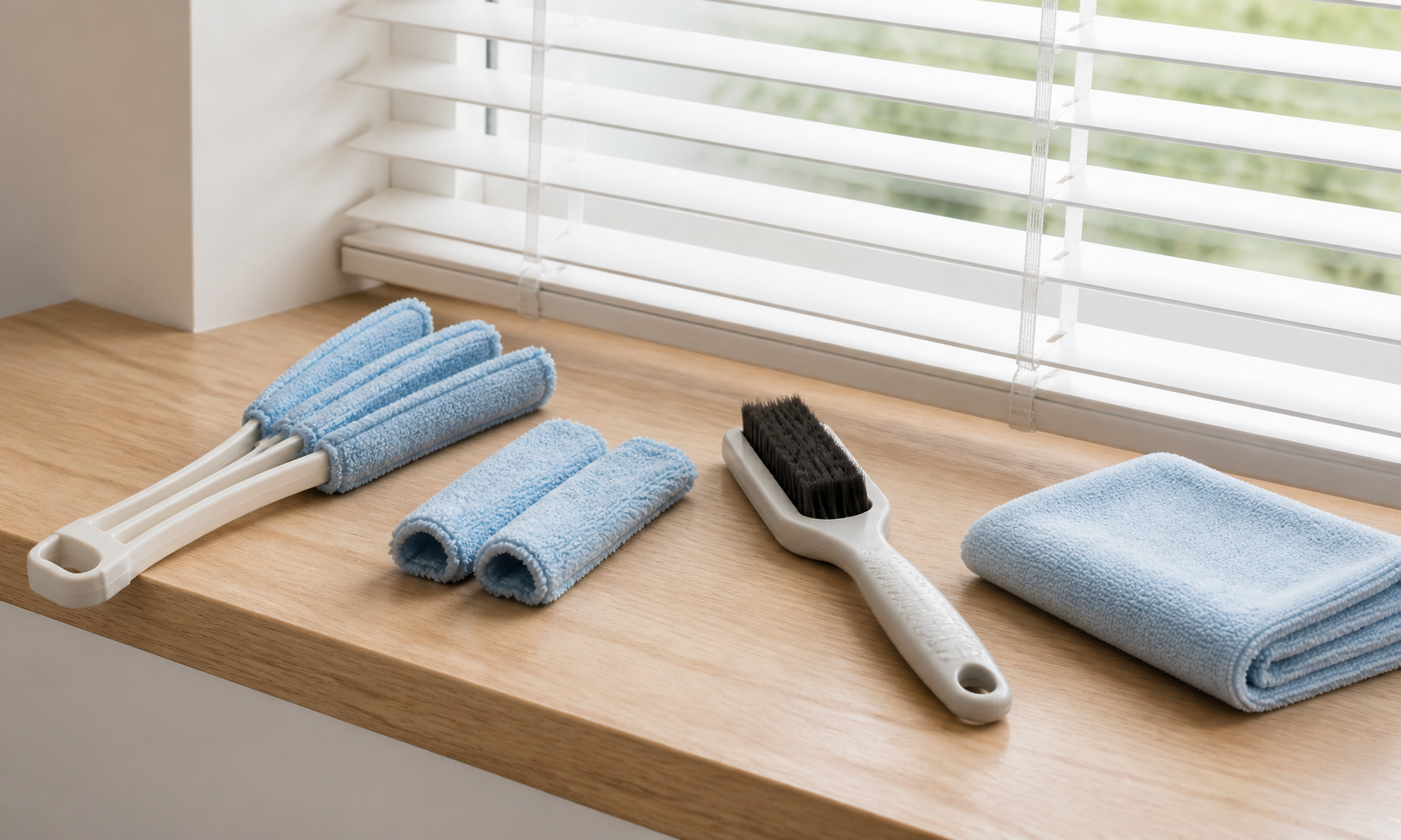
Start with the tool format: These affiliate category links are shopping starting points, not tested brand rankings.
- Browse category: Multi-prong microfiber blind dustersBest suited to regular rows of sturdy horizontal slats when speed matters.
- Browse category: Soft blind-cleaning brushesWorth comparing when light pressure and control matter more than cleaning several slats at once.
- Browse category: Vacuum blind-dusting attachmentsUseful for compatible vacuums and sturdy blinds when the suction can be kept low.
Confirm the working-head width, spacing, cover material, replacement availability, vacuum connection, and blind maker's care instructions before buying.
This is a category comparison for reachable horizontal blinds with ordinary household dust. It does not cover elevated windows, damaged blinds, unknown residue, pest contamination, mold-like growth, or cleaning near unsafe access. Keep both feet on the floor; use an appropriate stable access method or qualified help for anything beyond comfortable reach.
Quick Picks by Blind and Cleaning Style
- Best for sturdy faux-wood or wide vinyl slats: a microfiber tong or two-sided pad that supports the slat while wiping both faces.
- Best for a long row of evenly spaced slats: a multi-prong tool with thin washable sleeves that match the spacing without forcing.
- Best for delicate or narrow slats: a soft single-head detailing brush or clean microfiber cloth used with very light pressure.
- Best for dust containment: dense microfiber covers that can be removed without touching the dirty working surface.
- Best if you already vacuum often: a soft brush attachment used only at a low setting that the blind maker permits.
Check the Slats Before Choosing a Tool
Identify the blind material and inspect for cracked vinyl, bent aluminum, splintered wood, loose ladders, failing cords, or peeling finishes. A tool that works on sturdy faux wood can catch or crease a thin aluminum slat. Follow the blind maker's care directions when available, especially for natural wood and coated finishes.
Measure the slat width and the open gap between slats. For multi-prong tools, compare the center-to-center spacing of the covered fingers with the blind spacing. The sleeves should enter freely; if you must spread, compress, or twist the slats to make the tool fit, choose a single-slat method.
Comparison Framework
Microfiber Tongs and Two-Sided Pads
These tools sandwich one slat between two padded faces. They give you more control than a multi-prong head and can clean both sides in one pass.
Choose this type when: the slats are wide and sturdy enough for light, even contact.
Watch for: exposed plastic edges, strong spring pressure, thick pads that snag ladder cords, and non-removable fabric that stays dirty.
Multi-Prong Microfiber Dusters
Several covered fingers pass between adjacent slats at once. This format can reduce cleaning time on uniform horizontal blinds, but only when spacing and tool thickness match.
Choose this type when: the blind has consistent gaps, intact slats, and enough room for each covered prong to move freely.
Watch for: forcing the head into tight gaps, sleeves that bunch or slide off, and handles that make it difficult to keep the tool level.
Soft Single-Head Brushes
A soft detailing brush works one face or edge at a time. It is slower but easier to steer around cords, brackets, narrow gaps, and irregular slats.
Choose this type when: control matters more than speed or the blind feels too delicate for a clamping tool.
Watch for: stiff bristles, ferrules or hard plastic extending beyond the bristles, shedding fibers, and simply pushing dust into the room.
Microfiber Cloths and Gloves
A clean, dry microfiber cloth wrapped around your fingers is inexpensive and adaptable. A dusting glove provides similar control while reducing loose fabric around cords.
Choose this type when: you have a small set of blinds, need gentle contact, or want to test the least specialized option first.
Watch for: rings catching a slat, dragging grit across a finish, or using a damp cloth when the maker calls for dry cleaning only.
Vacuum Dusting Attachments
A soft brush attachment can lift loose dust as it is disturbed. Fit and controllable suction matter more than a large accessory bundle.
Choose this type when: the attachment connects securely, the brush is clean, and both the vacuum and blind instructions allow low-suction dusting.
Watch for: suction pulling thin slats, a hard nozzle contacting the finish, loose adapters, and vacuuming unknown or damp material.
Must-Have Features
- Compatible dimensions: the padded fingers or brush head must fit the open slat spacing without force.
- Soft, fully covered contact points: no molding seams, exposed metal, or hard corners should rub the blind.
- Washable or replaceable working surfaces: loaded microfiber stops collecting effectively and can redeposit dirt.
- Light, controllable pressure: the handle and any spring should let you support rather than bend the slat.
- Secure covers: sleeves should remain attached through a pass but still come off for washing.
Nice-to-Have Features
- Extra washable sleeves so one clean set is available while another dries.
- A hanging loop or compact case that keeps clean covers away from other supplies.
- A slim handle that clears the window frame when reaching the end of a slat.
- Clearly listed replacement-cover dimensions rather than a proprietary size with no refill path.
A Practical Dusting Routine
- Close the blinds enough to support the slats without pressing them into a tight overlapping stack.
- Inspect for damage and test the tool gently on an inconspicuous slat.
- Work from the top down with a clean, dry cover or brush. Support wide slats with your free hand when appropriate.
- Use short, level passes; avoid pulling across cords or forcing a tool past the frame.
- Rotate or replace the working surface when it looks loaded so it continues collecting rather than spreading dust.
- Wash reusable covers according to their care label and let them dry completely before storage.
Who Should Skip a Dedicated Blind Duster
Skip a specialized tool if you have only one small blind and a clean microfiber cloth already works without bending the slats. Also skip multi-prong formats when the spacing varies, cords cross the cleaning path, or the slats feel fragile. A slower single-slat method is better than a fast tool that does not fit.
Do not use a blind duster as a repair or access tool. If slats, cords, brackets, or the headrail are loose; if residue is oily, damp, mold-like, or unknown; or if the window is not safely reachable from the floor, stop and use the appropriate landlord, manufacturer, cleaning, or repair support.
Bottom Line
For sturdy, evenly spaced horizontal blinds, start with a washable microfiber tong or multi-prong duster whose dimensions match the gaps. For delicate, narrow, or irregular slats, choose a soft single-head brush or cloth and accept the slower pace. Fit, gentle pressure, cleanable covers, and control matter more than the number of attachments in the package.