Best Window Track Cleaning Tools for Tight Corners
The most useful window track kit combines a narrow brush for dry debris, a surface-safe plastic scraper for packed dirt, and either a crevice vacuum attachment or microfiber cloth for pickup. The best format depends on the channel width, corner shape, frame finish, and whether you are cleaning a window or a wider sliding-door track.
As an Amazon Associate, The Good Home Doc may earn from qualifying purchases.
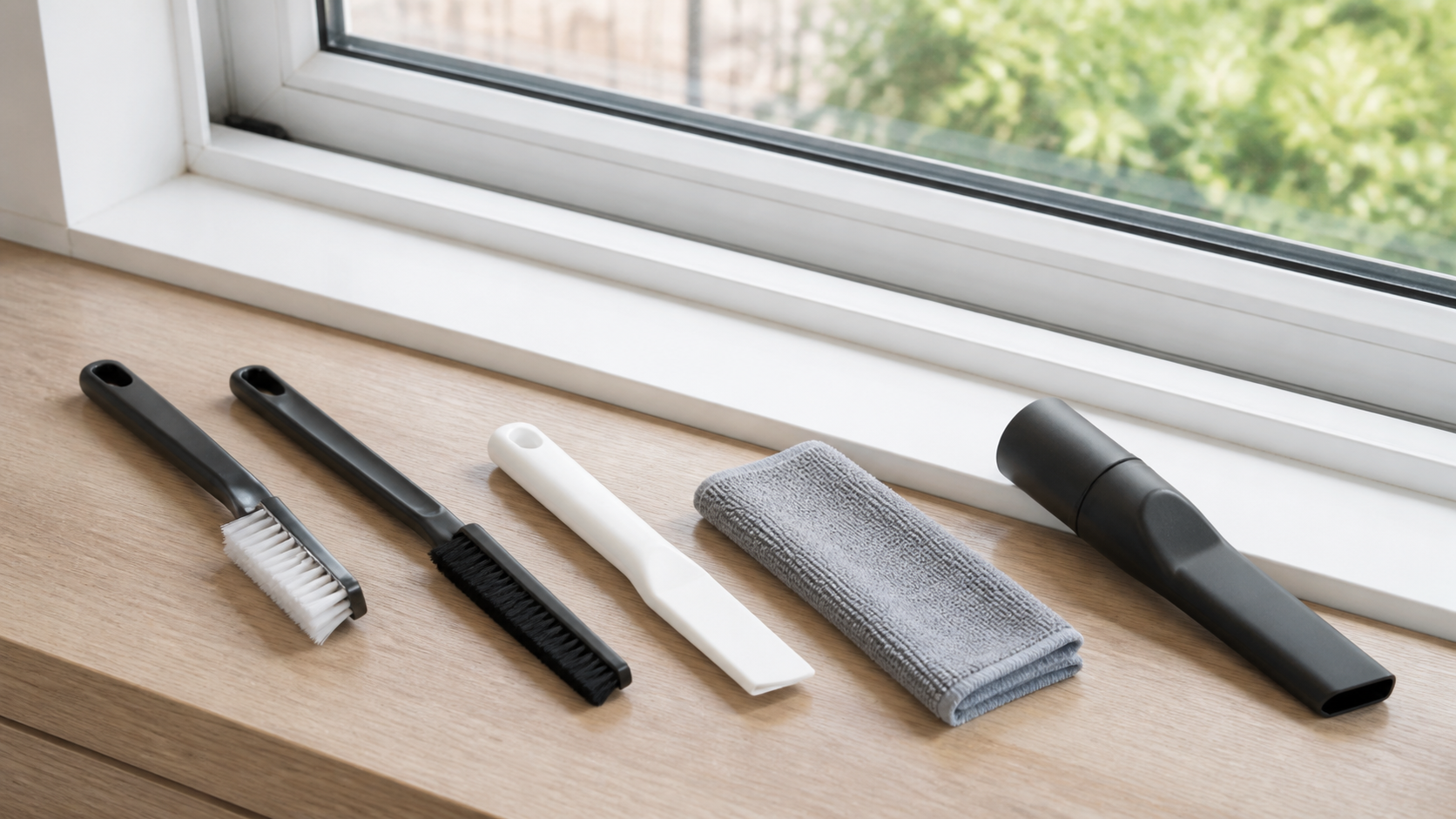
Start with the tool format: These affiliate category links are shopping starting points, not tested brand rankings.
- Browse category: Narrow window track brushesA practical first choice for loose dust in slim channels and corners.
- Browse category: Brush-and-scraper toolsWorth comparing for dried routine grime when the scraper edge is plastic and surface-safe.
- Browse category: Slim vacuum crevice toolsUseful for collecting loosened dry debris if the connector fits your vacuum.
Confirm head dimensions, bristle and scraper materials, vacuum connector size, washable parts, and the window maker's surface-care directions before buying.
This is a category comparison for ordinary household dust, crumbs, and light grime. It does not cover broken tracks, failing seals, pest residue, mold, lead-paint debris, or unknown contamination. Stop and get appropriate professional guidance when the material or damage is not routine and identifiable.
Quick Picks by Track Problem
- Best all-around starting point: a narrow nylon detail brush with a head slimmer than the track channel and an easy-to-rinse handle.
- Best for tight corners: a compact angled or tapered brush whose plastic body does not hit the frame before the bristles reach the corner.
- Best for packed routine dirt: a blunt plastic scraper paired with a brush, used only after checking the frame finish.
- Best for dry pickup: a slim crevice attachment that fits both the track and the vacuum connector.
- Best for final wiping: a thin washable microfiber sleeve or cloth wrapped around a non-sharp plastic tool.
Measure the Channel Before You Buy
Measure the narrowest clear width and depth of each channel, then note raised rails, weep holes, locks, and corner transitions. A brush advertised for tracks can still be too wide to reach the bottom. For a sliding door, check whether the tool can pass beneath the open panel without forcing it.
Measure vacuum attachments at the working tip, not just the hose connector. Also verify the connector diameter or adapter system. A narrow nozzle is not useful if it cannot connect securely to the vacuum you own.
Comparison Framework
Narrow Detail Brushes
Single-row or slim rectangular brushes loosen dry debris while keeping the handle above the sill. Medium nylon bristles are a sensible default for many intact vinyl or painted tracks, subject to the maker's care guidance.
Choose this type when: the channel is narrow and routine dust is the main problem.
Watch for: an exposed wire spine, hard head corners, shedding bristles, or a handle so bulky that it blocks corner access.
Angled and Tapered Brushes
An offset neck or pointed bristle layout can reach behind a rail and into the end of a channel. The angle should improve access without making the head difficult to control.
Choose this type when: straight brush heads stop short of the corners or hardware.
Watch for: pointed hard plastic extending beyond the bristles and very stiff fibers that can mark softer finishes.
Plastic Scrapers
A blunt polymer edge can lift dried, ordinary grime after loose grit is removed. It should flex slightly and have no metal blade.
Choose this type when: a brush alone leaves small patches of stuck-on dirt on a finish approved for gentle scraping.
Watch for: sharp corners, excessive force, and using any scraper on peeling paint, damaged coatings, seals, or soft weatherstripping. Test a hidden spot first.
Vacuum Crevice Attachments
A slim nozzle collects dry grit after brushing and can reduce the number of cloth passes. A removable brush tip may help around uneven channels.
Choose this type when: the track is dry, the debris is loose, and your vacuum has a compatible secure connection.
Watch for: nozzles that scrape the finish, adapters that separate, and vacuuming wet material or unknown residue.
Microfiber Sleeves and Pads
Thin washable fabric is useful for the final pass and for wiping accessible vertical edges. It works best after dry grit has been removed so particles are not dragged across the finish.
Choose this type when: the channel has enough clearance for cloth and the main job is pickup rather than scraping.
Watch for: thick pads that merely bridge the channel, covers that slide off, and fabric left damp against metal hardware.
Must-Have Features
- A documented head width: compare an actual dimension with the narrowest channel.
- Surface-safe contact points: bristles, scraper edges, and tool bodies should not expose metal or sharp molding seams.
- Controlled grip: the handle should stay manageable with light pressure in a shallow sill.
- Washable working parts: brushes and cloth covers should rinse clean and dry fully between uses.
- A storage plan: small scrapers and brush heads need a loop, caddy, or case so edges stay clean and easy to find.
Nice-to-Have Features
- A replaceable brush or microfiber cover.
- A low-profile angled neck for working around a raised rail.
- Color-separated heads if the household keeps bathroom, kitchen, and window tools apart.
- A universal vacuum adapter with clearly listed dimensions.
A Practical Cleaning Order
- Open the window or door only as far as it moves normally; never force a stuck panel.
- Check the track for sharp damage, peeling coatings, insects, droppings, mold-like growth, or unknown residue. Stop if the job is not routine dirt.
- Brush loose dry debris toward an accessible pickup point, using light pressure around seals and weep holes.
- Vacuum the loosened debris with a compatible crevice tool, or lift it with a dry cloth.
- If permitted by the window maker, use a lightly damp microfiber cloth for remaining ordinary grime. Do not flood the track or block drainage openings.
- Dry the channel and all tools. Confirm the panel, lock, and drainage path operate normally before finishing.
Who Should Skip a Dedicated Track Tool
Skip a multi-piece kit if your tracks are broad and accessible enough for a cloth and the narrow nozzle you already own. A single detail brush may be easier to store and clean than a bundle of specialized heads.
Do not treat cleaning tools as repair tools. If the panel binds, the track is bent, glass or hardware is loose, seals are damaged, water is entering the home, or the residue may be hazardous, stop and contact the landlord, window manufacturer, or a qualified professional as appropriate.
Bottom Line
For most routine window tracks, start with one narrow nylon brush, one blunt plastic scraper, and a thin pickup method that fits the channel. Measure first, remove dry grit before wiping, use the least aggressive tool that works, and protect drainage openings and frame finishes. A compact, washable kit with known dimensions is more useful than a large set of mystery attachments.