Best Dimmable Bedside Lamps for Small Nightstands
The best dimmable bedside lamp for a small nightstand is compact without being easy to tip, gets genuinely low without flicker or glare, and has controls you can find from bed. Measure the whole setup—including the shade, cord exit, and space your hand needs—before comparing touch controls, rotary dimmers, or slim task lamps.
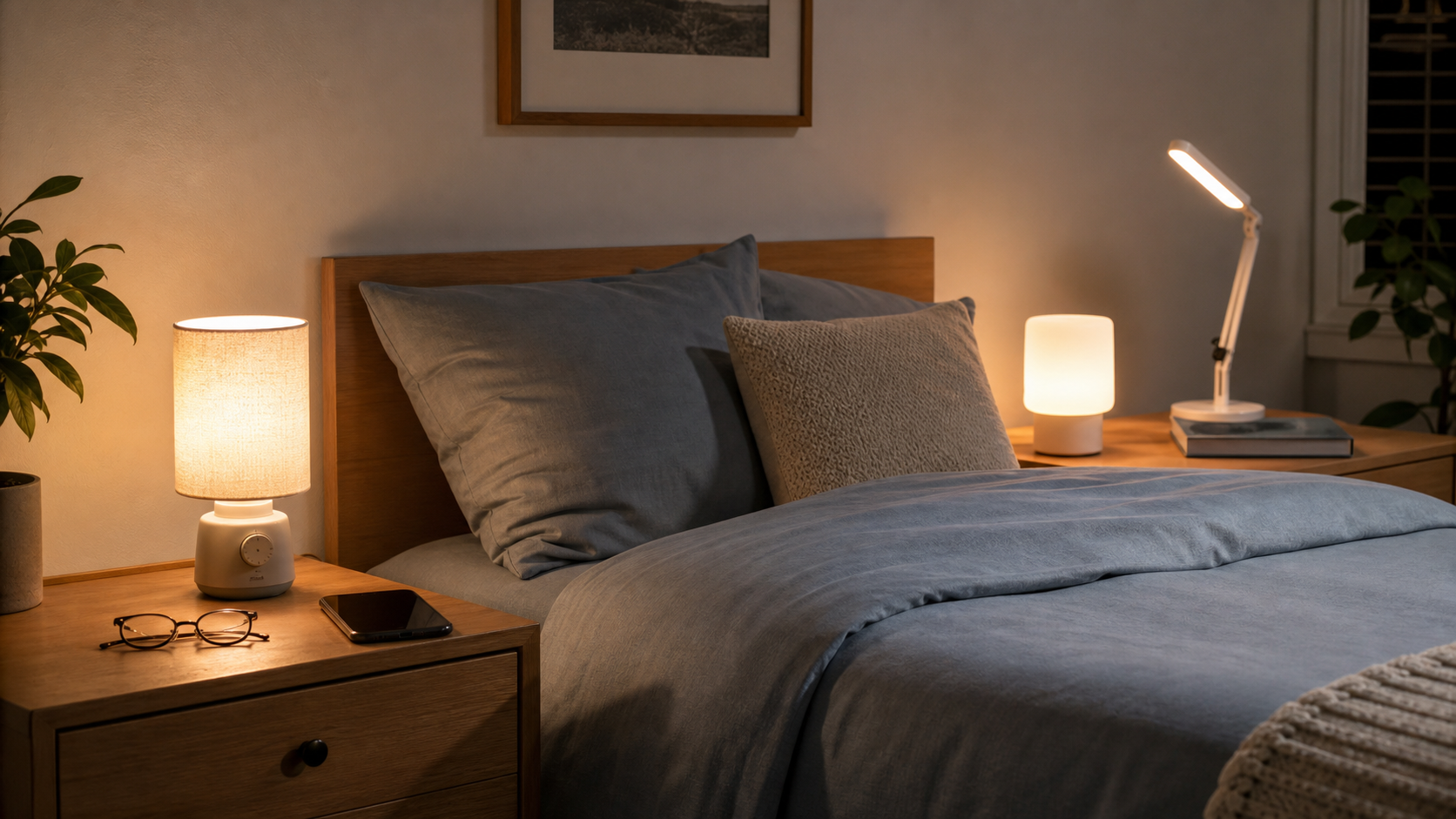
As an Amazon Associate, The Good Home Doc may earn from qualifying purchases.
Choose the control and bulb system first: These affiliate category links are shopping starting points, not tested rankings. Confirm current dimensions and electrical specifications on the maker’s listing.
- Browse category: Compact lamps with rotary dimmersA useful starting category when tactile control and predictable adjustment matter.
- Browse category: Small touch-control bedside lampsCompare for easy reach, but check sensitivity, brightness steps, and power-loss behavior.
- Browse category: Slim adjustable bedside lampsBetter when directed reading light matters more than soft room-wide glow.
Verify base and shade dimensions, control position, listed brightness settings, replaceable-bulb compatibility, maximum wattage, cord length, charging output if included, and a recognized electrical safety listing. “Dimmable” does not guarantee a low minimum setting or compatibility with every bulb.
This guide compares lamp formats by bedside fit; it does not rank brands or claim hands-on testing. A plug-in lamp should never be used to work around a loose outlet, damaged cord, flickering switch, hot plug, scorch mark, or repeatedly tripped breaker. Stop using the affected equipment and involve building management or a qualified electrician.
Quick Picks by Bedside Problem
- Best for most small nightstands: a short shaded lamp with a weighted base, front or side control, replaceable bulb, and clearly stated dimming compatibility.
- Best for easy half-awake control: a lamp with a large rotary dimmer or distinct physical brightness buttons.
- Best for very limited surface depth: a slim integrated-LED lamp whose arm stays within the base footprint.
- Best for reading without lighting the whole room: an adjustable head that shields the light source and aims across the page.
- Best when charging is useful: a lamp with clearly specified USB output and controls that remain usable when charging features age or fail.
Measure the Nightstand as a Working Surface
Measure usable width and depth after reserving space for the items that must stay beside the bed. A lamp with a five-inch base can still consume much more room if its shade is nine inches wide, its switch needs hand clearance, or its cord exits from the side. Open drawers and nearby doors to make sure the lamp or cord will not be struck.
- Mark the space needed for glasses, a phone, water, medication, or a book.
- Measure the remaining rectangle and compare it with both base and shade dimensions.
- Check the lamp height from your normal lying and seated positions; the shade should hide the bright source from direct view.
- Trace the full cord route to an accessible outlet without crossing a walkway, pinching behind furniture, or running beneath a rug.
- Leave enough room to reach the control without pulling the shade or sliding the base.
Comparison Framework
Shaded Lamps With a Rotary or Button Dimmer
A small fabric or frosted shade spreads softer light, while a physical dimmer gives a clear control target. A continuous rotary control may offer finer adjustment; stepped buttons make the available levels easier to repeat.
Choose this type if: you want one lamp for winding down, low ambient light, and occasional reading.
Watch for: a shade wider than the nightstand, a switch hidden behind the base, a lightweight body that turns with the knob, and unclear bulb requirements.
Touch-Control Lamps
Touch lamps can be easy to operate in the dark because a large part of the base acts as the control. Most use fixed brightness steps rather than a continuous range. That can be convenient, but cycling from low through bright to turn the lamp off may be disruptive.
Choose this type if: fine finger movements are inconvenient and the touch surface is easy to reach without brushing it accidentally.
Watch for: overly sensitive bases, controls that react when the nightstand is bumped, a lowest step that is still bright, and settings that reset after an outage.
Slim Adjustable LED Lamps
Integrated-LED lamps can use a narrow base and direct light precisely onto a book. Many add brightness or color settings. Their main tradeoff is repairability: the light source or power adapter may not be replaceable.
Choose this type if: reading light and minimum footprint matter more than a traditional shaded look.
Watch for: exposed glare, touch icons that are hard to find in the dark, an arm that makes the lamp top-heavy, proprietary adapters, and no clear end-of-life plan.
Lamps With USB or Wireless Charging
Charging built into the base can reduce adapters, but it may not reduce cords: the lamp still needs power, and a phone may need precise placement. Treat charging as an extra rather than the reason to accept weak light or poor controls.
Choose this type if: the charging standard suits your current device and the lamp remains worthwhile on lighting quality alone.
Watch for: unstated output, bright charging indicators, heat around the charging area, a top surface too small for the phone, and ports blocked by other bedside items.
Must-Have Selection Criteria
- A useful low setting: Look for stated brightness steps or range, then use the return window to verify that the minimum suits the room without visible flicker.
- Shielded glare: From bed height, the shade or head should keep the bare bulb or LED points out of direct sight.
- Stable footprint: The lamp should resist tipping or sliding when its control is used normally.
- Reachable controls: You should not need to reach behind a hot shade, pull the cord, or sit fully upright to switch it off.
- Clear dimming system: For replaceable-bulb lamps, confirm whether the dimmer requires a particular bulb type and follow both lamp and bulb limits.
- Safe cord fit: The supplied cord must reach without an overloaded adapter, daisy-chained extension, pinch point, or trip route.
Nice-to-Have Features
- Setting memory: Useful if the lamp returns to the last level after being switched off; check what happens after a power loss.
- Warm light appearance: Often comfortable before sleep, provided color quality and glare are acceptable.
- Replaceable bulb: Makes later replacement easier and lets you choose an approved bulb within the lamp’s limits.
- Padded base: Helps protect the nightstand and resist sliding.
- Separate charging controls: A dark or switchable indicator is preferable in a sleep space.
Who Should Skip a Bedside Lamp
Skip a nightstand lamp if there is no stable surface, if the cord would cross the route out of bed, or if children, pets, bedding, or curtains can pull it down or contact hot parts. A properly installed wall light, a stable floor lamp outside the walking path, or a different furniture layout may be a better fit.
Skip touch controls if accidental activation is likely or if cycling through bright settings would disturb a partner. Skip integrated LEDs if replaceability is important. Skip built-in charging if device compatibility, indicator light, heat, or long-term repairability is unclear.
Setup and Maintenance
Place the lamp on a level surface with the maker’s required clearance from bedding, curtains, walls, and other materials. Use only the listed bulb base, shape, and maximum wattage. Do not cover the lamp, route its cord under a rug, or put water where it can spill onto electrical parts.
Dust the shade, vents, and controls with the lamp unplugged and cool, following its care instructions. Recheck the cord and plug periodically. If dimming becomes erratic, do not assume a new bulb will solve it: stop using the lamp if there is heat, odor, buzzing, damage, or other electrical warning signs.
Bottom Line
For most small nightstands, start with a stable shaded lamp that has a reachable physical dimmer, a low setting suitable for the room, and a replaceable bulb with clearly documented compatibility. Choose a slim adjustable LED lamp when focused reading light matters more than broad glow, and treat touch controls and charging as fit-dependent extras. The right lamp leaves room for bedside essentials and keeps glare, heat, and the cord out of the way.