Best Table Lamps for Dark Apartments Without Ceiling Lights
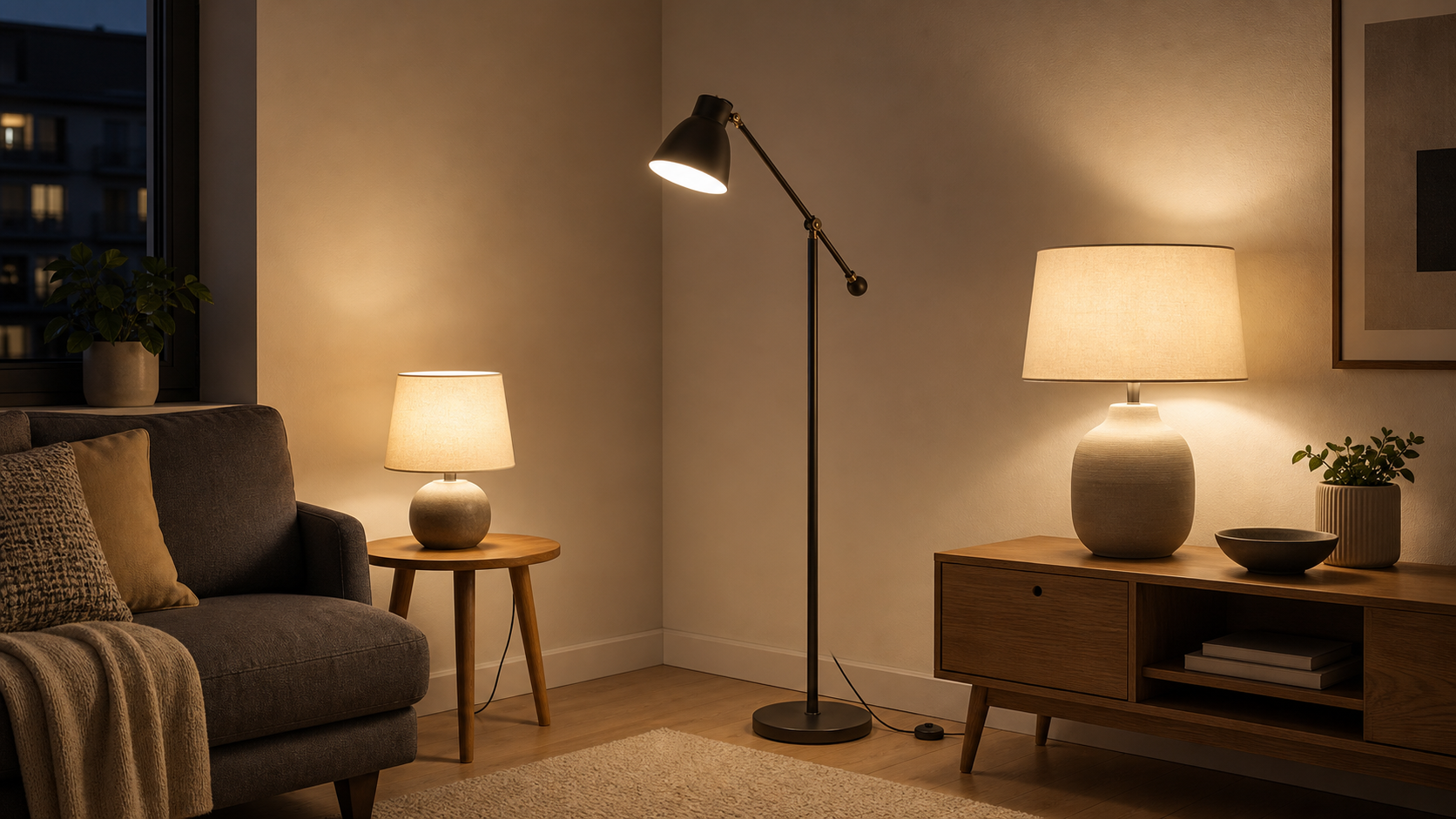
The best table-lamp setup for a dark apartment is usually a small group of lamps with different jobs, not one extremely bright lamp. Start with a shaded ambient lamp for the room, then add a directed task lamp where you read, work, or prepare food. Choose each lamp by placement, shade direction, bulb limits, and switch access.
As an Amazon Associate, The Good Home Doc may earn from qualifying purchases.
Choose the light pattern before the style: These affiliate category links are shopping starting points, not tested rankings.
- Browse category: Shaded ambient table lampsA practical starting point for soft light beside a sofa, on a console, or in a bedroom.
- Browse category: Adjustable task lampsBetter when the lamp needs to direct light onto a desk, book, craft, or work surface.
- Browse category: Compact dimmable table lampsWorth comparing for nightstands and narrow surfaces where footprint and low-light control matter.
Confirm the lamp's listed bulb base, maximum wattage, dimming method, shade dimensions, overall footprint, cord length, and safety listing before buying. A dimmable bulb does not make every lamp or wall dimmer compatible.
This guide compares lamp formats and fit rather than ranking individual brands. Plug-in table lamps can improve usable light without changing apartment wiring, but they do not replace required fixtures or solve a damaged outlet, sparking switch, hot plug, or repeatedly tripped breaker. Report those problems to building management or a qualified electrician.
Quick Picks by Situation
- Best for general room light: a medium-height lamp with a light-colored fabric shade that sends light outward and slightly upward.
- Best for reading or desk work: an adjustable task lamp with an opaque shade that keeps the bright source out of your direct sightline.
- Best for a narrow nightstand: a compact, bottom-heavy lamp with an easy-to-reach switch and a shade that does not crowd the bed.
- Best for changing needs: a lamp with built-in stepped brightness or verified dimming compatibility.
- Best when outlets are limited: a stable lamp with a suitably long manufacturer-supplied cord, placed without stretching the cord across a walkway.
Plan the Room Before Buying
List the places where poor light stops an activity: the sofa where you read, the desk surface, the entry console, or the bedside area. Then identify a stable surface near an outlet for each job. A lamp can look bright in a product photo while putting most of its light in the wrong direction.
Layering works because ambient and task light solve different problems. A translucent shade softens contrast across a room, while an adjustable opaque shade concentrates light on a smaller area. Two moderate lamps placed near the work often feel more useful than one bare, high-output bulb across the room.
Comparison Framework
Shaded Ambient Lamps
Traditional table lamps with fabric or frosted shades spread light across nearby walls and surfaces. Lighter shades pass more light; dark or heavily lined shades direct more of it up and down.
Choose this type if: the main problem is a dim living room, bedroom, or entry area and you want comfortable background light.
Watch for: a shade that exposes the bulb at seated eye level, a base too wide for the furniture, and a shade that blocks most side light.
Adjustable Task Lamps
A pivoting head or arm lets you aim light at a desk, book, puzzle, or craft. An opaque shade reduces spill and can keep reflections away from a screen when positioned carefully.
Choose this type if: you need useful light on one work surface rather than broad room illumination.
Watch for: a small base that tips when the arm extends, joints that do not hold position, harsh exposed LEDs, and a head that becomes hot during normal use.
Compact Bedside Lamps
Small lamps preserve nightstand space and put the control within reach. Size alone does not make one suitable: the shade should cover the light source from bed height, and the base should remain stable when the switch is used.
Choose this type if: the surface also needs to hold a phone, water, glasses, or medication.
Watch for: touch controls that activate accidentally, switches hidden behind the shade, top-heavy bases, and cords pinched between furniture and the wall.
Built-In LED Lamps
Integrated LEDs can make a task lamp thin and may provide several brightness or color settings. The tradeoff is that the light source may not be replaceable when it fails.
Choose this type if: compact adjustment matters and the maker clearly states the controls, expected service life, and warranty.
Watch for: unclear replaceability, a proprietary power adapter, controls that reset after power loss, and marketing terms that do not state actual light output.
Must-Have Features
- A useful light direction: Diffuse shades for ambient light; controlled, adjustable heads for task light.
- Verified bulb limits: Match the base type and never exceed the lamp maker's maximum wattage or specified bulb shape.
- Stable proportions: The base should resist tipping when the switch is used or an adjustable arm is extended.
- Accessible controls: The switch should be reachable from the chair, desk, or bed without grabbing a hot shade or pulling the cord.
- Enough cord reach: Measure along the safe route to the outlet, not in a straight line through furniture or a walkway.
- Recognized safety certification: Look for a listing mark appropriate to your region and verify unfamiliar marks with the certifying organization.
Nice-to-Have Features
- Stepped brightness: Simple low, medium, and high settings can be easier to live with than an overly sensitive touch slider.
- A replaceable bulb: Lets you change brightness or color appearance within the lamp's stated limits and replace the light source later.
- A weighted or padded base: Adds stability and helps protect the table surface.
- An in-line switch: Useful when it lands within easy reach and does not disappear behind furniture.
- A USB charging port: Convenient only if the lamp remains useful without it; charging standards age faster than lamp bodies.
Brightness, Bulbs, and Glare
Use lumens to compare bulb light output rather than relying on wattage as a brightness measure. More lumens are not automatically better: shade material, lamp height, wall color, and distance from the task change how useful the light feels. Follow both the lamp and bulb instructions.
For ambient light, a shade that hides the bulb from normal seated and standing views reduces glare. For a desk, aim the head across the work surface rather than toward your eyes or monitor. If a lamp is dimmable, confirm whether dimming is built into the lamp and which bulb types the maker permits.
Measure Placement and Cord Route
- Measure the table's usable width and depth after reserving space for daily items.
- Check the lamp's total height and shade width, including any arm at full extension.
- Sit or stand where the lamp will be used and estimate whether the shade will hide the bulb.
- Measure the cord route around furniture to the outlet.
- Keep cords out of walking paths, doorways, pinching points, rugs, and places children or pets can pull them.
Do not daisy-chain extension cords or overload adapters to make a placement work. If the room lacks a suitable outlet, choose another location or ask building management or a qualified electrician about safe options.
Who Should Skip a Table Lamp
Skip a table lamp where there is no stable surface, where the cord must cross a walkway, or where the lamp can be pulled down easily. Homes with young children, active pets, or unstable furniture may be better served by a securely placed alternative after considering cord and tip risks.
Skip any lamp with a damaged cord, loose socket, cracked plug, flickering control, scorch marks, or missing electrical information. Do not use a plug-in lamp as a workaround for a faulty outlet or wiring problem.
Buying Checklist
- Assign the lamp one job: ambient, task, or bedside light.
- Measure the surface, height, shade width, and safe cord route.
- Choose a shade that directs light where the job requires it.
- Confirm bulb base, bulb shape, maximum wattage, and dimming compatibility.
- Check base stability with any arm in its widest normal position.
- Confirm the switch is reachable and the lamp has a recognized safety listing.
- Reject placements that create cord, heat, glare, or tipping problems.
Bottom Line
For most dark apartments, begin with a shaded ambient lamp near the main seating area and add an adjustable task lamp where detailed work happens. Choose each lamp by light direction, stable footprint, bulb limits, control access, and a safe cord route. The best-looking lamp is a poor fit if its shade creates glare or its cord cannot reach the outlet safely.