Best Plug-In Wall Sconces for Renters
The best plug-in wall sconce for a renter puts useful light at the right height without pretending every wall is suitable for an adhesive mount. Start with mounting permission and the wall surface, then compare the cord route, switch position, shade direction, bulb limits, and removal plan.
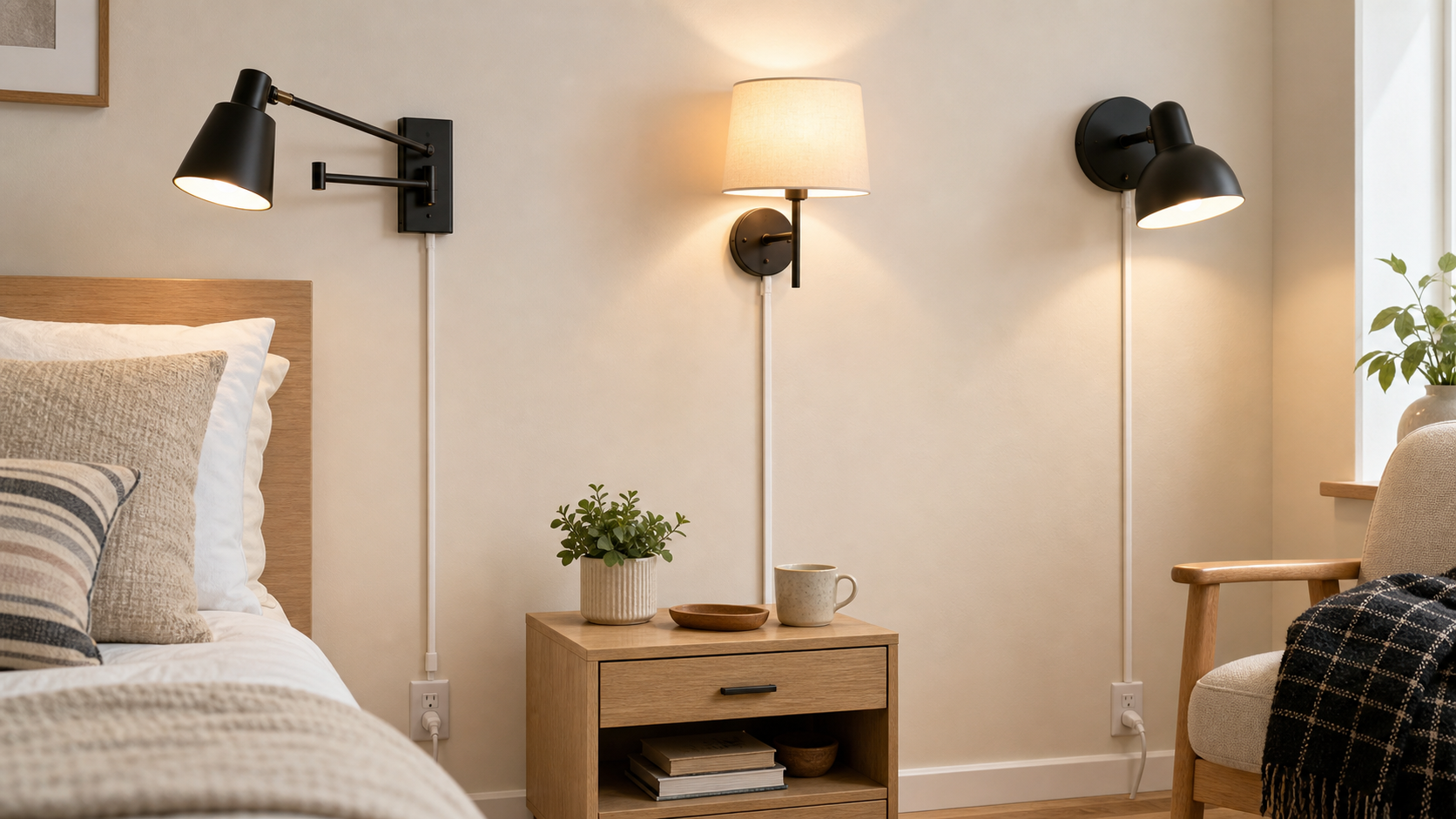
As an Amazon Associate, The Good Home Doc may earn from qualifying purchases.
Choose by mounting and light direction first: These affiliate category links are shopping starting points, not tested rankings.
- Browse category: Plug-in swing-arm sconcesUseful for adjustable bedside or reading light when a permitted screw-mounted plate can support the moving arm.
- Browse category: Plug-in fabric-shade sconcesA softer-light option where glare control matters more than a focused beam.
- Browse category: Directional plug-in reading sconcesCompare head adjustment, switch reach, cord length, and whether the light source is replaceable.
Confirm the listed mounting hardware, fixture weight, cord length, switch location, bulb base and maximum wattage, wall clearance, and recognized electrical safety listing. “Renter-friendly” does not guarantee mark-free removal.
This guide compares sconce formats and fit rather than ranking brands or claiming hands-on tests. A plug-in sconce uses a normal outlet and does not require hardwiring, but mounting it may still require holes. Do not modify a fixture, cord, plug, outlet, or building wiring. Report a hot plug, damaged cord, sparking outlet, scorch mark, or repeated breaker trip to building management or a qualified electrician.
Quick Picks by Situation
- Best for focused reading: a screw-mounted swing-arm sconce with a stable wall plate and an opaque shade that keeps the bulb out of your sightline.
- Best for soft bedside light: a fixed fabric-shade sconce with a switch reachable from bed and enough clearance from pillows and bedding.
- Best when holes are prohibited: a lightweight fixture explicitly designed for its supplied removable mount—or, more reliably, a compact table or floor lamp.
- Best for a visible cord: a fixture whose cord follows a short vertical route without crossing furniture, doors, rugs, or a walkway.
Decide Whether a Sconce Fits the Lease
Check the lease and ask the property manager before drilling. Small patchable holes may be allowed in one rental and prohibited in another. Tile, masonry, textured plaster, wallpaper, and fragile or newly painted surfaces add removal and repair risk. Keep written permission when the answer could affect your deposit.
Adhesive mounting is not automatically safer for the wall. Paint condition, texture, humidity, fixture weight, heat, cord tension, and removal technique all affect whether adhesive holds or lifts the finish. Never improvise with removable strips unless the fixture maker explicitly permits that mounting method and the strip maker permits the load, surface, orientation, and environment.
Comparison Framework
Screw-Mounted Swing-Arm Sconces
A hinged arm brings light closer to a book or work surface and folds back when not needed. Movement places changing leverage on the mount, so these fixtures need the hardware and wall attachment specified by the manufacturer.
Choose this type if: focused, movable light matters and the lease allows the required holes.
Watch for: a flexible wall plate, an arm that drifts, a switch hidden behind the shade, and a shade that exposes the bulb at eye level.
Fixed Fabric-Shade Sconces
A fabric shade spreads gentler light around a bedroom or reading corner. Fixed fixtures create less mounting leverage than long swing arms, but they still need secure installation and adequate clearance.
Choose this type if: ambient bedside light and reduced glare matter more than precise aiming.
Watch for: a wide shade that crowds the bed, a bulb visible from below, difficult dusting, and placement near curtains or bedding.
Directional Metal-Shade Sconces
A pivoting metal shade can direct a smaller pool of light onto a book, chair, or desk. It may feel brighter at the task while contributing less general room light.
Choose this type if: the fixture has one defined reading or task job.
Watch for: hot accessible surfaces, limited pivot range, glare from an exposed bulb, and a cord switch that lands behind furniture.
Adhesive-Mounted Plug-In Lights
Some lightweight wall lights use maker-supplied adhesive plates. They avoid holes only when the wall, paint, room conditions, load, and installation all match the instructions.
Choose this type if: the manufacturer explicitly supports the surface and you accept that paint damage or falling remains possible.
Watch for: generic “damage-free” claims, textured walls, humid rooms, substitute strips, heavy shades, and cord pull.
Must-Have Selection Criteria
- A permitted mounting method: Match the lease, wall material, fixture instructions, and supplied hardware.
- A safe cord route: The cord should descend without being stretched, pinched, covered by a rug, or pulled across a walking path.
- Reachable controls: Check the actual location of an in-line, canopy, or shade switch after measuring the installation height.
- Useful light direction: Choose a diffusing shade for ambient light or an opaque adjustable shade for reading.
- Verified bulb limits: Confirm base, shape, maximum wattage, enclosure rules, and dimming compatibility.
- Recognized safety listing: Verify unfamiliar certification marks with the named testing organization.
Nice-to-Have Features
- A replaceable bulb: Easier to service and adjust within the fixture’s permitted specifications.
- A long manufacturer-supplied cord: Helpful only when excess cord can be managed without tight coils, heat traps, or trip hazards.
- A glare-controlling shade: Especially useful when the fixture sits close to eye level beside a bed.
- Simple mechanical controls: Often easier to reach and troubleshoot than app-dependent controls.
- A compatible cord cover: Can tidy a vertical route when its adhesive and removal instructions suit the wall.
Measure Before Buying
- Mark the intended shade center and sit or lie where the light will be used.
- Measure the fixture’s full width, depth, and maximum arm reach.
- Confirm clearance from the bed, headboard, door, curtain, shelf, and anything that could touch the shade.
- Measure the cord route down and around furniture to the outlet, not a straight diagonal line.
- Locate the switch on that route and confirm it will be reachable without pulling the cord.
- Check where holes, adhesive, and a cord cover would land before purchasing.
Mounting and Cord Safety
Follow the fixture maker’s installation instructions and use compatible mounting hardware for the stated wall type. A drywall anchor is not interchangeable with attachment to a stud, masonry, tile, or plaster. If the instructions are unclear or the wall condition is uncertain, use a freestanding lamp or hire appropriate help rather than guessing.
Do not route the cord through a wall, under a rug, through a doorway, or where furniture pinches it. Keep it away from water and hot surfaces. A decorative cord cover organizes a suitable surface route; it does not turn a flexible lamp cord into permanent wiring.
Who Should Skip a Plug-In Wall Sconce
Skip this category when the lease prohibits both holes and the required adhesive, the wall finish is fragile, the fixture cannot be mounted with its specified hardware, or the only cord route creates a trip or pinch hazard. A table lamp or floor lamp is often the more reversible choice.
Also skip a wall sconce where children or pets can pull the cord, where bedding or curtains can contact the lamp, or where the outlet shows damage or does not hold a plug securely. A plug-in fixture is not a workaround for an electrical fault.
Buying Checklist
- Get lease or property-manager approval for the exact mounting method.
- Match the supplied mount to the wall material and fixture weight.
- Measure depth, arm reach, shade clearance, cord route, and switch access.
- Choose ambient or directional light for the actual task.
- Confirm bulb base, wattage limit, dimming method, and safety listing.
- Plan removal and possible wall repair before installation.
- Reject setups requiring cord modification, hidden in-wall routing, or an unsafe outlet.
Bottom Line
For renters allowed to make small holes, a properly mounted swing-arm sconce is the strongest fit for focused reading, while a fixed fabric-shade model gives softer bedside light. If drilling is prohibited, treat adhesive fixtures cautiously and choose only a lightweight design explicitly approved for its mounting system and wall surface. The lease, wall, cord route, switch reach, and bulb limits matter more than style.