Best Magnetic Curtain Rods for Metal Doors
A magnetic curtain rod is a narrow-fit solution: it can hold a lightweight privacy panel on a compatible steel door without drilling, but only when the magnets make full contact and the rod stays clear of the frame, latch, hinges, and door swing. Start by testing the actual door—not by assuming every metal-looking surface is magnetic.
As an Amazon Associate, The Good Home Doc may earn from qualifying purchases.
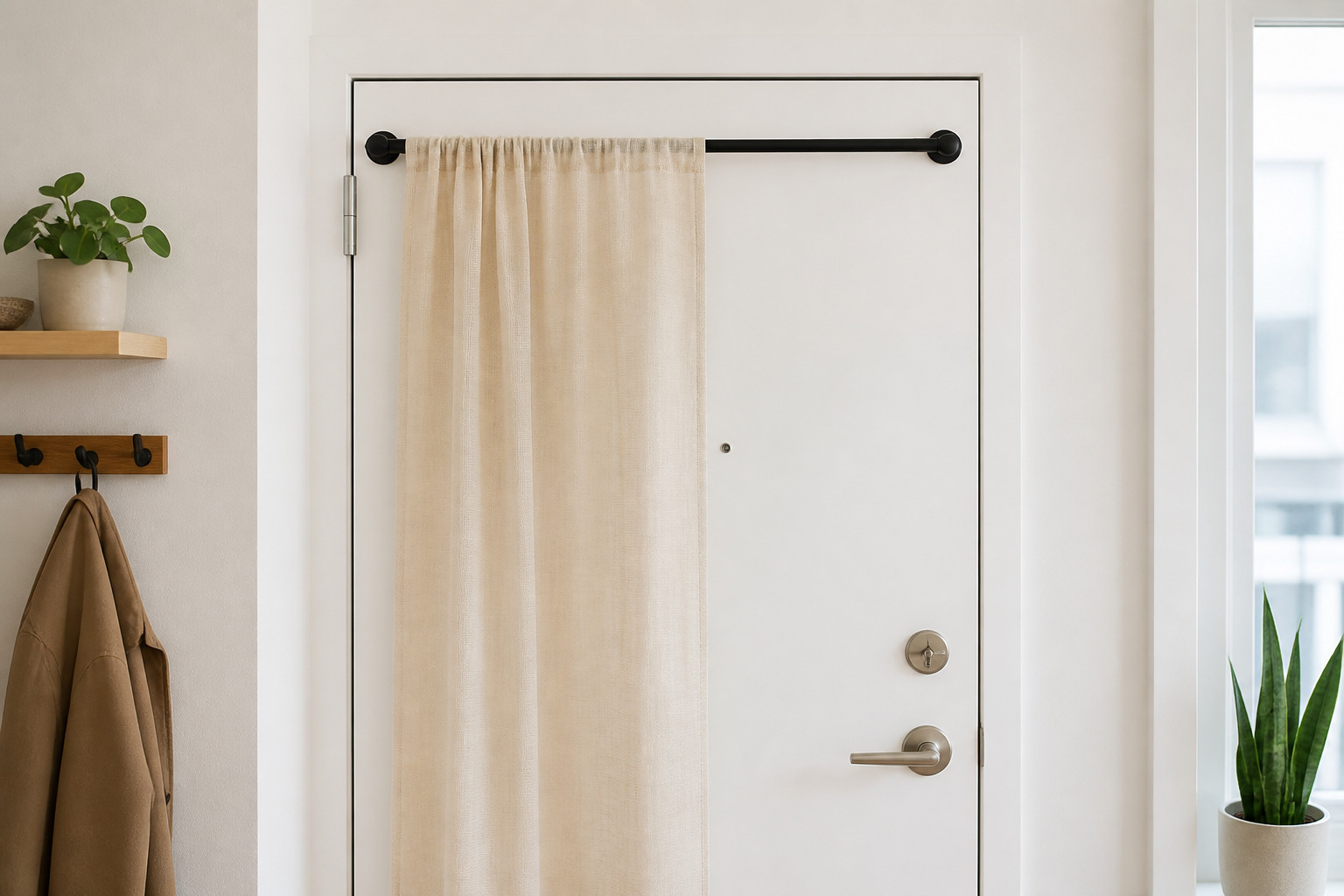
Start with the compatible category: This affiliate category link is a shopping starting point, not a tested brand ranking.
- Browse category: Magnetic curtain rods for metal doorsCompare only rods with listed span, magnet-base dimensions, and curtain-weight guidance.
Confirm that your door attracts a magnet strongly at both mounting points, then check rod span, base contact, panel weight, door clearance, surface-care instructions, and the return policy before buying.
This guide compares product formats and fit criteria rather than current named products. It does not claim hands-on testing, guaranteed holding strength, damage-free use, security, soundproofing, or complete blackout performance.
Quick Picks by Door Setup
- Best simple setup: a fixed straight rod with two broad, padded magnetic bases and a clearly listed adjustable span.
- Best for a small glazed door panel: a paired top-and-bottom rod setup, but only when the panel maker supports two rods and the lower rod does not interfere with hardware.
- Best for frequent curtain changes: a rod with removable end caps or a simple telescoping tube that does not require disturbing the magnets.
- Best when the door is not magnetic: skip this category and use a compatible tension, trim-mounted, or temporary shade option instead.
Test the Door Before Measuring
Use an ordinary household magnet to test the exact upper-left and upper-right areas where the rod bases would sit. Test both spots because a steel door can include nonmagnetic trim, filler, windows, skins, or hardware. A weak attraction is not enough evidence that a curtain rod will stay put during daily door movement.
Do not place magnets over labels, seals, weatherstripping, hinges, closers, locks, peepholes, or door-frame components. If the door is fire-rated, part of an emergency exit, or governed by building rules, ask the landlord or property manager before adding anything that could affect its operation.
Measure the Working Area
- Measure the clear width available between raised trim, hardware, and the door edges.
- Measure the flat contact area needed for each magnetic base; the full base should sit on steel, not partly on molding.
- Check the rod's projected depth against the frame when the door opens fully.
- Measure the curtain panel and include rings, rod pockets, hems, and any lower rod in the total setup.
- Open and close the bare door normally to identify vibration, slamming, rubbing, and pinch points before mounting anything.
Comparison Framework
Broad Padded Magnetic Bases
A broad base can create more contact area than a small exposed magnet, while a thin non-marking pad may reduce direct rubbing. The pad and paint still need routine checks because trapped grit or repeated movement can mark a finish.
Choose this type when: the door provides two clean, flat steel contact areas.
Watch for: bases that overlap trim, vague dimensions, exposed rough edges, and claims that skip curtain-weight guidance.
Adjustable Telescoping Rods
An adjustable tube is useful when the required span falls comfortably inside its stated range. Avoid using the rod at an uncertain extreme, where overlap may be limited or the curtain can push against the end mounts.
Choose this type when: you need a precise span and the maker documents the usable range.
Watch for: weak twist locks, sharp seams that snag fabric, and a tube diameter that does not fit the curtain pocket or rings.
Paired Top-and-Bottom Rods
A lower rod can hold a lightweight panel closer to a door, which may reduce swinging. It also adds two more magnets and more opportunities to interfere with handles, kick plates, weather seals, or the frame.
Choose this type when: the curtain is made for paired rods and all four contact points remain clear through the full door swing.
Watch for: stretched fabric pulling the bases inward, a lower rod near the handle, and magnets sliding when the door closes.
Must-Have Features
- Documented dimensions: rod span, tube diameter, base width, and projection should be listed.
- Manufacturer weight guidance: compare the complete curtain setup—not just the bare fabric—with the stated limit.
- Full flat contact: both bases need unobstructed contact with compatible steel.
- Surface protection: smooth base edges or replaceable pads are preferable, with regular checks for grit and paint movement.
- Secure fabric retention: end caps or stops should keep the lightweight panel from sliding off during normal use.
Nice-to-Have Features
- A finish that makes dust and paint transfer easy to spot.
- Simple removable end caps for laundering the curtain.
- A short adjustment range centered on the measured span.
- Replacement surface pads supplied by the maker.
Setup and Maintenance
Clean and dry the mounting spots according to the door maker's care guidance. Place the unloaded rod first, confirm both bases sit flat, then add the lightest suitable panel. Open and close the door gently while watching for sliding, rotation, frame contact, and fabric near the latch or hinges.
Recheck the mounts after the first several door cycles and periodically thereafter. Remove dust from behind the bases, inspect the paint and pads, and stop using the setup if a magnet creeps, a base rocks, the rod bends, or the door no longer opens and latches normally.
Who Should Skip Magnetic Curtain Rods
Skip this category if the door fails the magnet test, offers too little flat contact area, closes hard, has a closer that creates strong movement, or needs a heavy thermal or blackout curtain. Also skip it when a child or pet can pull the panel, when the curtain could catch in the latch or hinges, or when building rules prohibit door attachments.
Choose another privacy method when failure could block an exit, expose a glass panel unexpectedly, damage a specialty finish, or interfere with a fire-rated door. Magnetic rods are a convenience product for light fabric on a compatible surface, not permanent hardware.
Bottom Line
The best magnetic curtain rod is the one that fits a verified steel contact area, stays comfortably within its listed span and load guidance, clears every moving part, and holds a lightweight panel through normal door use. Test the door first, measure the bases as carefully as the rod, and choose a different no-drill option whenever compatibility or clearance is uncertain.