Best Mop and Bucket Sets for Small Storage Closets
A compact mop-and-bucket set earns its closet space only when it is easy to carry, wring, empty, clean, and dry. Start with the system’s stored dimensions and your floor-care instructions—not the bucket capacity or accessory count on the box.
As an Amazon Associate, The Good Home Doc may earn from qualifying purchases.
Product-category guide
Compare compact bucket systems by the way you clean and store them
Check nested dimensions, wringing method, filled carrying weight, floor compatibility, replacement heads, and how every part dries before choosing a set.
This is a best-fit category comparison, not a hands-on ranking. Product dimensions, capacities, floor claims, replacement parts, and care instructions can change. Verify them with the current manufacturer listing and your flooring maker before buying or using a cleaning solution.
Quick Picks by Cleaning Routine
- Best for frequent whole-floor cleaning: a nested spin-mop set with a stable pedal or hand-operated wringer and readily available replacement heads.
- Best for narrow closet floors: a slim rectangular flat-mop bucket whose mop plates, handle sections, and lid all store inside its measured footprint.
- Best for simple parts and familiar wringing: a compact bucket with a removable press wringer, provided the filled weight and storage width are manageable.
- Best when carrying water is difficult: no large bucket by default; choose a lightweight spray mop or smaller hand-filled system.
- Best for delicate flooring: the system explicitly permitted by the floor manufacturer, with reliable moisture control and the approved cleaner.
Measure the Full Stored System
Measure the closet’s clear floor width, depth, and height after accounting for trim, door swing, shelves, pipes, and other tools. Then compare those numbers with the set fully nested for storage. Include protruding pedals, wringer arms, wheels, handles, pouring spouts, and a mop head that may not fit inside the bucket.
A telescoping handle helps only if its shortest usable length fits below the shelf and its locking joints remain secure. Check whether the handle separates into sections and whether taking it apart after every use is realistic. Leave enough clearance to lift the set without catching a shelf or knocking over cleaners.
Plan a drying location as well as a parking location. A damp mop sealed inside a bucket is compact but poorly stored. The head and bucket need airflow after cleaning, away from flooring, paint, fabrics, food, children, and pets.
Comparison Framework
Spin-Mop Bucket Sets
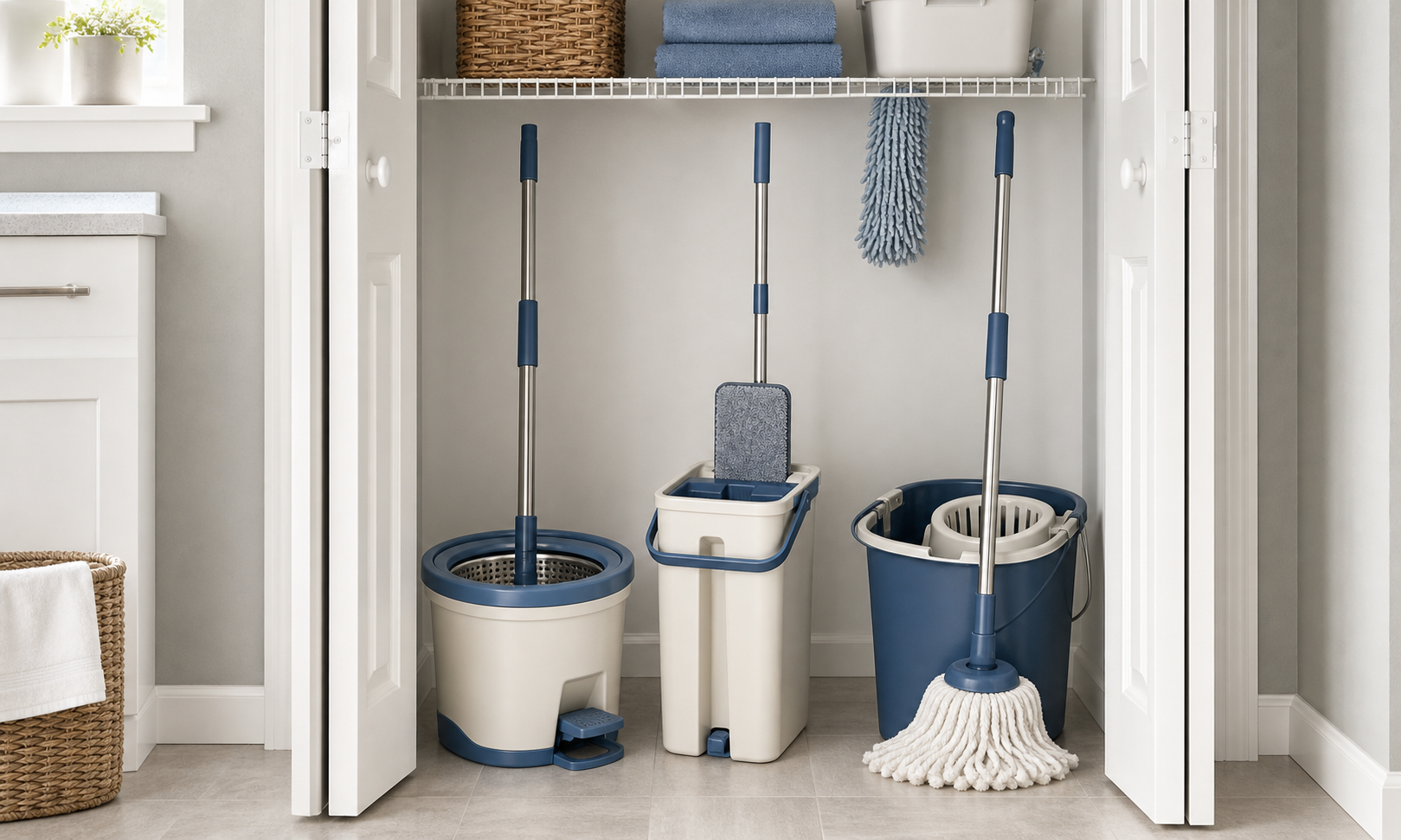
Spin systems use a basket to remove water from a round microfiber head. Some use a foot pedal; others spin through the handle. They suit open floors and households that prefer not to hand-wring a mop.
Compare: nested width, pedal projection, basket material, splash guard, drain plug, carrying handle, clean-water separation, handle lock, head diameter, and replacement-head availability.
Skip when: the bucket is awkward to lift, the round head cannot reach your edges, the pedal would be cramped against a wall, or replacement parts are proprietary and hard to source.
Slim Flat-Mop Wash-and-Dry Buckets
These tall rectangular buckets pass a flat head through narrow wash and wring slots. Their narrow footprint can suit a closet, but height, balance, and internal cleaning matter more than the tidy shape suggests.
Compare: base stability, slot width, whether the head enters without touching dirty outer surfaces, separate chamber design, drain access, lid removal, internal corners, pad attachment, and the actual handle length.
Skip when: the tall bucket feels unstable, the chambers are difficult to scrub and dry, the mop plate does not swivel for your furniture, or the system leaves the pad wetter than your floor permits.
Traditional Buckets with Press Wringers
A compact press-wringer set has fewer specialized moving parts and can accept familiar string or fan-style mops. The tradeoff is width and weight: the wringer often adds bulk above the bucket and can make pouring less controlled.
Compare: wringer leverage, attachment security, bucket lip, pour spout, handle comfort, base stability, mop compatibility, removable parts, and storage with the wringer nested or detached.
Skip when: pressing the wringer strains your hands or back, the loaded bucket twists, or the set blocks the closet doorway.
Filled Weight Matters More Than Capacity
Water is heavy: one U.S. gallon weighs about 8.3 pounds before adding the bucket and mop. You do not need to fill a bucket to its advertised capacity, but you do need a safe route from the faucet to the floor and back. Consider the sink or tub height, thresholds, stairs, doorways, and where you can pour without twisting.
Choose a smaller working fill line if the manufacturer permits it, and keep the handle centered before lifting. Never carry a full bucket on stairs if the load, visibility, or free-hand support feels uncertain. A smaller container, two trips, or a spray system may be the better setup.
Must-Have Features
- Published nested dimensions: Measure the complete stored set, not only the bucket body.
- Controlled wringing: The mechanism should remove enough water for the approved floor-care method without unstable force.
- Secure carrying handle: Check its attachment points and comfortable grip at the intended fill level.
- Easy emptying: A useful spout or drain should let you empty the bucket without water tracking down its side.
- Cleanable parts: The basket, chambers, wringer, lid, and corners should be reachable for rinsing and drying.
- Available consumables: Confirm current replacement pads or heads and their wash instructions before committing to the system.
Nice-to-Have Features
A drain plug can reduce lifting if there is a suitable floor-level drain, while a splash guard can keep wringing tidier. Wheels help only on smooth, level routes and can add footprint or instability. A water-separation chamber may extend the useful cleaning cycle, but it also adds internal parts to rinse. Treat dispensers, extra heads, and telescoping sections as bonuses after fit and handling are settled.
Floor Compatibility and Cleaning Solution
Follow the flooring manufacturer’s care instructions. Wood, laminate, resilient flooring, tile, and natural stone can have different moisture and cleaner limits. A mop advertised for many surfaces does not override those instructions. Avoid steam, excessive water, abrasive pads, or improvised chemical mixtures unless the floor and tool makers explicitly permit them.
Do not mix cleaning chemicals. Keep products in their original labeled containers, use the stated dilution, ventilate as directed, and store them separately from the empty bucket if leakage could damage the mop materials. If flooring is damaged, lifting, unsealed, or under warranty, ask the manufacturer or a qualified flooring professional before wet cleaning.
Pad Care, Bucket Cleaning, and Drying
Rinse the bucket and wringer after use so grit does not stay in moving parts or scratch the next floor. Wash reusable pads or heads according to their labels; fabric softener, bleach, heat, and mixed lint loads may be restricted. Replace frayed pads, loose strands, cracked handles, bent baskets, or unreliable locks rather than working around them.
Empty all chambers, wipe trapped debris, and dry the pieces with airflow before nesting them. Do not leave standing water in a closet. Persistent odor, slimy residue, or a mechanism that cannot be cleaned is a reason to stop using the set.
Who Should Skip a Mop and Bucket Set
Skip this category if most cleanup is a few crumbs or small spills, if the bucket cannot dry outside its closet, or if carrying water would be difficult. A simple microfiber mop system or refillable spray mop may take less storage and setup.
Also skip a wet-mop system when your flooring instructions prohibit it, when the route crosses stairs or crowded walkways, or when the only storage spot blocks utilities, ventilation, or emergency access. For major water damage, sewage, mold, hazardous spills, or damaged flooring, stop routine cleaning and contact the appropriate qualified professional.
Selection Checklist
- Confirm the floor maker’s allowed moisture, pad, and cleaning solution.
- Measure the closet, shelf clearance, door swing, faucet, and carrying route.
- Record the complete nested dimensions and shortest stored handle length.
- Choose a wringing method that is stable and comfortable at a modest fill level.
- Verify replacement heads, wash care, drain or pour design, and cleanable internal parts.
- Decide where the mop and bucket will dry before deciding where they will be stored.
- Skip the system if filled handling, floor limits, or drying space do not work.
Bottom Line
For many small closets, a slim flat-mop bucket wins on footprint, while a compact spin set offers easier wringing and a traditional press wringer offers simpler parts. None is universally best. The right set is the one that fits fully nested, stays manageable with water, matches the flooring instructions, has replaceable mop heads, and can be cleaned and dried after every use.