Best Narrow Trash Cans for Small Kitchens
A narrow trash can can reclaim a galley-kitchen walkway or fit beside a cabinet, but width alone does not make it useful. The best fit leaves room for the lid and pedal, holds a liner without constant slipping, and can be emptied and cleaned without scraping the wall.
As an Amazon Associate, The Good Home Doc may earn from qualifying purchases.
Product-category guide
Compare slim kitchen bins by fit and daily use
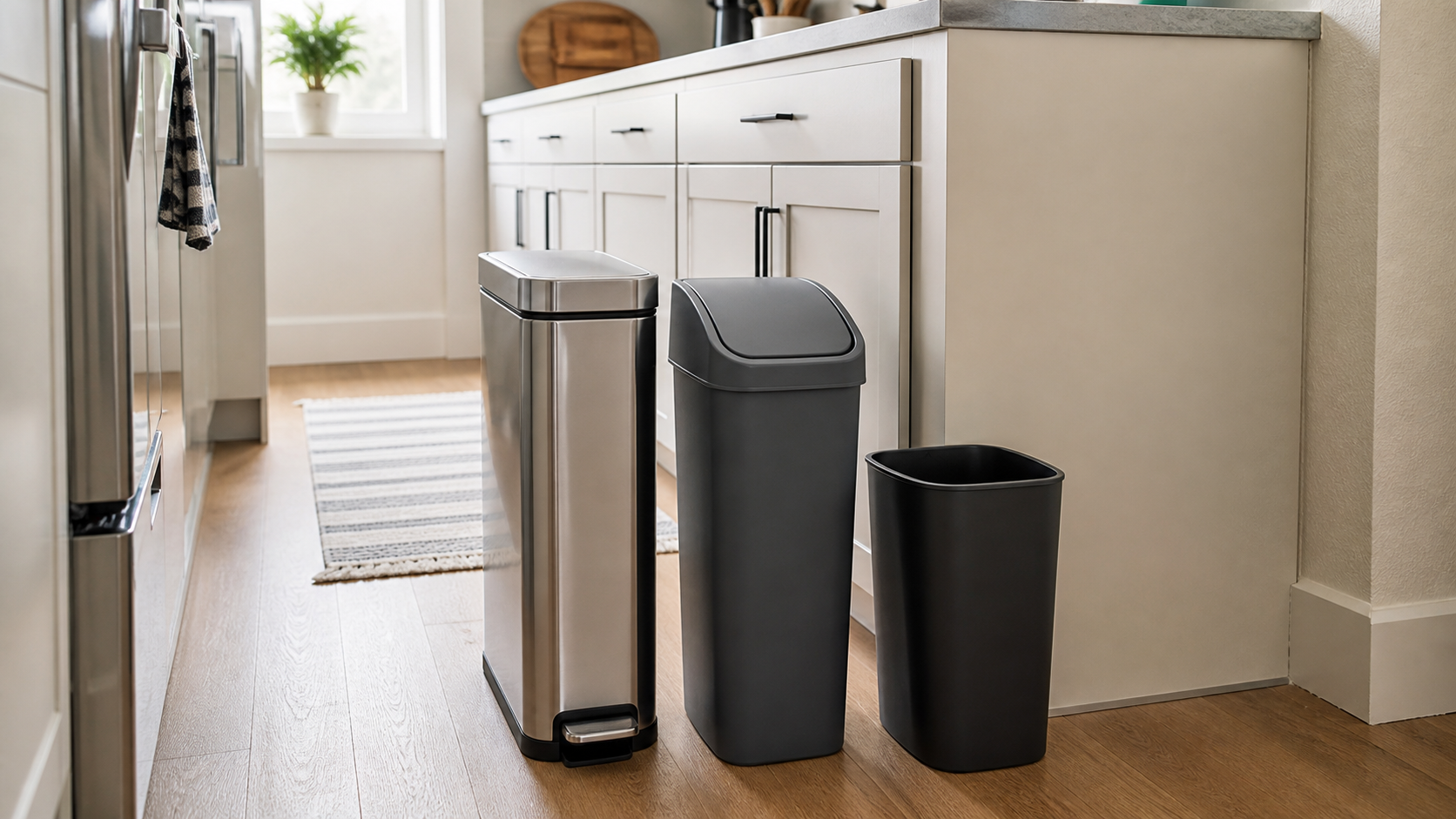
Measure the complete operating space, then compare lid style, pedal access, usable capacity, liner fit, removable buckets, and cleaning access.
This is a best-fit comparison framework, not a ranked review or a claim that we tested individual cans. Confirm current dimensions, capacity, liner guidance, materials, and care instructions with the manufacturer before buying.
Quick Picks by Kitchen Problem
- Best for most narrow walkways: a rectangular step can with a short-opening lid, stable pedal, and removable inner bucket.
- Best under a counter overhang: an open-top or low swing-lid bin, provided food waste is emptied often and pets or children cannot reach it.
- Best beside a refrigerator: a slim can with enough side clearance that it does not block the refrigerator door, venting, or appliance service access.
- Best for easy cleaning: a smooth plastic bin or a can with a fully removable bucket and few seams around the rim.
- Best when odor is the main concern: a well-fitting manual lid plus frequent emptying; no narrow can makes old food waste odor-free.
Measure the Working Footprint, Not Just the Width
Measure the available width, depth, and height at the narrowest points, including baseboards and countertop overhangs. Then add the space needed to stand at the pedal, lift out the bucket, remove a full bag, and wipe behind the can. A model that fits only when untouched will be frustrating every day.
Use painter's tape to outline the can on the floor. Open nearby drawers, cabinet doors, the oven, dishwasher, and refrigerator. Check that the can does not reduce a walking path or sit where a door can knock it over. For a hinged lid, compare both closed height and fully open height.
Comparison Framework
Slim Step Cans
A foot pedal keeps hands away from the lid and works well during food prep. Rectangular bodies usually use wall space more efficiently than round cans.
Choose this type if: you want hands-free opening and have clear floor space in front of the pedal.
Watch out for: pedals protruding into the walkway, lids hitting counters, and narrow inner buckets that pinch standard liners.
Swing-Lid Cans
A swing lid uses less vertical opening space than many hinged lids and can be inexpensive. The flap may touch bulky waste and can be awkward to clean around its pivot.
Choose this type if: overhead clearance is limited and the opening is large enough for your routine waste.
Watch out for: overfilled bags blocking the flap, dirty lid edges, and light bins shifting when waste is pushed through.
Open-Top Bins
Open bins are simple, easy to see into, and free of lid hardware. They work best for dry packaging or households that take kitchen waste out frequently.
Choose this type if: clearance is extremely tight and quick emptying already fits your routine.
Watch out for: visible waste, odors, flies, and access by children or pets. Skip open tops for food waste that will sit.
Pull-Out-Compatible Bins
A plain narrow bin can work inside an existing, correctly sized pull-out system. The cabinet hardware—not the bin alone—determines whether the setup slides safely and clears plumbing or hinges.
Choose this type if: you already have a compatible pull-out frame and can verify the bin dimensions.
Watch out for: buying a loose bin and assuming it includes mounting hardware, reduced cabinet access, and hidden spills.
Must-Have Features
- Exact assembled dimensions: Product listings should state width, depth, closed height, and ideally open-lid height.
- Stable base: The can should resist tipping or sliding when the pedal or swing lid is used.
- Practical liner fit: Check the maker's bag-size guidance and whether common liners can wrap the rim without blocking the lid.
- Cleanable interior: Smooth surfaces and a removable bucket reduce awkward scrubbing in a deep narrow body.
- Usable opening: The mouth must accept the cartons, trays, and tied bags your household actually discards.
Nice-to-Have Features
- Liner-retaining rim: Helps keep the bag from falling inward without exposing a large cuff.
- Carry handle: Useful when the whole can must move for cleaning, as long as it is rated for that use.
- Soft-close lid: Reduces slamming, though it adds a mechanism that may eventually need care.
- Fingerprint-resistant finish: Can reduce visible smudges on stainless steel but does not eliminate cleaning.
- Rounded interior corners: Easier to wipe than tight seams where crumbs and leaks collect.
Capacity, Liners, and Odor Limits
Do not compare capacity labels without dimensions. Two cans with similar stated volume can differ in opening size, taper, and usable space around an inner bucket. A smaller bin emptied every day may work better than a taller can that blocks a drawer and holds food waste too long.
Before committing to a specialty shape, check how liners are secured and whether replacements are easy for you to buy. A standard bag may fit loosely, while a proprietary liner may fit neatly but raise ongoing cost. Avoid stretching an undersized bag so tightly that it tears or pulls the bucket upward.
Lids help contain the view and may slow odor spread, but they do not replace regular emptying and washing. Clean spills according to the maker's directions and let the can dry before fitting a new liner.
Who Should Skip a Narrow Trash Can
Skip this category if your household regularly discards bulky packaging, fills a small bin several times a day, or needs separate trash, recycling, and compost streams in one station. A wider divided can, two smaller bins in different locations, or a correctly fitted cabinet pull-out may be easier to manage.
Also skip any placement that blocks appliance ventilation, electrical panels, plumbing access, exits, or a safe walkway. If the only available space is under a sink, preserve clear access to shutoff valves and check regularly for leaks; the home leaks and moisture prevention guide explains that broader setup.
Bottom Line
For most small kitchens, the best narrow trash can is a stable rectangular step can whose complete working footprint fits the room, whose liner stays put, and whose bucket can be removed without a struggle. Choose an open or swing-lid bin only when its cleanup and odor tradeoffs match your routine. Measure every nearby door and appliance first, then compare capacity second.
For a repeatable way to judge measurements, setup, maintenance, and skip conditions across home purchases, continue with the home product category buying frameworks guide.