Best Spice Drawer Organizers for Shallow Drawers
A spice drawer works only if the tallest jar clears the drawer opening and every label stays readable. Measure the usable height at the cabinet frame first, then compare angled inserts, tiered trays, and modular bins by the jars you actually own—not by the number of bottles shown in a product photo.
As an Amazon Associate, The Good Home Doc may earn from qualifying purchases.
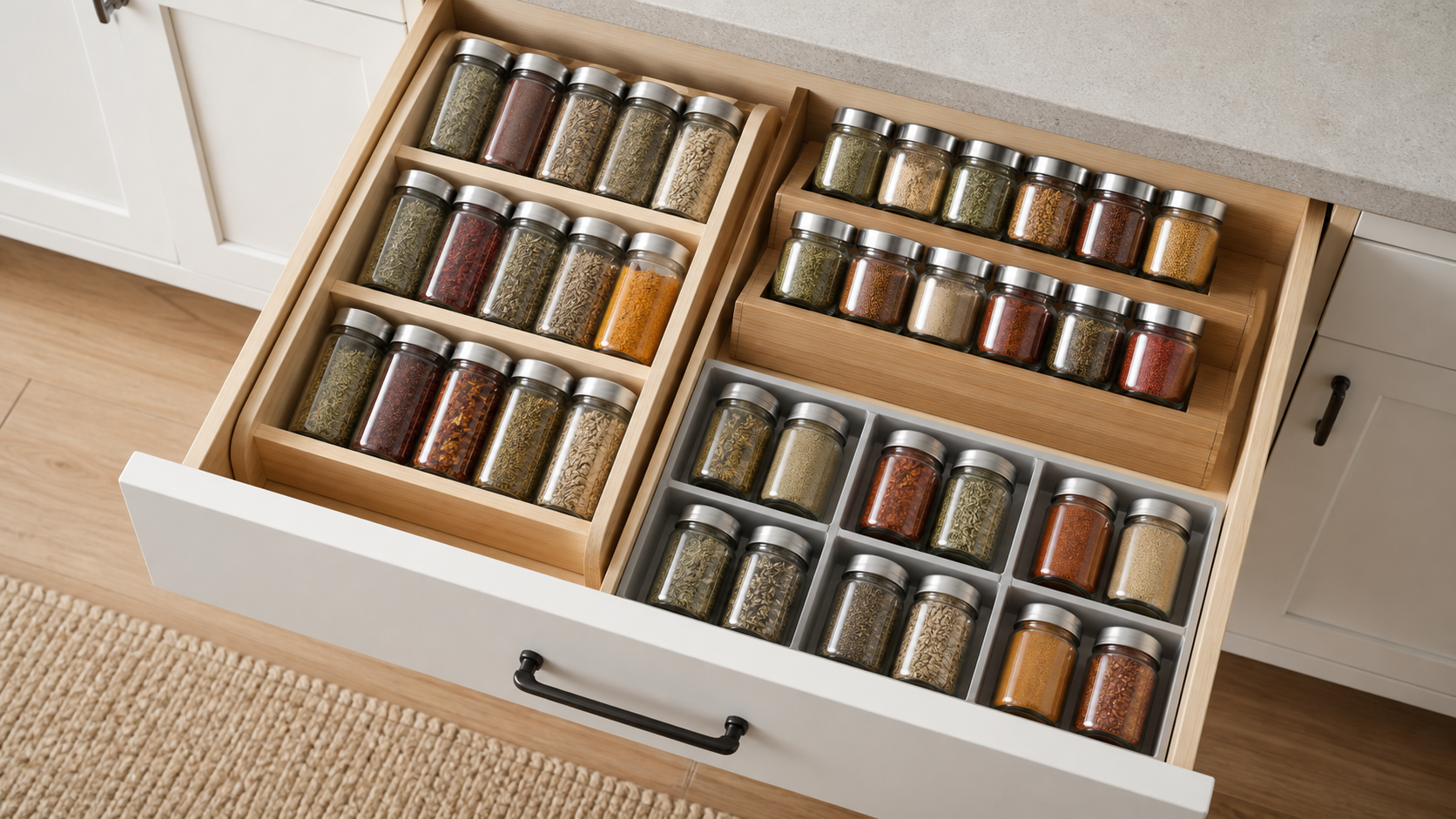
Compare the category after measuring: This affiliate link is a shopping starting point for organizer formats, not a tested brand ranking.
- Browse category: Spice drawer organizers for shallow drawersLook for complete dimensions, supported jar diameters, usable row width, and a return policy.
Confirm drawer width, depth, opening height, jar diameter, and jar height before buying. Product capacity photos often use matching jars and may not reflect a mixed collection.
This guide compares product formats and buying criteria without naming current winners. It does not claim hands-on testing, current prices, ratings, availability, or a guaranteed jar capacity.
Quick Picks by Drawer Problem
- Best for top-label visibility: a low-profile flat liner or modular grid when jars already have clear labels on their lids.
- Best for front-label visibility: a shallow angled insert that keeps the tallest jar below the cabinet opening.
- Best for mixed jar sizes: separate modular trays or low bins that can assign different zones without forcing every jar into one groove.
- Best for a drawer that barely clears: skip raised organizers and use a washable non-slip liner with lid labels.
Measure the Drawer and the Jars
- Measure the inside width and depth at the narrowest points, including screw heads and drawer hardware.
- Measure usable opening height from the drawer bottom to the cabinet rail or countertop obstruction above it.
- Measure the tallest and widest jars, including lids. Check square jars diagonally if they will sit in curved grooves.
- Add the organizer's stated rise to the jar position and allow clearance so jars do not scrape or jam.
- Map odd containers, packets, grinders, and refills separately; they often need another storage zone.
Test the concept before ordering by laying the jars in rows inside the empty drawer. If the collection cannot fit flat with reasonable finger access, an angled insert will not create extra drawer area—it may reduce it.
Comparison Framework
Angled Inserts
Angled rows make front labels easier to scan and can keep round jars from rolling. Their rise consumes vertical clearance, while fixed grooves may waste space around unusually wide or square jars.
Choose this type when: most jars share a similar diameter and the measured opening height leaves comfortable clearance.
Watch for: vague height dimensions, rows too narrow for jar shoulders, sharp edges, and sections that cannot be removed for cleaning.
Tiered Trays
A tiered tray groups jars into stepped rows. It can improve sightlines in a deeper drawer, but the back tier may raise jars into the cabinet frame and the steps can leave unusable wedges along the sides.
Choose this type when: the drawer is deep enough for several rows and the back-row height has been checked with the tallest jar.
Watch for: jars hidden behind one another, trays that slide when the drawer closes, and a footprint that blocks the full drawer from opening.
Modular Bins and Flat Grids
Low modular sections are the most forgiving for mixed jars. They preserve headroom and can separate frequently used spices from baking or refill items, though front labels are harder to read without lid labels.
Choose this type when: container sizes vary or the drawer has an irregular interior.
Watch for: thick bin walls that consume width, loose modules, and deep compartments that make jars hard to lift.
Must-Have Features
- Complete dimensions: overall footprint, maximum rise, row width, and groove size should be stated.
- Jar compatibility: dimensions matter more than a claimed bottle count.
- Slip control: grippy feet, a compatible liner, or snug modular fit should reduce movement without damaging the drawer finish.
- Cleanable surfaces: spice dust and cooking residue should wipe away without soaking unfinished material.
- Finger access: leave enough space to lift one jar without unloading a whole row.
Nice-to-Have Features
- Expandable width that locks or stays aligned after adjustment.
- Removable row sections that can fit around drawer hardware.
- Rounded edges that do not catch labels or scrape the drawer.
- A neutral, high-contrast surface that makes spilled spice easy to see.
Setup and Maintenance
Empty and clean the drawer, let it dry, and place the organizer without jars first. Open and close the drawer to check for shifting. Add the tallest jars to the highest organizer position, close the drawer slowly, and stop if a lid approaches the frame or countertop.
Group jars by how often they are used rather than alphabetizing a collection that changes constantly. Keep everyday spices near the front, label the visible jar surface, and wipe spills promptly. Periodically lift the organizer to remove grit that can scratch the drawer bottom.
Who Should Skip a Spice Drawer Organizer
Skip a raised organizer if the drawer has limited opening height, shallow extension, weak slides, or no comfortable lifting space. Keep glass jars out of a drawer that slams or racks badly until the drawer hardware is repaired. A cabinet shelf, wall-free countertop rack, or existing pantry bin may be more practical when the spice collection includes tall grinders, bags, bulk refills, and many mismatched containers.
Also skip a new product if the real issue is expired duplicates or rarely used spices. Edit the collection first; organizers cannot fix more jars than the drawer can safely and conveniently hold.
Bottom Line
The best spice drawer organizer is the lowest format that makes labels visible, fits the real jar collection, stays put, and leaves enough headroom for the drawer to close without contact. Measure the cabinet opening as carefully as the drawer interior, choose geometry around the jars you already own, and use a flat liner when every raised option sacrifices too much clearance.