Best Sunrise Alarm Clocks for Dark Bedrooms
A sunrise alarm clock can make a dark bedroom feel less abrupt at wake-up time, but the best fit is not simply the brightest clock. Look for a useful dimming range, a wake window that matches your routine, controls you can operate half-awake, and a backup plan when the power or app fails.
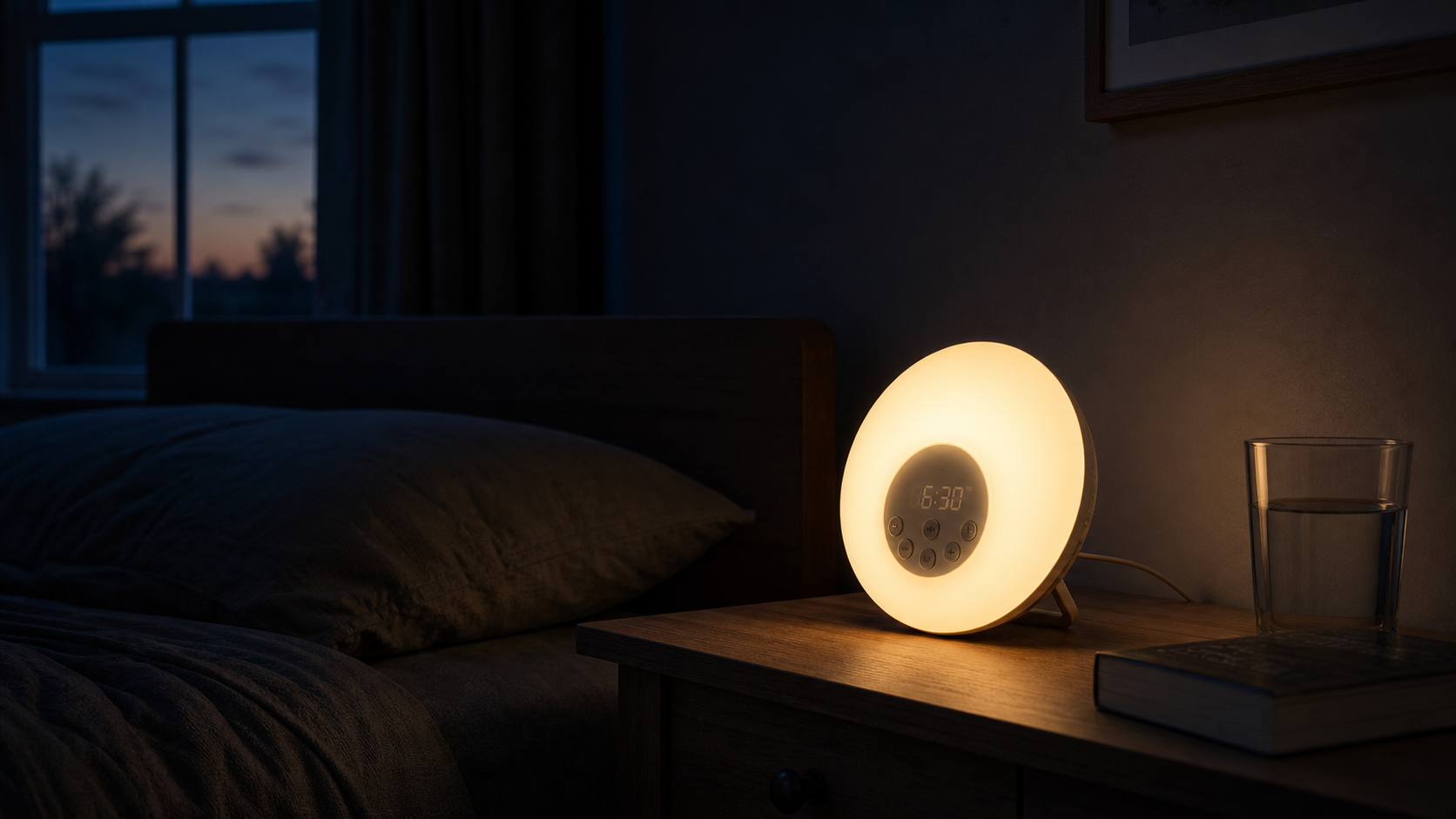
As an Amazon Associate, The Good Home Doc may earn from qualifying purchases.
Compare the control style first: These affiliate searches are shopping starting points, not tested rankings. Check the current maker specifications for light timing, alarm backup, and bedside dimensions.
- Browse category: Sunrise clocks with physical controlsA practical starting category when reliable half-awake operation matters more than app features.
- Browse category: Compact sunrise clocks for small nightstandsCompare base depth, cord exit, button clearance, and stability rather than face diameter alone.
- Browse category: Sunrise clocks with backup and dual alarmsUseful for two schedules, provided the backup behavior is clearly documented.
Confirm the listed sunrise duration, brightness steps, display-off mode, sound controls, backup behavior, app requirements, cord length, and return policy. “Battery backup” may preserve settings without powering the light or alarm during an outage.
This guide compares types and features rather than naming an unsupported winner. A sunrise clock is routine equipment, not a treatment for insomnia, seasonal affective disorder, depression, or another health condition. If persistent sleep or mood problems are affecting daily life, discuss them with a qualified clinician.
Quick Picks by Bedroom and Routine
- Best for a very dark bedroom: a broad light face with multiple brightness steps, an adjustable 20-to-40-minute wake window, and a final audible alarm.
- Best for a shared bedroom: a lower minimum brightness, fully dimmable display, gradual sound volume, and separate weekday or dual-alarm schedules.
- Best for a small nightstand: a stable compact base with top or front controls that remain reachable beside a glass, book, or phone.
- Best for app-averse users: complete clock, alarm, light, and snooze controls on the device, with the app optional rather than required.
- Best for irregular schedules: easy alarm editing, multiple saved schedules, and a clear way to confirm which alarm is active.
Comparison Framework
Simple Button-Controlled Clocks
These clocks keep setup and daily changes on the device. They are usually the easiest type to understand at a glance, although a crowded button layout can make them frustrating in the dark.
Choose one when: you want the clock to work without an account, phone, Wi-Fi connection, or software update.
Watch for: buttons that look identical, settings hidden behind long presses, a display that cannot turn fully off, and a snooze control that is difficult to find by touch.
App-Connected Sunrise Clocks
An app can make schedules, light colors, and sound libraries easier to edit. The tradeoff is dependence on phone compatibility, account requirements, wireless setup, and continued software support.
Choose one when: you regularly change schedules and the product still provides essential alarm and snooze controls on the clock.
Watch for: app-only setup, unclear privacy terms, a bright status light, unreliable reconnection, or basic features moved behind a subscription.
Compact Bedside Models
A smaller clock may fit a narrow nightstand, but the light surface, speaker, controls, and stability all compete for the same space. Check the full base depth and cord clearance, not just the advertised screen diameter.
Choose one when: you can position it near eye level without crowding it behind water, books, or other bedside items.
Watch for: a light face that tilts away from the bed, rear controls against a wall, a lightweight base that moves during snooze, and a side-exit cord that increases the footprint.
Must-Have Buying Criteria
- Adjustable sunrise window: a fixed, very short ramp may still feel abrupt, while an unnecessarily long ramp can disturb a partner.
- Low minimum brightness: both the clock face and time display should dim enough for the room. A display-off mode is especially useful in a blackout bedroom.
- Audible fallback: light alone may not wake every user. Look for adjustable sound and volume rather than a single harsh tone.
- Clear active-alarm indicator: you should be able to verify the next alarm without reopening every setting.
- Usable physical controls: alarm off, snooze, brightness, and volume should be distinguishable by position, shape, or touch.
- Documented outage behavior: distinguish between a battery that saves settings and a backup that actually sounds an alarm.
Measure the Bedside Setup
- Measure the available surface. Record width and depth after leaving room for items that must stay on the nightstand.
- Check viewing height and angle. The light should face the bed without being blocked by the mattress, a book stack, or a water bottle.
- Allow hand clearance. Leave room to reach the alarm and snooze controls without knocking over nearby items.
- Plan the cord route. Use an accessible outlet and keep the cord behind furniture or along the wall, not across a walkway.
- Check partner spill. In a shared room, consider whether the light face can be angled or reduced without hiding it from the intended user.
Nice-to-Have Features
Dual alarms can separate weekday schedules or two sleepers. A sunset-dimming routine may reduce the need for another bedside lamp, but it should not replace practical room lighting. Replaceable alarm sounds, separate light and sound volume, USB charging, and a clearly labeled nap timer can be useful. Treat colored light scenes, voice control, and large sound libraries as extras after reliable alarm operation.
Blackout, Backup, and Maintenance Checks
Test the room at its darkest. Covering a display with tape can block sensors or ventilation, so prefer a built-in display-off setting. If the clock uses automatic brightness, confirm that it does not brighten unexpectedly when a hallway light or car headlight reaches the room.
Read the manual’s outage section before relying on a backup claim. Some clocks keep the time and alarm settings but do not illuminate or sound until wall power returns. If waking on time is essential, keep a separate battery alarm or phone alarm as a fallback.
Dust the light face and speaker openings according to the maker’s instructions. Avoid spraying cleaner directly onto the clock. Recheck saved alarms after a time change, outage, app update, or schedule change.
Who Should Skip a Sunrise Alarm Clock
Skip this category if even low light disturbs a partner and the clock cannot be positioned or dimmed independently. It may also be a poor fit for someone who needs a wearable vibration alarm, a bed shaker, or another accessibility-specific alert rather than room light.
Skip app-dependent models if the home Wi-Fi is unreliable, the phone is not kept nearby, or account setup is unwanted. If the main problem is reading or task light on a tiny bedside surface, a compact table lamp for a dark room may solve the actual need better.
Bottom Line
For most dark bedrooms, the best sunrise alarm clock is one with a genuinely low display setting, an adjustable light ramp, a separate audible alarm, clear physical controls, and documented backup behavior. Measure the nightstand, confirm the clock works without unwanted app dependence, and choose the routine features you will actually use.