Best Toy Storage Bins for Small Living Rooms
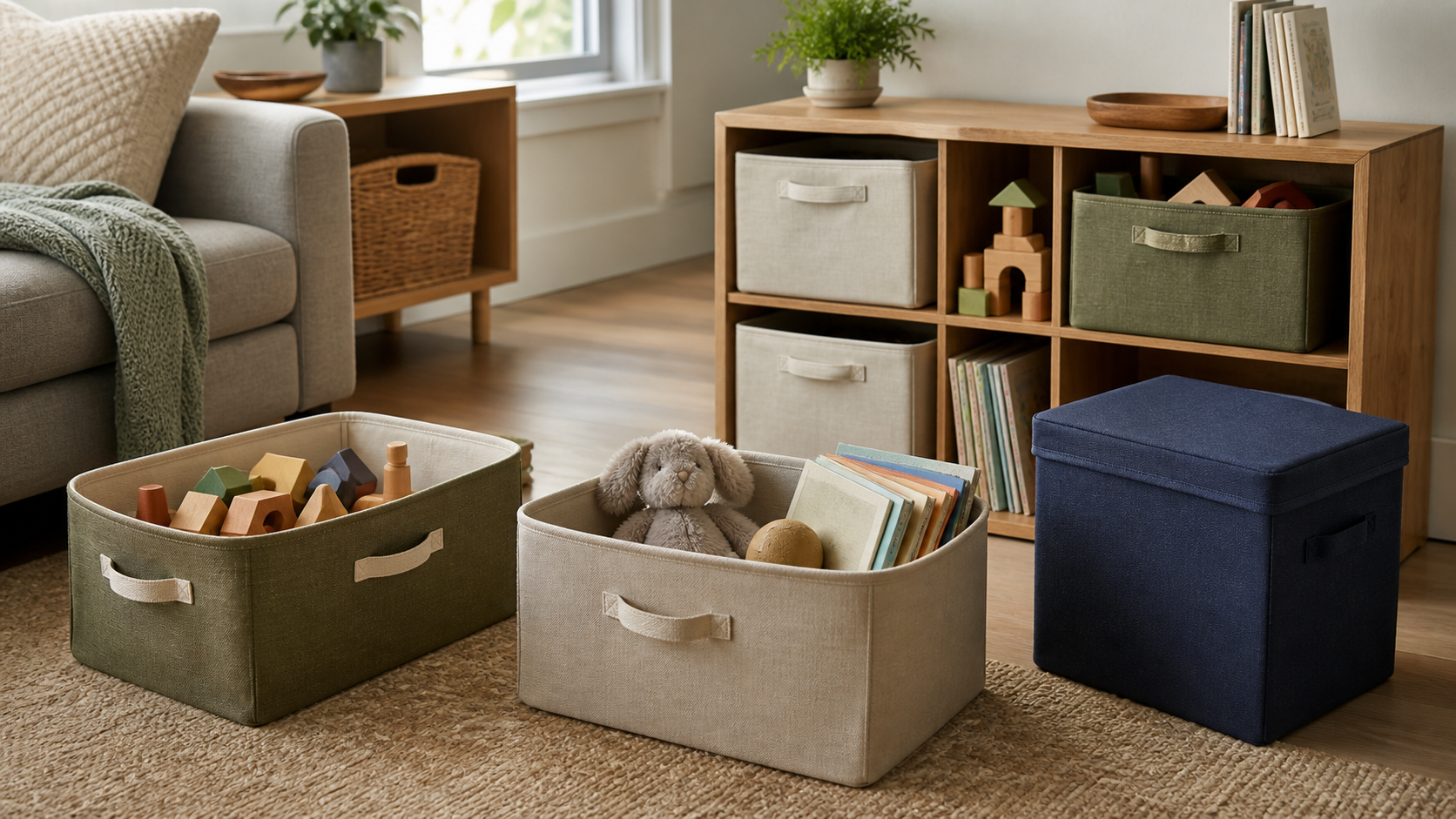
The best toy storage for a small living room makes the daily reset easy without turning the room into a playroom warehouse. Start with low open bins for frequently used toys, add one closed bin for visually busy pieces, and use a cubby only when its full footprint and anchoring instructions fit the room.
As an Amazon Associate, The Good Home Doc may earn from qualifying purchases.
Choose the storage format before the color: These affiliate category links are shopping starting points, not tested rankings.
- Browse category: Low open toy bins with handlesBest starting point for fast cleanup and toys used most days.
- Browse category: Lidded fabric storage cubesUseful for hiding visually busy sets when adult access is acceptable.
- Browse category: Low organizers with removable binsWorth comparing when categories need separate, visible homes.
Confirm exterior dimensions, opening size, materials, cleaning instructions, stated load guidance, and any wall-restraint requirements with the maker before buying.
This guide compares storage formats, not individual brands. A useful system matches the toys, the cleanup routine, and the room's available footprint. It should also leave doors, heating vents, outlets, and walking paths clear. No bin fixes an overfilled collection, so plan capacity around what actually belongs in the living room.
Quick Picks by Living-Room Problem
- Best for the fastest daily reset: two or three low, open fabric bins with broad handles and rigid enough sides to stay open.
- Best for keeping categories visible: a low cubby organizer with removable bins that fit completely inside each opening.
- Best for reducing visual clutter: a lightweight lidded cube for occasional-use toys, provided the lid is easy for an adult to remove and has no awkward pinch point.
- Best for moving play between rooms: shallow handled baskets that an adult can carry without toys spilling over the rim.
- Best when floor space is extremely tight: one bin sized to slide under an existing console or bench, after checking height, depth, and pull-out clearance.
Measure the Room Before Comparing Bins
Measure the exact parking spot, not the empty wall around it. Record width, depth, and usable height. Then check the space needed to pull a bin forward, lift a lid, or stand in front of a cubby. A 13-inch cube can require much more than 13 inches of working depth once a person needs to remove it.
Mark the proposed footprint with painter's tape for a day. Confirm that it does not narrow the main walking route, block a door swing, sit over a floor register, or force furniture into a cramped arrangement. If the storage goes under a console, measure the smallest opening between legs and any lower rail—not only the tabletop width.
Comparison Framework
Low Open Fabric Bins
Open bins remove a step from cleanup: toys can be dropped in without aligning a lid or pulling out a drawer. Fabric sides are lighter than wood boxes, and handles help an adult move a full bin.
Choose this type if: toys come out daily, quick cleanup matters most, and a little visible color or clutter is acceptable.
Watch out for: floppy sides that collapse into the opening, thin handles, rough internal seams, and bins so deep that small pieces disappear beneath larger toys.
Lidded Cubes and Baskets
A lid quiets the look of a shared room and can keep dust off occasional-use items. It also adds a step and creates somewhere else to put the lid during play.
Choose this type if: visual calm matters, the contents are used less often, and an adult usually manages the bin.
Watch out for: heavy or hinged lids, narrow finger gaps, closures that snag, and rigid boxes that become too heavy when filled. Follow the maker's age and use guidance; a storage bin is not seating unless it is explicitly designed and rated for that purpose.
Low Cubby Organizers with Removable Bins
Cubbies give each category a fixed location and keep several bins within one furniture footprint. Removable bins are easier to carry to the play area than fixed drawers.
Choose this type if: sorting helps the household reset the room and the wall has enough width and depth for a permanent piece.
Watch out for: a top-heavy loaded arrangement, bins that protrude into the path, difficult-to-clean gaps, and furniture that requires wall restraint. Follow all assembly and anti-tip instructions; if the wall or lease prevents required restraint, choose a different format rather than improvising.
Shallow Handled Baskets
Shallow baskets keep more contents visible and are useful for a single activity such as blocks, cars, or picture books. A broad base is less likely to tip during loading than a narrow, tall basket.
Choose this type if: the basket moves between a shelf, rug, and another room, and the toy category is easy to recognize at a glance.
Watch out for: splinter-prone natural fibers, open weave that catches small parts, decorative handles that are uncomfortable when loaded, and hard edges beside a busy walkway.
Must-Have Features
- A useful opening: the opening should accept the largest everyday toy without forcing a precise angle.
- Easy-clean surfaces: check whether fabric inserts are washable, wipeable, or spot-clean only. Removable bottom panels should come out without damaging the bin.
- Comfortable handles: broad sewn handles or smooth cutouts are easier for adults to carry than thin cords or exposed wire.
- Stable proportions: favor a broad base and moderate height over a tall narrow container that is easy to knock over.
- Rounded, finished contact points: inspect edges, fasteners, seams, and bin frames where hands meet the product.
- Honest capacity: the bin should close or remain below the rim with a normal load; an overfilled bin defeats handles, lids, and sorting.
Nice-to-Have Features
- Simple labels: a picture or broad category label can help everyone return items without turning the system into a detailed filing project.
- Replaceable inserts: useful when a cubby frame may outlast the fabric bins, as long as the replacement size is standard and available.
- A neutral outer surface: it helps the storage sit comfortably in a shared room while the contents stay easy to identify.
- A lightweight empty bin: the container should not use most of its practical carrying weight before toys are added.
Capacity: Use More Small Bins, Not One Toy Chest
One oversized chest looks efficient but often becomes a deep mixed pile. Small pieces sink, bulky toys occupy the top, and finding one item means unloading everything. Two or three moderate bins create useful limits: for example, building pieces, pretend play, and books or puzzles.
Do not choose categories more detailed than the household will maintain. If the reset repeatedly ends with everything in the nearest container, broader bins are the better system. Keep overflow elsewhere and rotate it intentionally rather than adding bins until the living room perimeter is full.
Placement, Setup, and Maintenance
Put daily-use bins where they can be reached and returned without moving a coffee table. Keep heavy items low. Do not stack loose bins where pulling one could dislodge another. Furniture should sit level and use every restraint the manufacturer requires.
Empty crumbs and dust regularly, wipe hard surfaces according to their care instructions, and let washed fabric dry completely before refilling. Check handles, seams, corners, and organizer fasteners during the reset. Retire a bin when its frame breaks through the fabric, an edge becomes rough, or a handle begins to detach.
Who Should Skip These Formats
Skip open bins if seeing the contents makes the shared room feel permanently cluttered; closed adult-managed storage may fit better. Skip lidded cubes when the lid will be left on the floor or when independent access is essential. Skip a cubby organizer when the room cannot spare its full depth, the required restraint cannot be installed, or the bins would protrude into a traffic path.
Skip floor bins altogether when the only available location blocks a doorway, heater, vent, outlet, or accessible route. In that case, reduce the living-room toy set or use secure existing furniture rather than forcing another storage product into the room.
A Practical Buying Checklist
- Choose the two or three toy categories that actually stay in the living room.
- Measure the storage footprint and the clearance needed to open or pull it out.
- Compare the largest toy with the bin opening and usable interior dimensions.
- Check materials, cleaning instructions, edges, handles, lids, and stated load guidance.
- Read the complete assembly and restraint instructions before choosing furniture-style storage.
- Tape the footprint on the floor and test the walking route before ordering.
Bottom Line
For most small living rooms, start with two low open fabric bins that hold the daily toy categories without overflowing. Add one lightweight lidded cube only for items that benefit from being out of sight. Choose a low cubby organizer when sorting is genuinely useful, the permanent footprint works, and every maker-required restraint can be installed. The best system is the smallest one the household can reset consistently.