Is a Compact Dehumidifier Worth It for a Closet or Small Room?
A compact dehumidifier can be worth it for mild, measured humidity in a genuinely small space when you can give the unit airflow, empty or drain it reliably, and accept its limited capacity. Skip the gadget and address the source when you see active water, damage, recurring strong odors, or dampness that returns despite normal ventilation.
As an Amazon Associate, The Good Home Doc may earn from qualifying purchases.
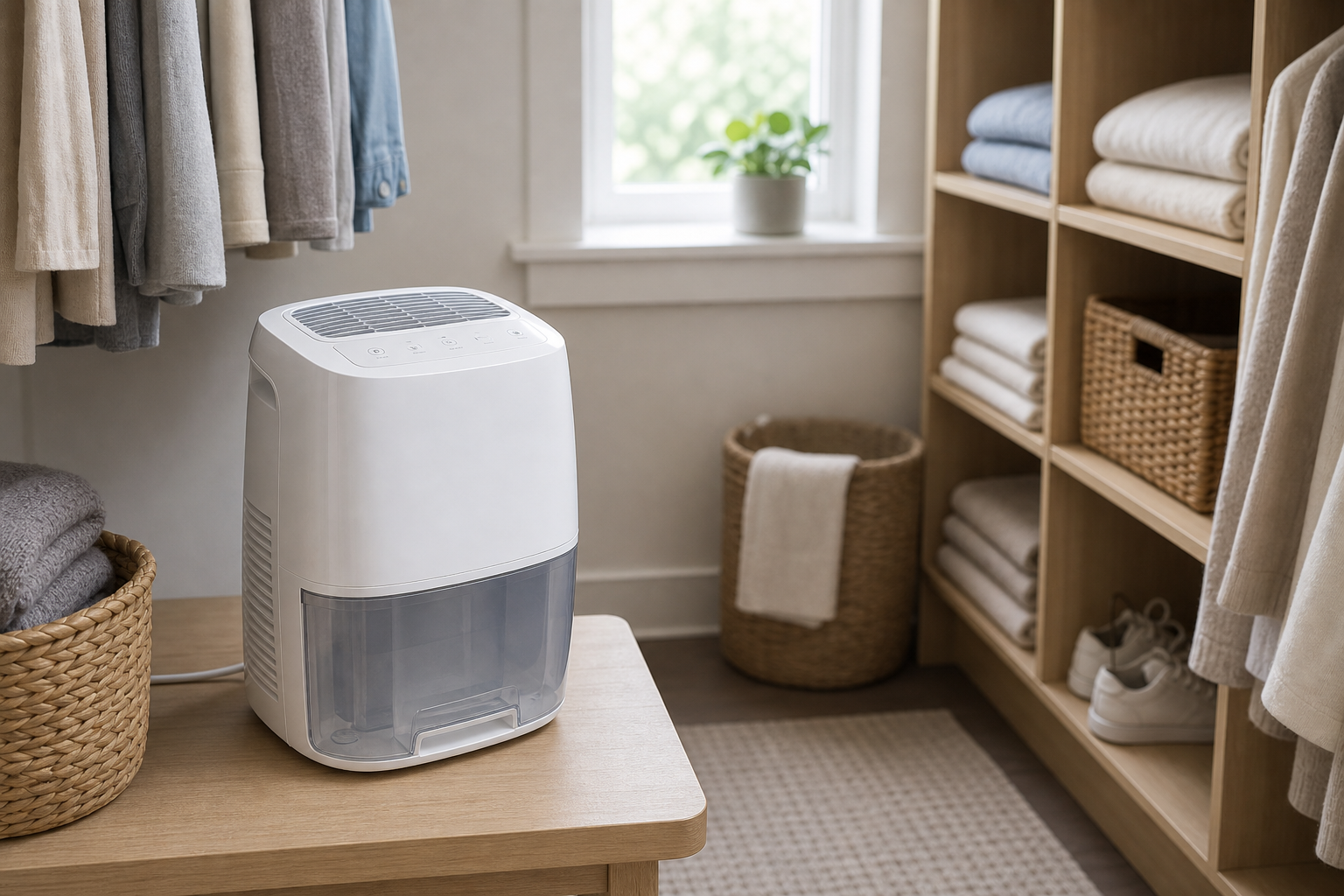
Compare the category only after checking the space: Browse category: Shop compact dehumidifiers on Amazon.
This is a category shortcut, not a tested ranking. Verify the maker's stated water-removal capacity, operating temperature, clearance, tank size, shutoff behavior, filter care, electrical instructions, and warranty before choosing.
This page answers whether compact equipment is adequate at all. If the answer is yes, the separate compact dehumidifier buying guide covers formats and features without pretending that a small machine can fix a building problem.
Quick Decision: Buy, Skip, Delay, Choose an Alternative, or Escalate
- Buy: humidity is mildly elevated or comfort-related, the space is within the unit's documented limits, airflow and outlet placement are safe, and you will maintain the tank and filter.
- Skip: the space is large, cold, tightly packed, outlet-free, or persistently wet, or the smallest unit that physically fits lacks enough documented capacity for the job.
- Delay: you have not tracked humidity in more than one location and time, checked for obvious water entry, measured the usable footprint, or priced ongoing electricity and maintenance.
- Choose an alternative: use better air circulation, an existing exhaust fan correctly, a larger appropriately sized unit, or a non-electric absorber for a tiny mildly damp storage area when each option fits the actual cause.
- Escalate: contact the property manager or an appropriate qualified professional for active leaks, standing water, wet or soft materials, recurring staining, persistent strong musty odor, visible growth, or unexplained moisture that keeps returning.
When a Compact Unit Earns Its Keep
The strongest case is a small room or open closet with modest humidity, a stable surface, a nearby outlet, and enough clearance around the intake and exhaust. The goal is limited: remove some water from the air and improve comfort or storage conditions while you monitor the result.
It can also make sense when a full-size machine would overwhelm the room with footprint, sound, or heat. But “compact” describes size, not capability. Compare the manufacturer's removal capacity and operating range with your conditions rather than relying on a large room-size number printed on a listing.
Check the Problem Before Shopping
- Look for a source: check for plumbing drips, window or wall staining, wet flooring, condensation patterns, blocked vents, and damp stored items. Do not cover an active source with a machine.
- Track the pattern: a basic hygrometer can show whether humidity rises after showers or laundry and then falls, or stays elevated. It does not diagnose leaks, mold, or building damage.
- Measure the actual space: record room dimensions and the usable surface area for the unit, including clearance for airflow, tank removal, doors, clothes, and shelving.
- Check temperature: water-removal performance can change with temperature. Confirm the product's documented operating range for the planned location.
- Consider the renter path: document damage and notify the landlord or property manager instead of accepting responsibility for drying out a repair problem.
Cost, Setup, and Maintenance Tradeoffs
The purchase price is only the first cost. An electric unit uses power, may add some warmth and noise, needs tank emptying or a safely routed drain, and requires filter and reservoir cleaning. A tiny low-output unit may cost less but run longer while collecting little water; a more capable model may cost more and take up more floor space.
Setup is easy only when the room cooperates. The unit needs a level surface, documented clearance, an appropriate wall outlet, and a cord route that is not pinched, covered, or stretched across a walkway. Do not improvise drain routing or extension-cord use against the manufacturer’s electrical and installation directions.
Maintenance is recurring, not optional. A full tank stops useful operation on auto-shutoff models, while a dirty filter reduces airflow. Clean and empty the unit on the maker's schedule, inspect the reservoir and hose connections, and keep fabric, paper, and stored goods away from the air path.
Capacity Reality: Mini Unit, Compact Compressor, or Something Else?
Small thermoelectric units can suit light moisture in very small, warm spaces, but their removal rate may be modest. Compact compressor units generally offer more removal capacity, with more noise, heat, weight, and maintenance. A passive or rechargeable desiccant product can be simpler in a tiny closet without safe outlet access, but it has limited capacity and replacement or recharging costs.
For a room that stays substantially damp, a larger dehumidifier sized from current manufacturer documentation—or source control and repair—may be more sensible than forcing a mini unit to run continuously. The comparison guide explains these categories after you decide a dehumidifier is appropriate.
Red Flags That Mean “Stop Shopping”
- Standing water, an active drip, a wet wall or ceiling, or water entering around a window, foundation, appliance, or pipe.
- Soft, swollen, crumbling, warped, or repeatedly stained building materials.
- A strong musty odor that persists, visible growth, or symptoms that prompt health concerns; a consumer dehumidifier is not an inspection or treatment.
- The unit would sit among hanging fabric, paper, packed bins, or other items that block airflow or make tank access difficult.
- The only power plan involves a pinched cord, an outlet with signs of damage, or an extension setup that conflicts with the product instructions.
- Humidity remains elevated or damage returns even after ordinary ventilation and a correctly used unit.
Who Should Skip a Compact Dehumidifier
Skip it if you expect a tiny device to dry a large room, cold basement, wet bathroom, or ongoing leak. Also skip it when no one will empty the reservoir, clean the filter, or check whether the space is improving. A machine that quietly shuts off with a full tank is not protecting the room.
People dealing with suspected mold, major water intrusion, damaged materials, electrical concerns, or an unknown recurring source should not use this purchase to delay appropriate help. Renters should report the condition; homeowners should contact the qualified trade or specialist appropriate to the suspected source.
Bottom Line
A compact dehumidifier is worth it when the problem is mild airborne humidity, the documented capacity and operating range fit a genuinely small space, and the setup and maintenance are realistic. Delay until you measure and monitor. Choose a larger unit, ventilation change, or passive absorber when those better match the space. Stop shopping and escalate when water, damage, odor, or recurring dampness suggests a source that needs attention.